

PLINTH HOUSE
COMPLETED
FUNCTION: Single Family Dwelling
SITE AREA: 993 sqm
FLOOR AREA: 761 sqm
The Plinth House is Singapore’s first privately initiated residential house built with Mass Engineered Timber. Resting a lightweight timber pavilion atop a grounded stone plinth, this project explores how tropical mass timber architecture can reconcile privacy and openness while responding to the urgent challenge of embodied carbon in the built environment.
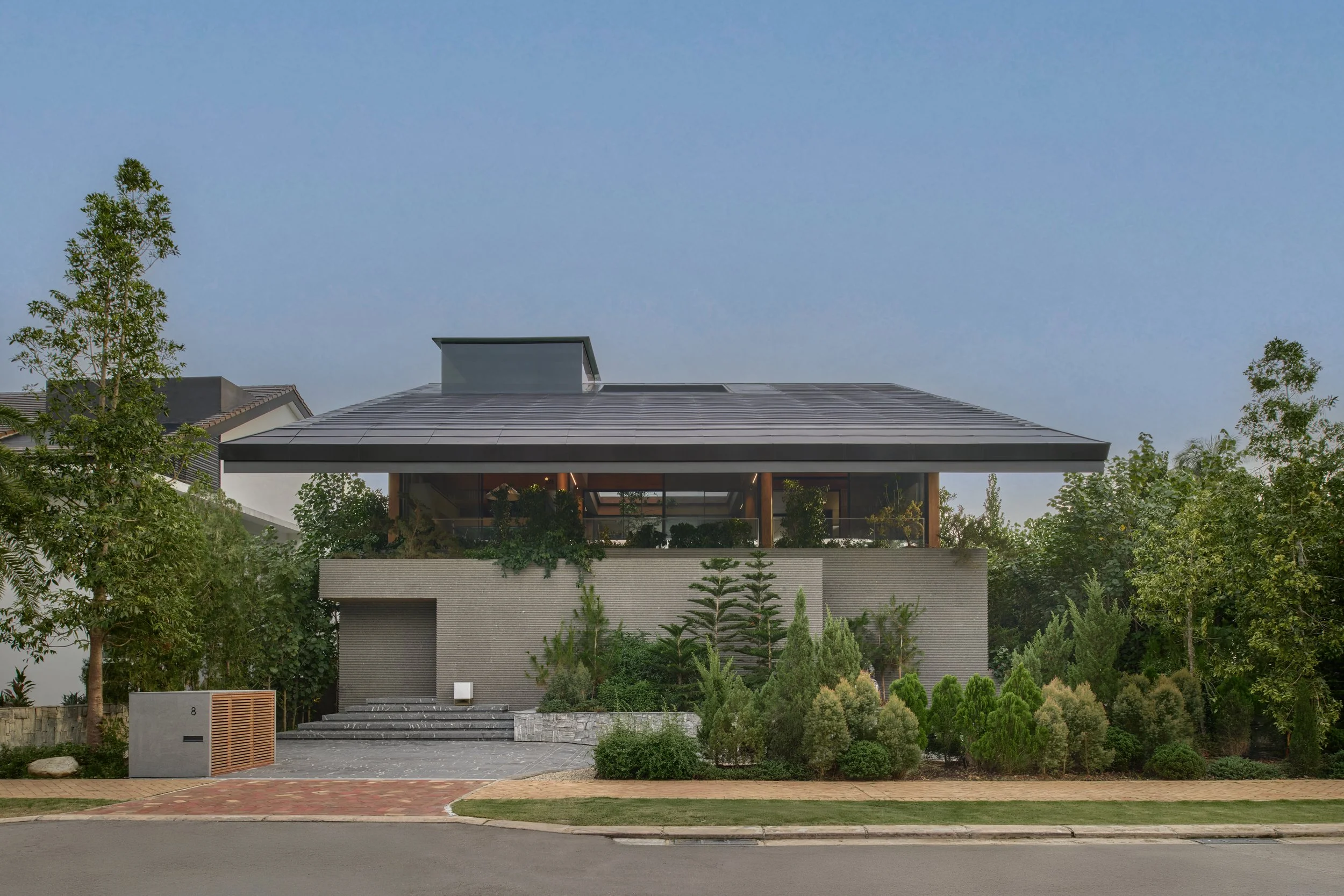
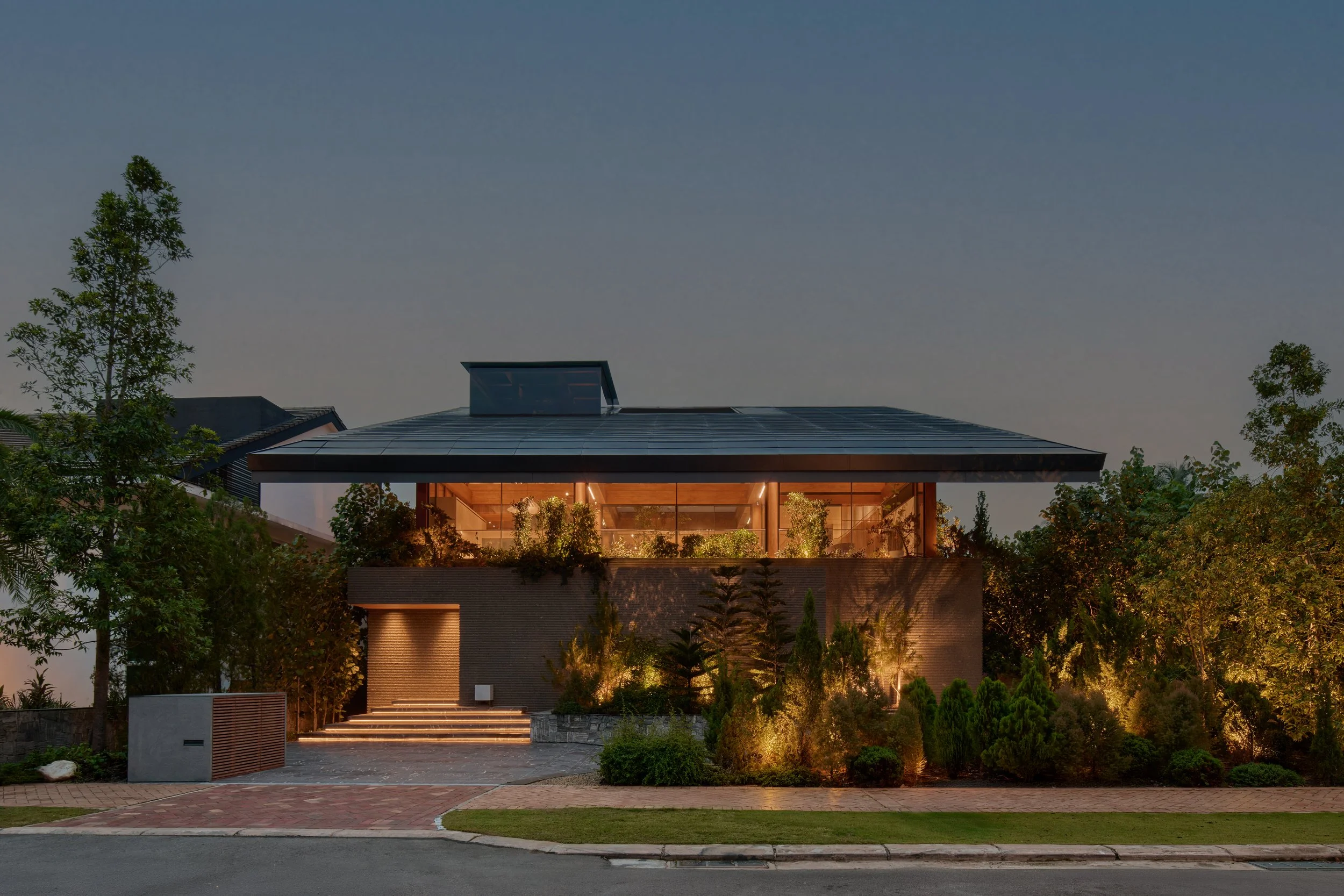
A five-metre cantilevered CLT roof shelters the arrival sequence, revealing the timber pavilion resting above a grounded stone plinth.
Along the seafront of Sentosa Cove, the Plinth House occupies a site defined by both privilege and exposure.
From the property, panoramic views stretch across the Singapore Strait towards Pulau Tekukor and St John’s Island. Yet directly in front of the house runs a public boardwalk connecting the waterfront to the surrounding neighbourhood — an active promenade that brings constant movement and visibility to the edge of the site.
The condition presents a familiar dilemma for waterfront houses: how to engage the horizon while preserving the sense of retreat essential to domestic life?
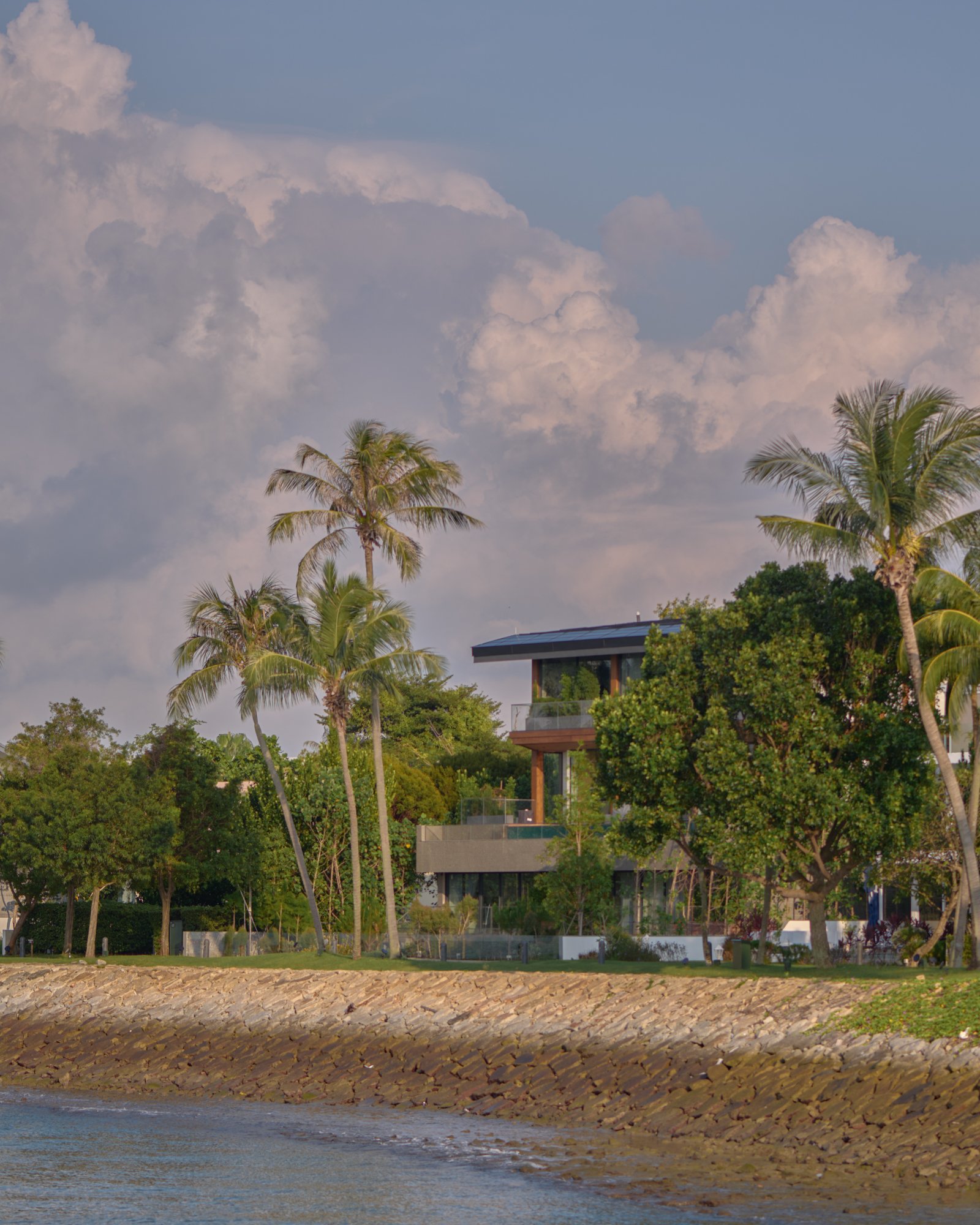
The previous house on the site attempted to embrace the seafront through expansive glazed openings facing the boardwalk. In practice, the openness proved difficult to inhabit. The interior remained constantly exposed to passers-by, and curtains were frequently drawn to restore privacy — effectively negating the panoramic views the house was designed to capture.
The client approached Type0 Architecture with a brief that emerged directly from this tension. The new house was to maintain a strong relationship with the sea while allowing the home to withdraw from the public edge. At the same time, the project sought to maximise the site’s development potential through the addition of a basement, while addressing the harsh climatic conditions of the reclaimed shoreline — intense solar exposure, salt-laden air and driven tropical rain.
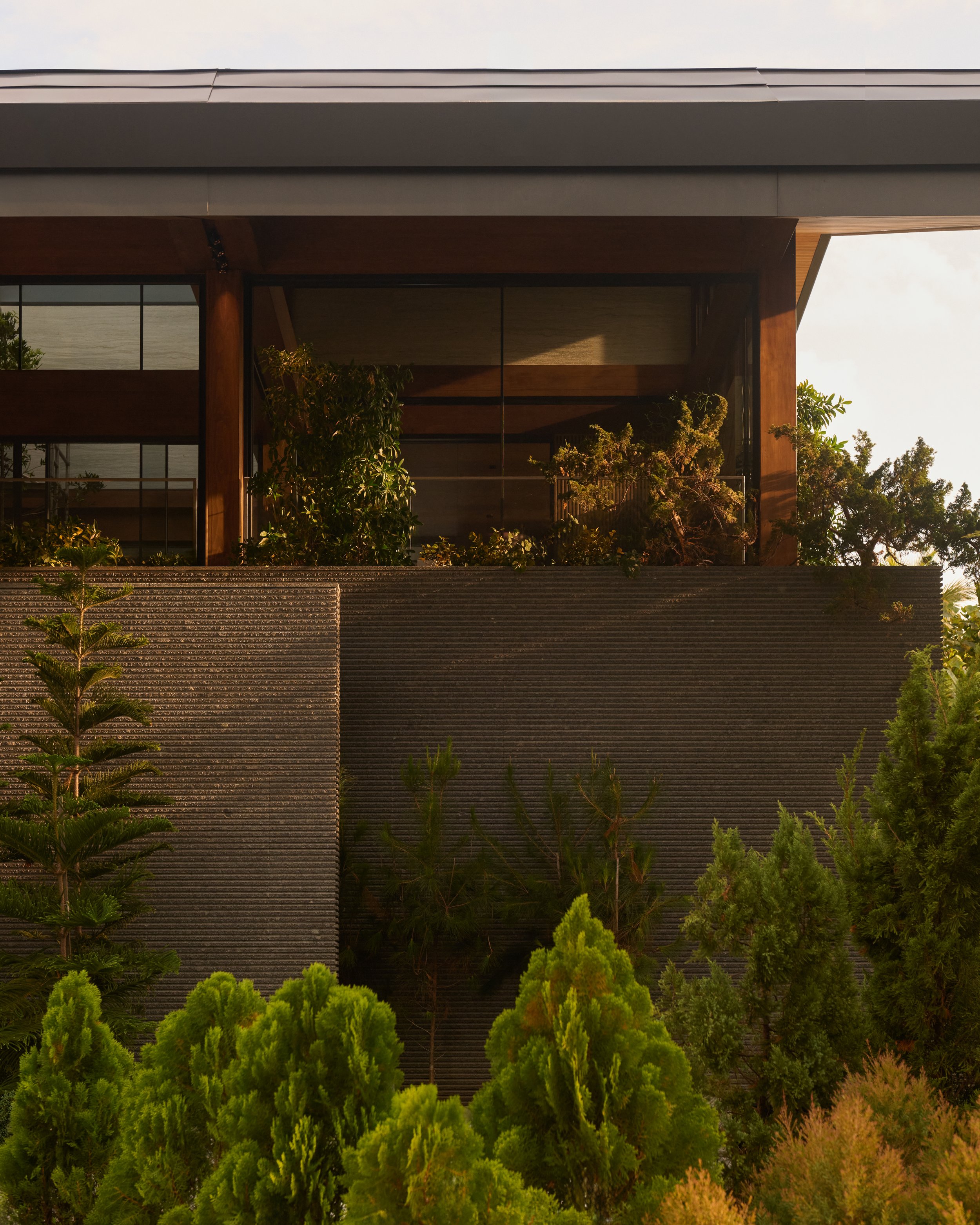
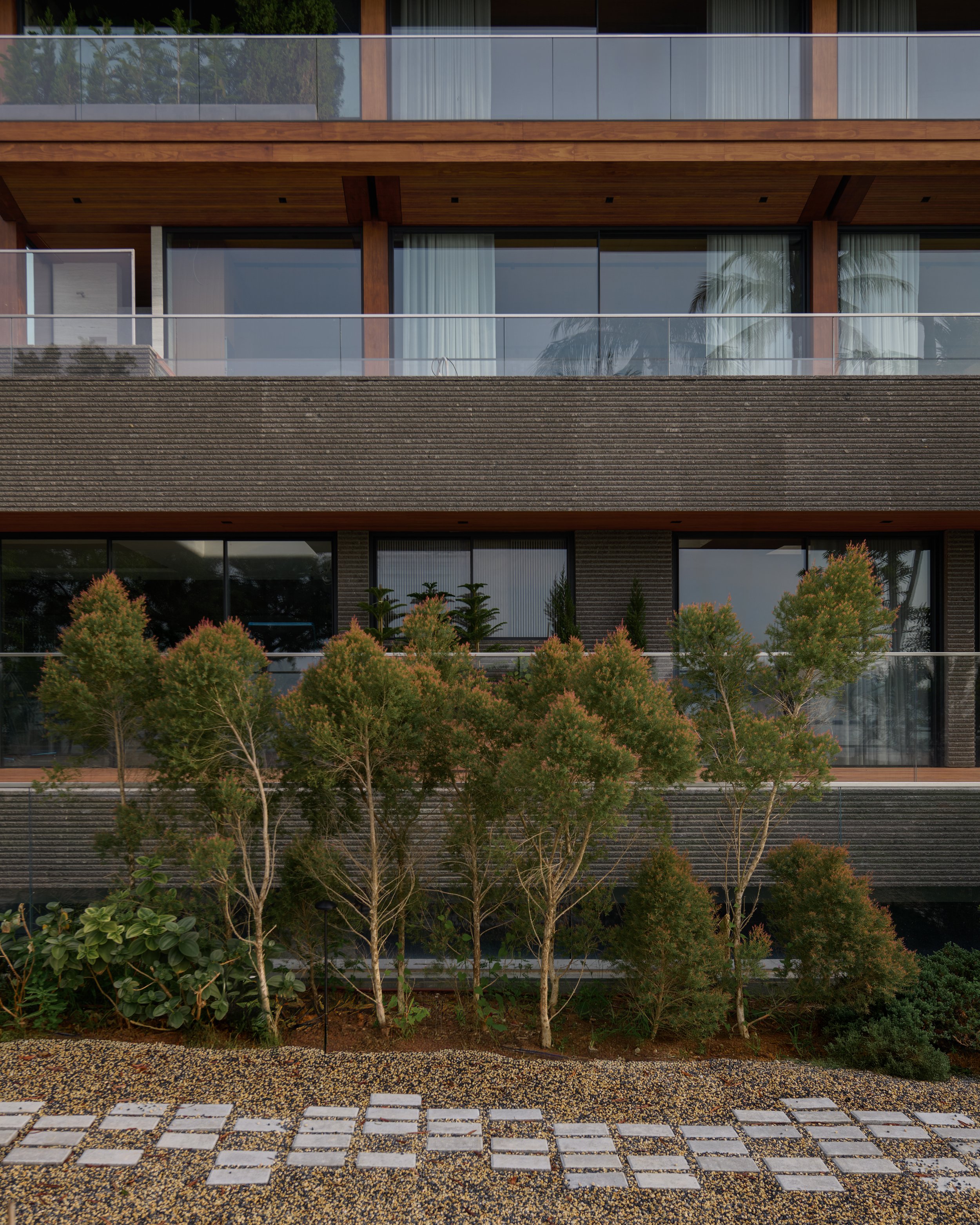
The house is organised into two tectonic strata: a reinforced concrete base clad in textured stone and a lightweight Mass Engineered Timber pavilion above.
“... how to engage the horizon while preserving the sense of retreat essential to domestic life?”
The architectural response begins with a simple inversion.
Where the conventional seafront house places communal living spaces at the exposed ground plane and private rooms above, the Plinth House reverses this hierarchy. The lower levels withdraw and protect; the upper levels open towards the horizon.
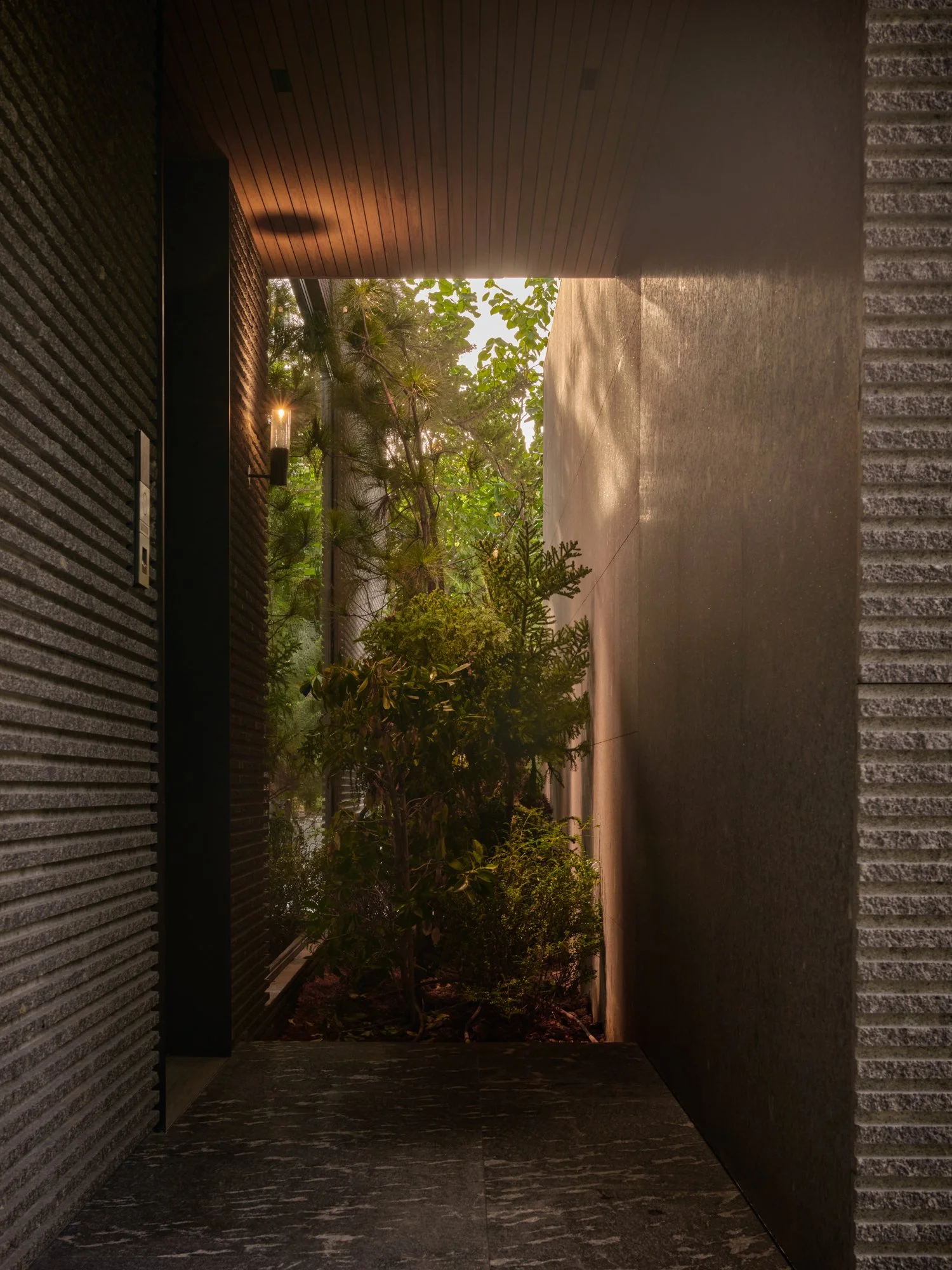
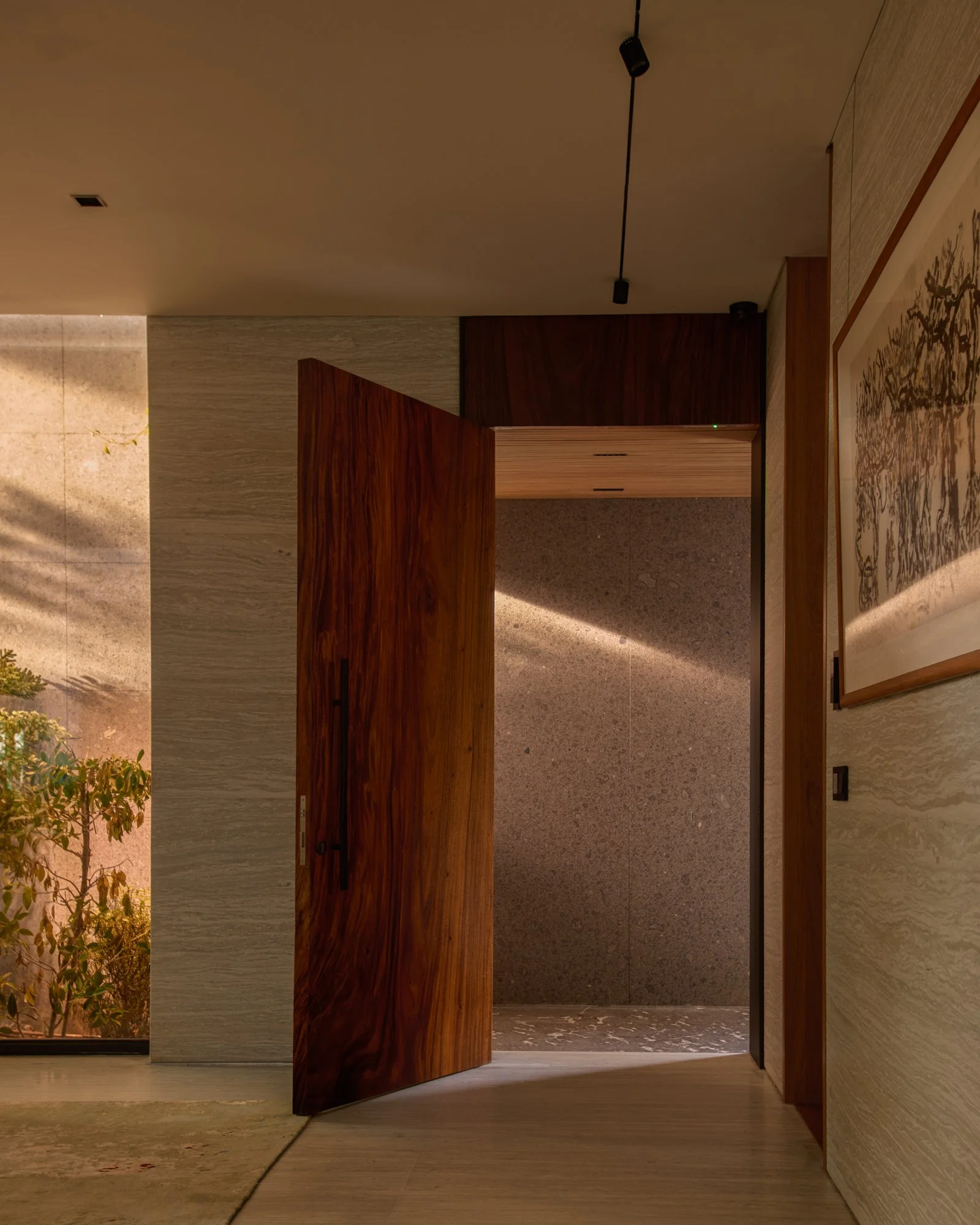
The entrance slips behind a striated stone slab, compressing the approach and creating a moment of retreat from the exposed seafront edge.
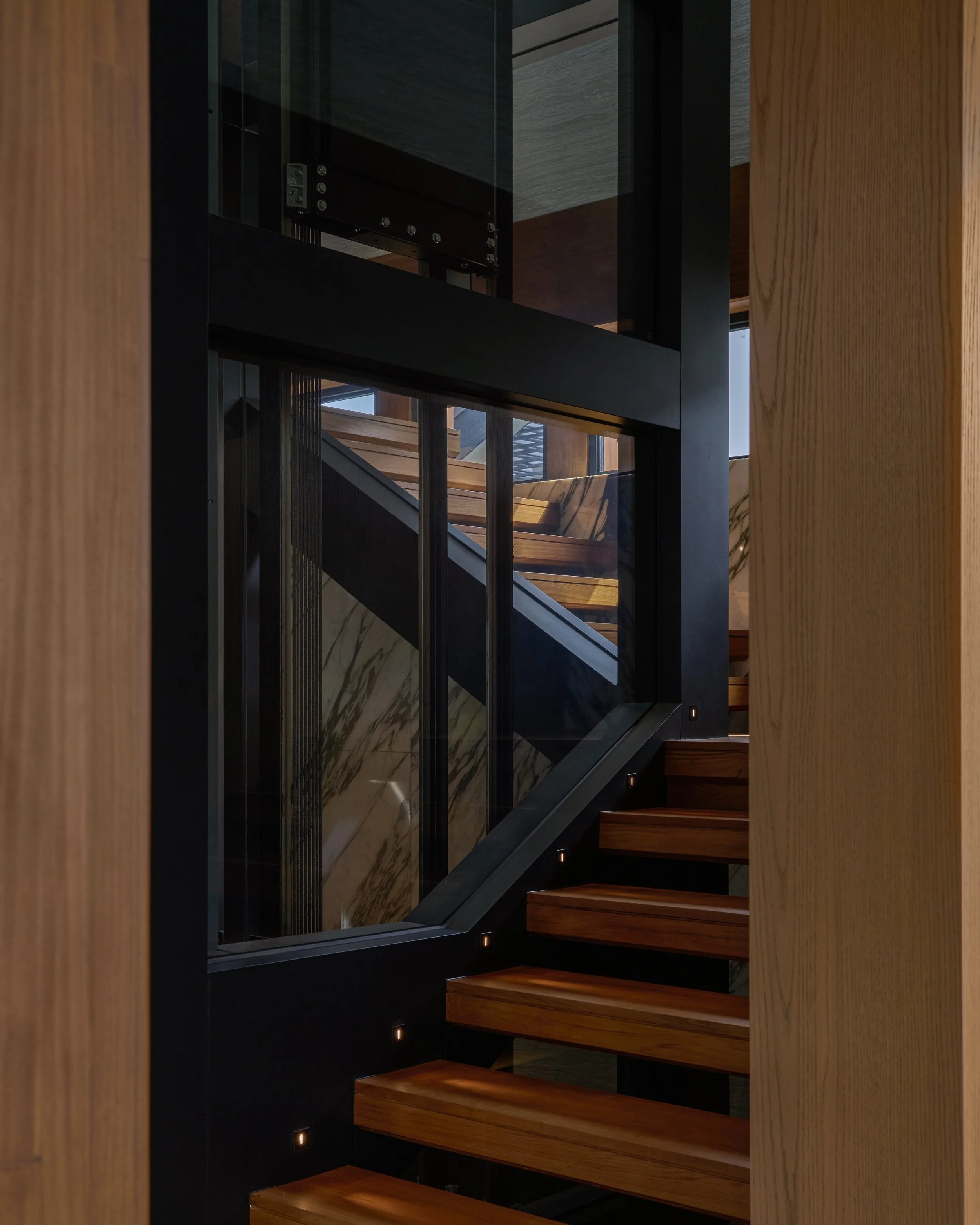
The basement and first storey are constructed in reinforced concrete and expressed as a grounded stone plinth. Clad in deeply textured hydro-finished Ceppo di Gré, the base reads as a striated geological mass rising from the reclaimed shoreline. Unlike natural beaches, the coast of Sentosa Cove meets the sea through a field of rocks — rugged in formation yet gradually refined by erosion and time. The house adopts this geological condition as its architectural datum.
Openings within the plinth are restrained and deeply set. From the outside, the house appears solid and protective; from within, carefully framed views extend towards the surrounding landscape. In this way, the plinth establishes a necessary withdrawal from the public edge.
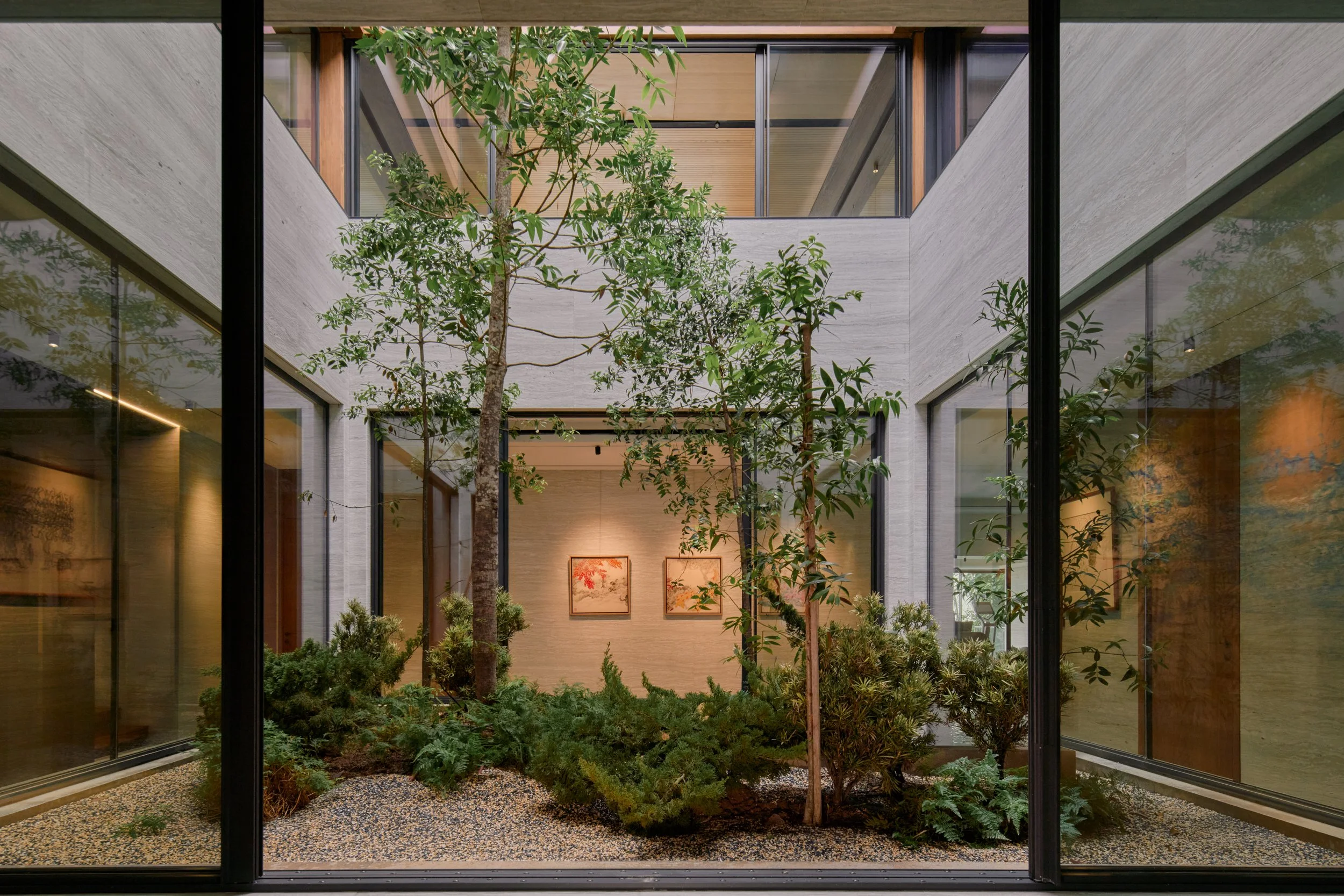
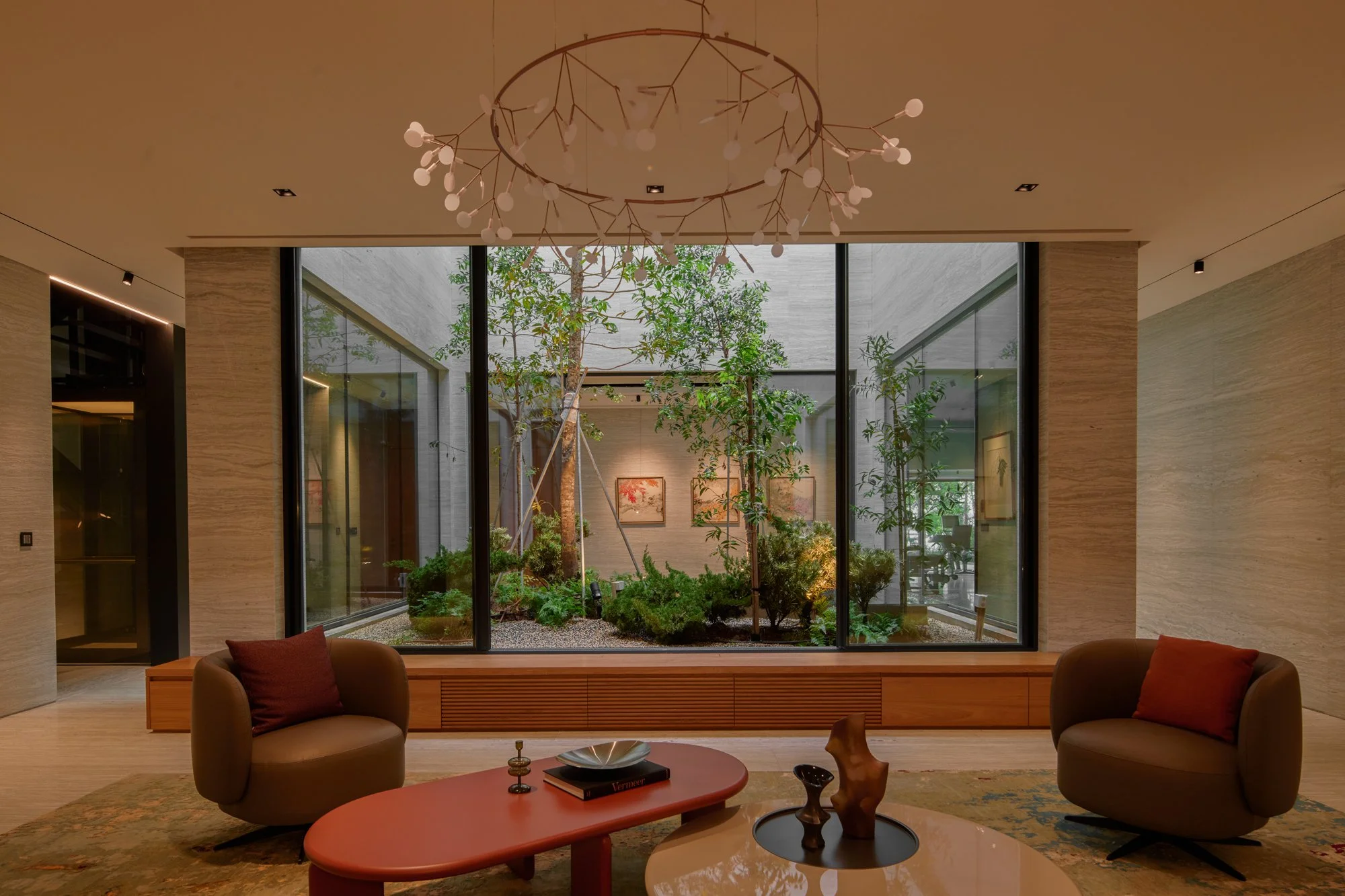
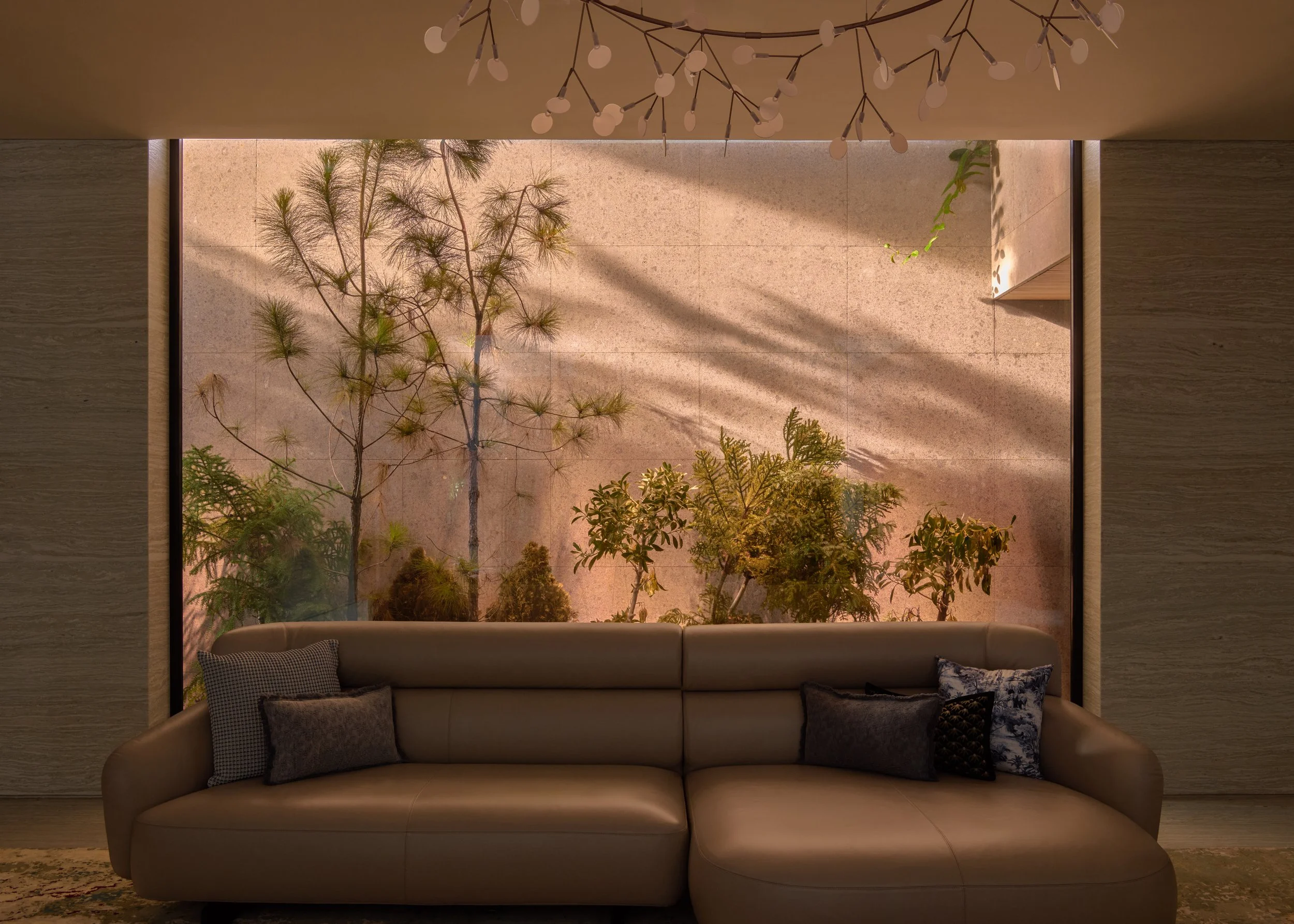
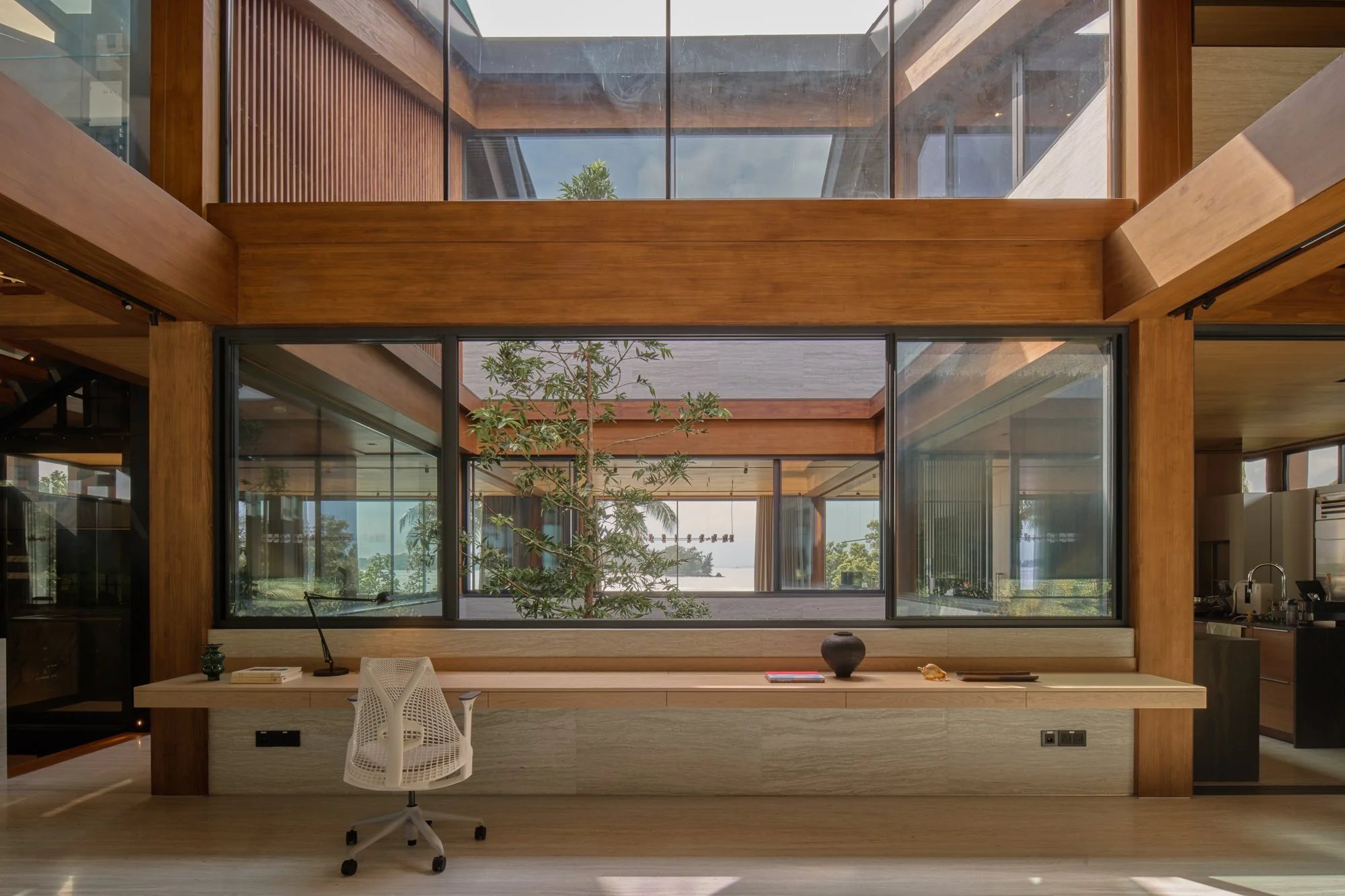
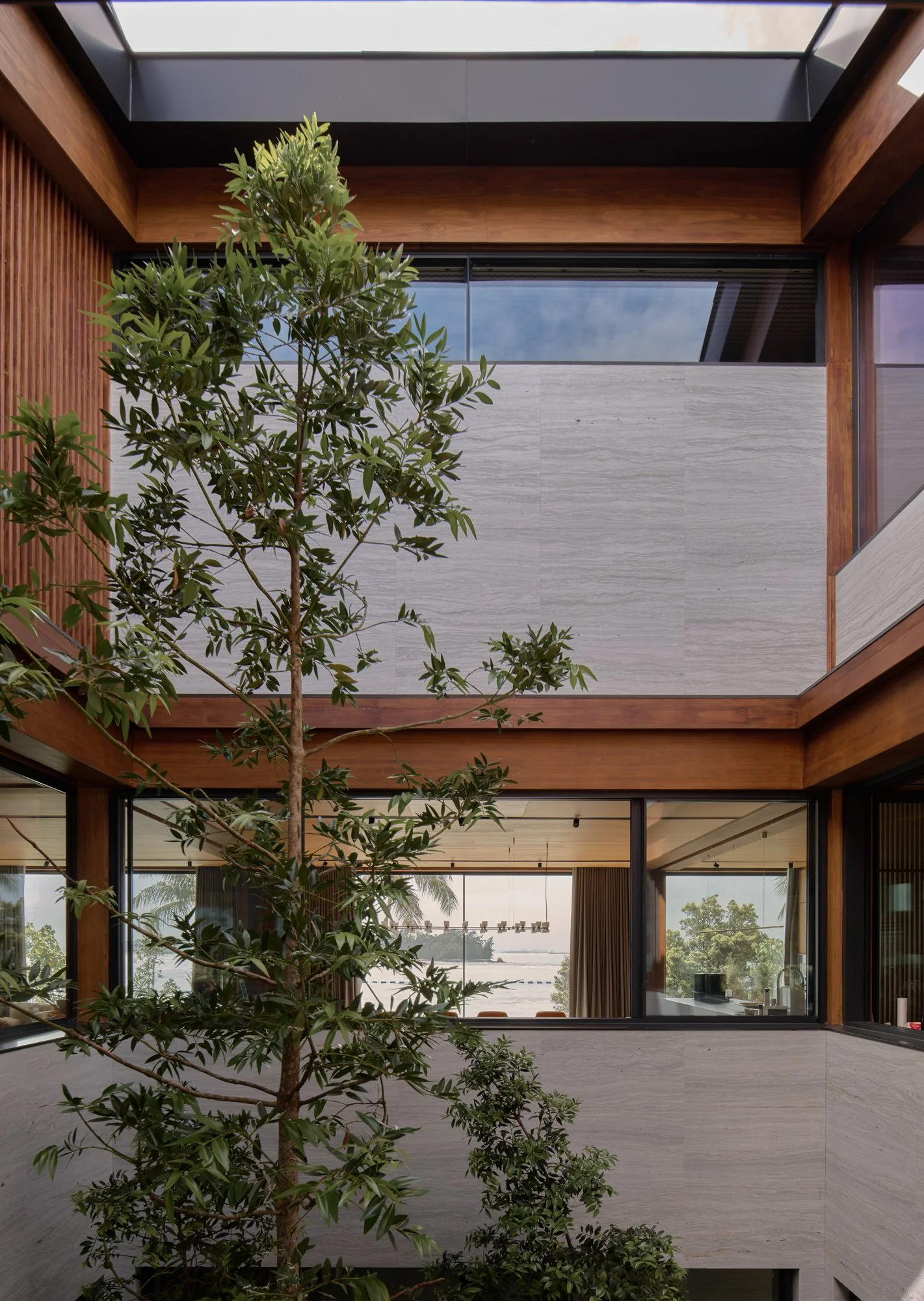
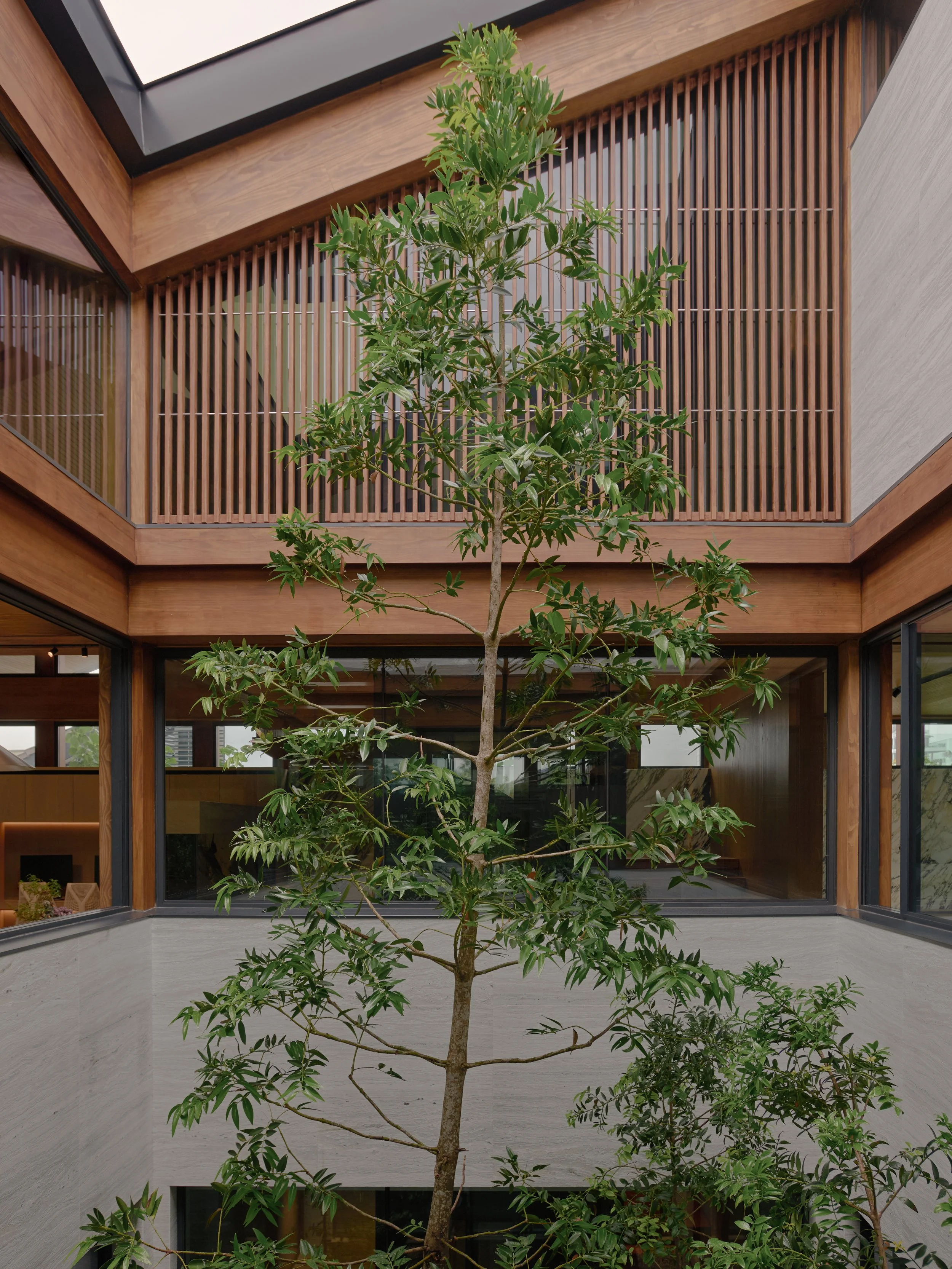
A tree rises through the nine-grid courtyard, bringing daylight and ventilation deep into the protective stone plinth.
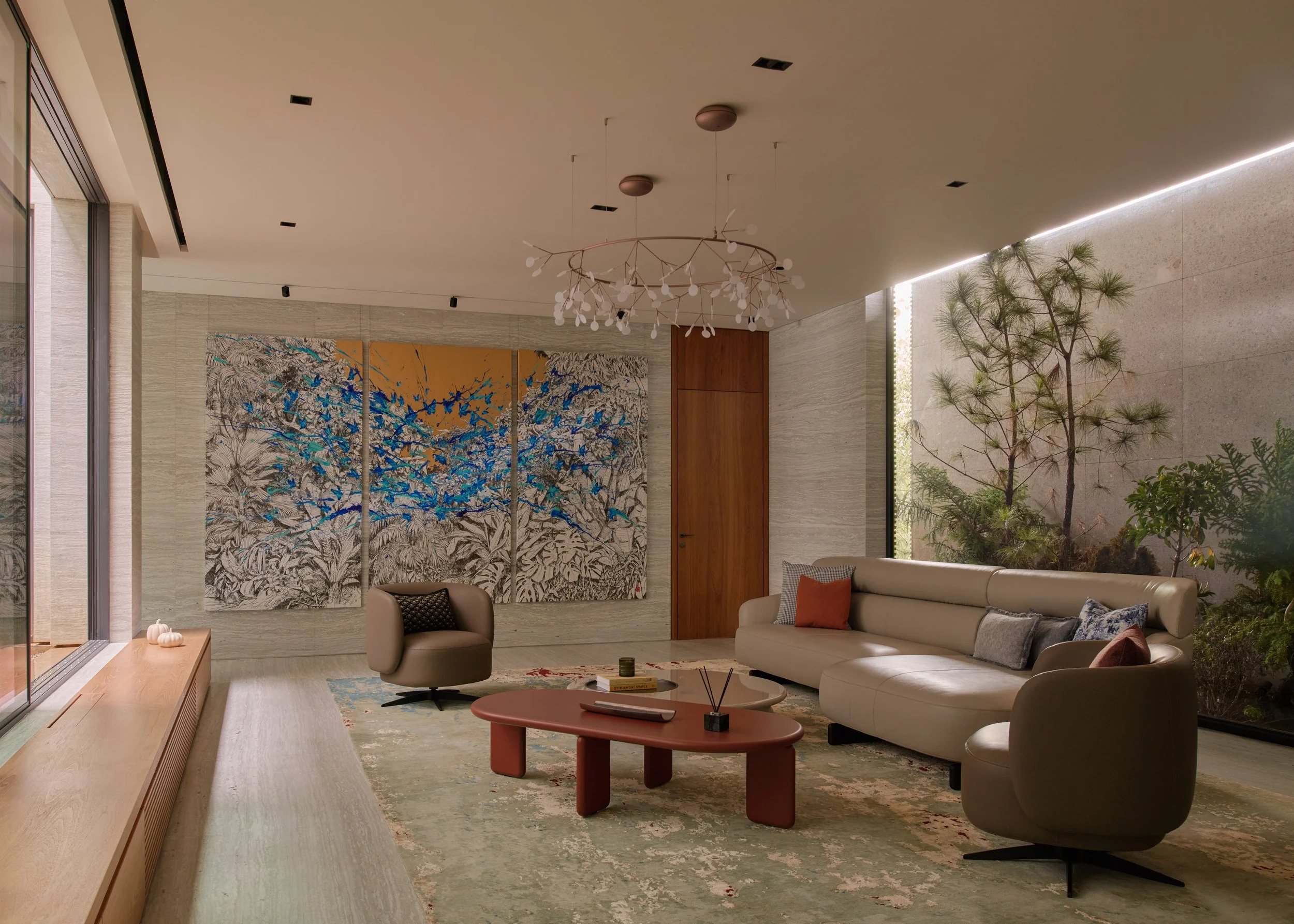
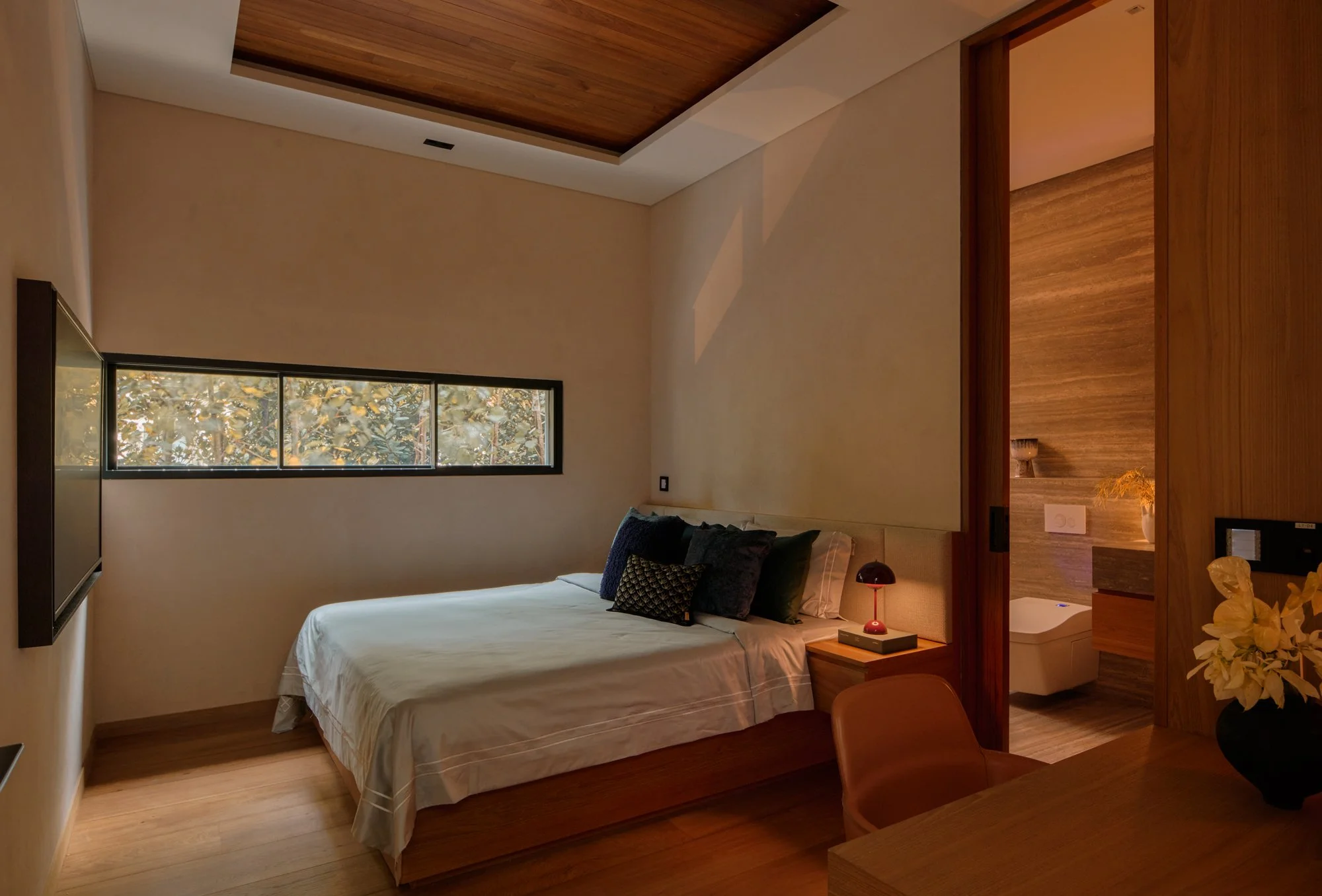
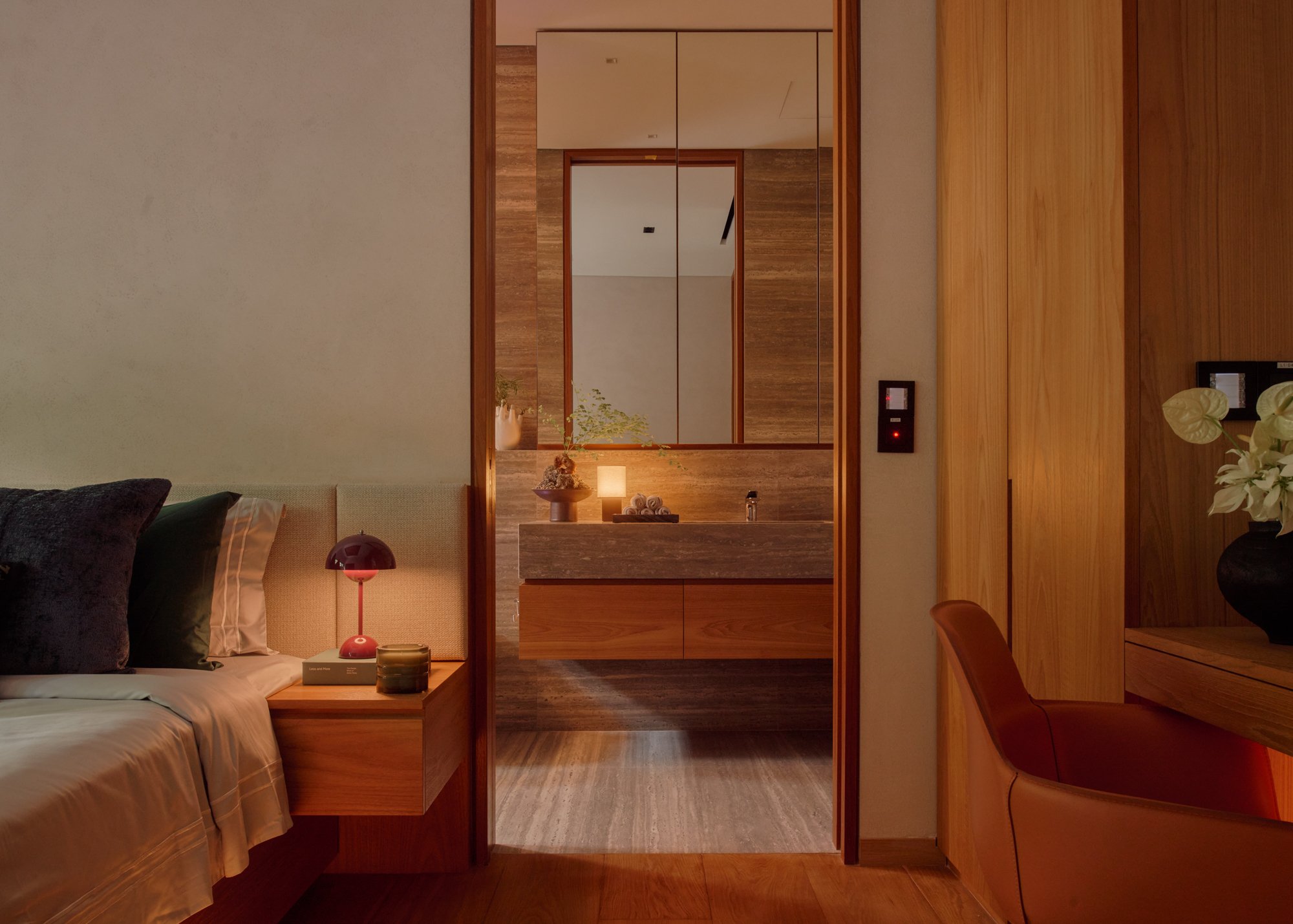
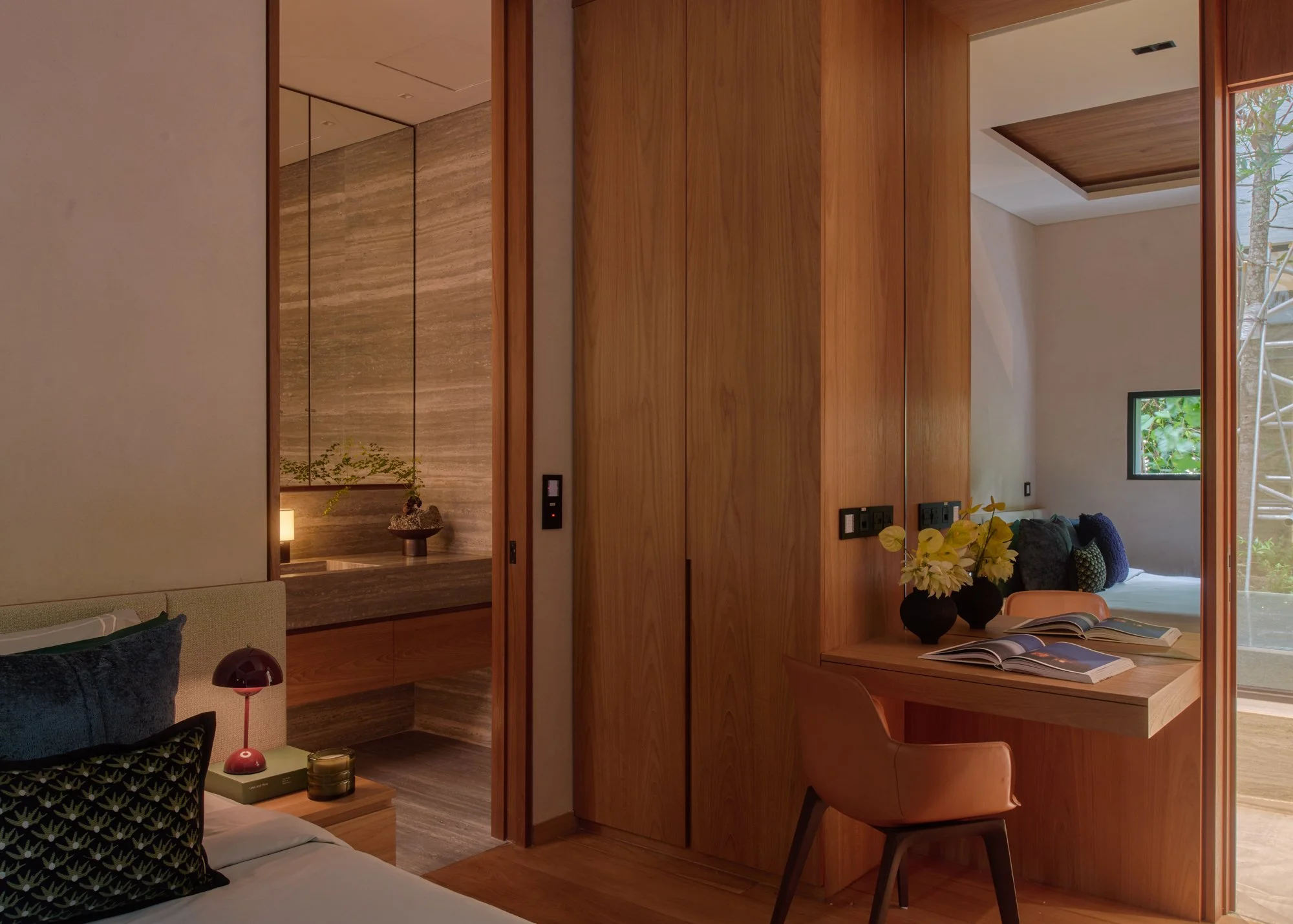
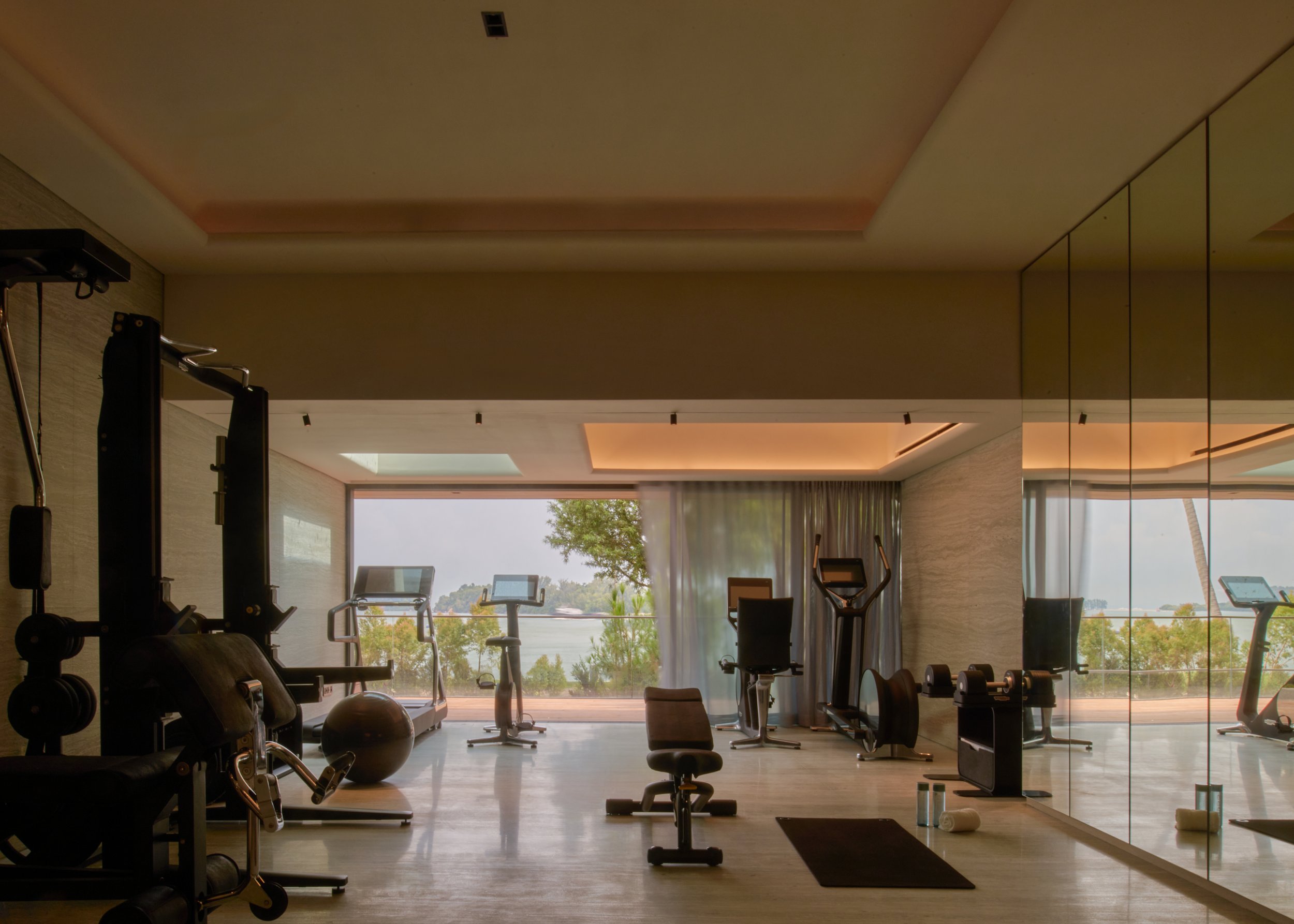
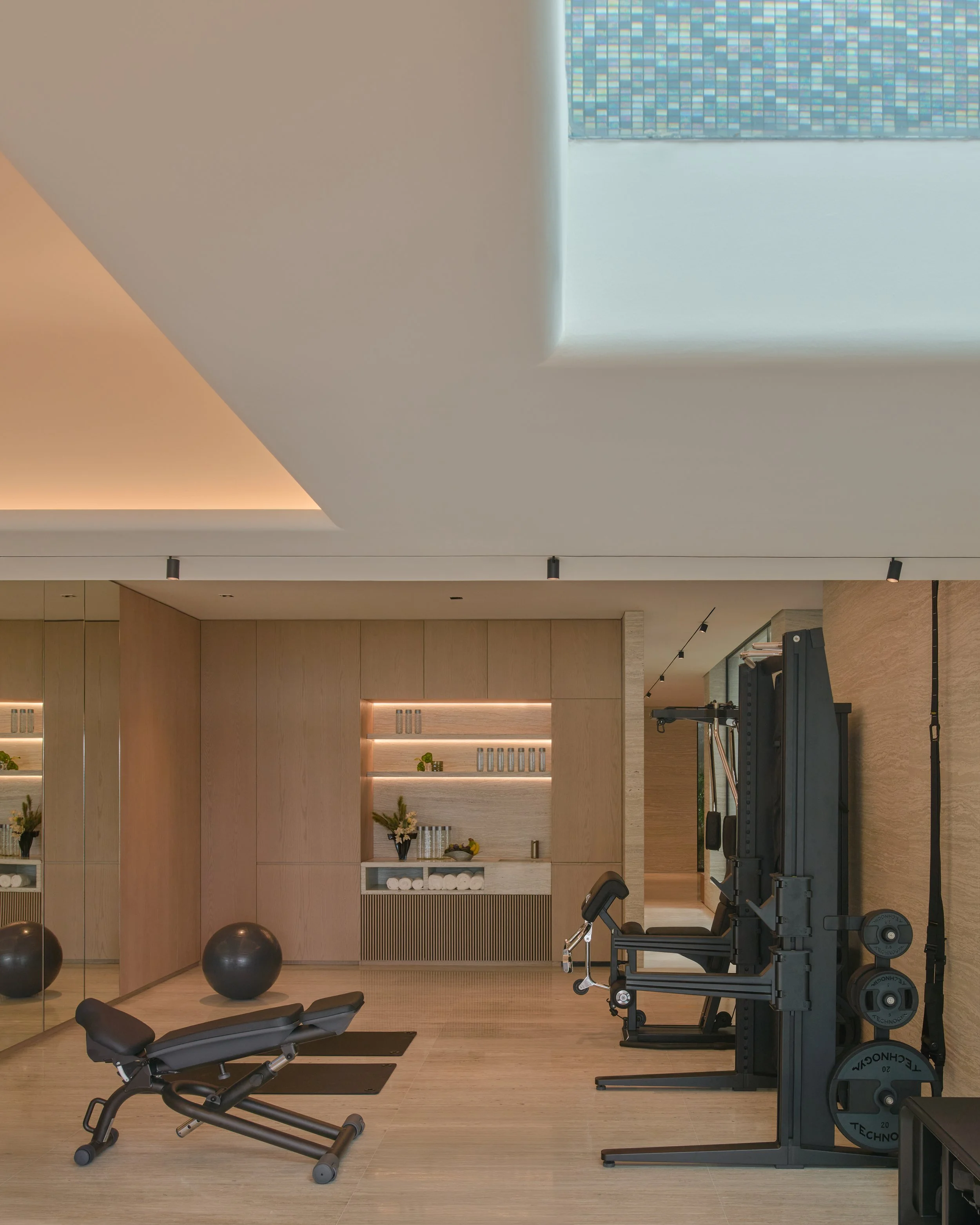
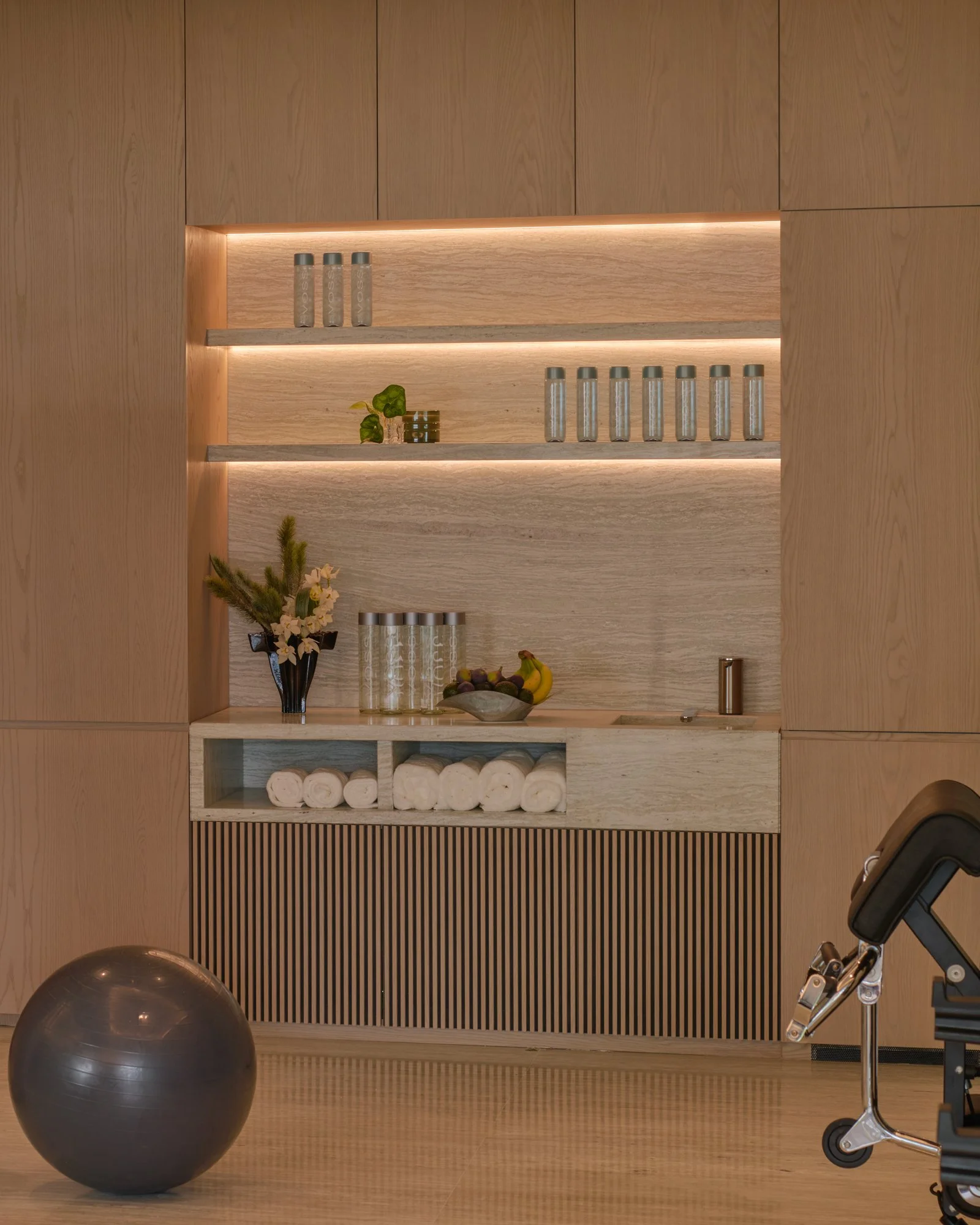
Within this base lie the children’s bedrooms, guest rooms and gym. Despite the limited outward openings, the interior remains bright and naturally ventilated through a central courtyard organised within a disciplined nine-grid plan. Anchored by a single tree whose crown rises through the height of the house, the courtyard introduces light, air and greenery deep into the stone base, establishing an inward landscape that balances the outward presence of the sea.
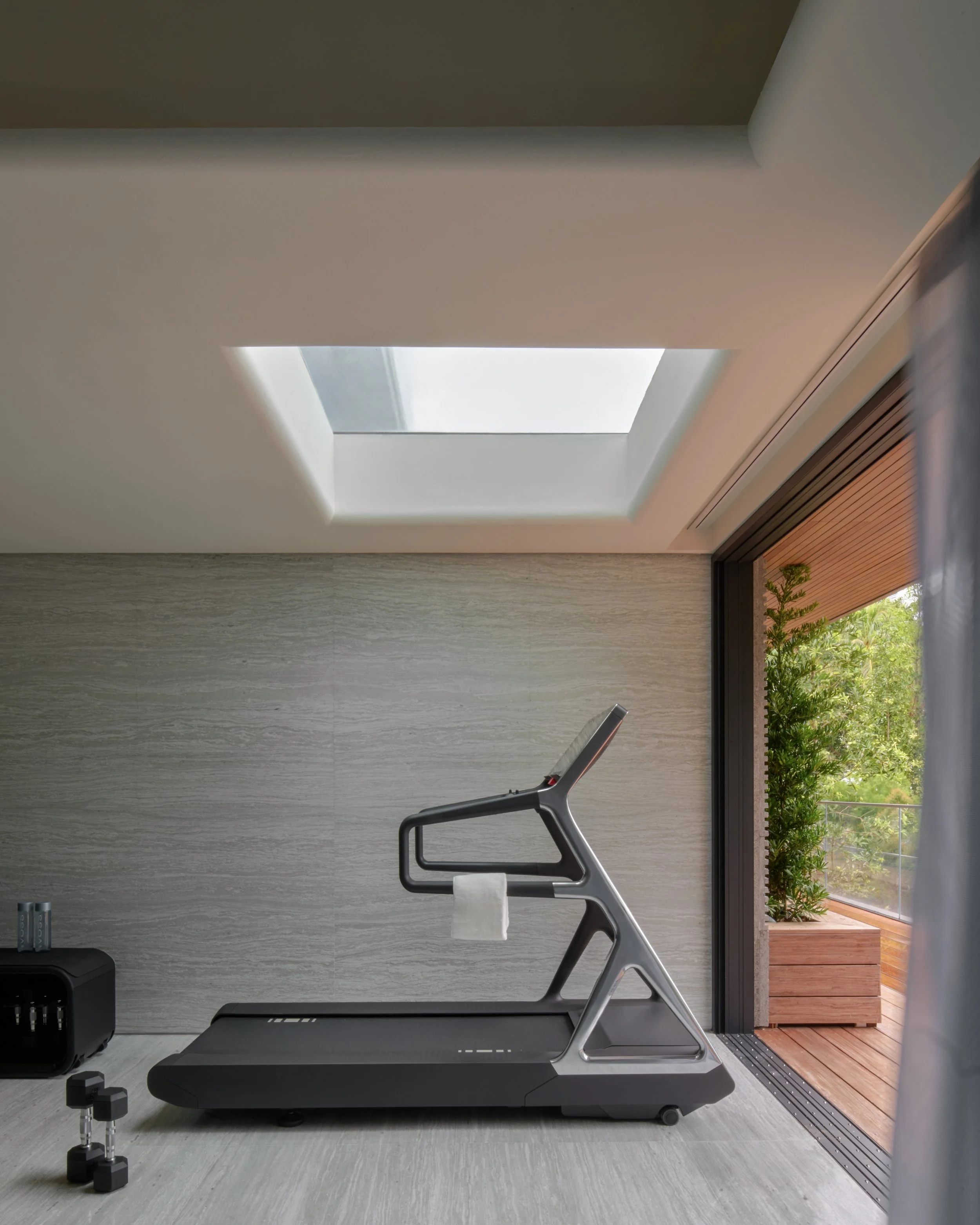
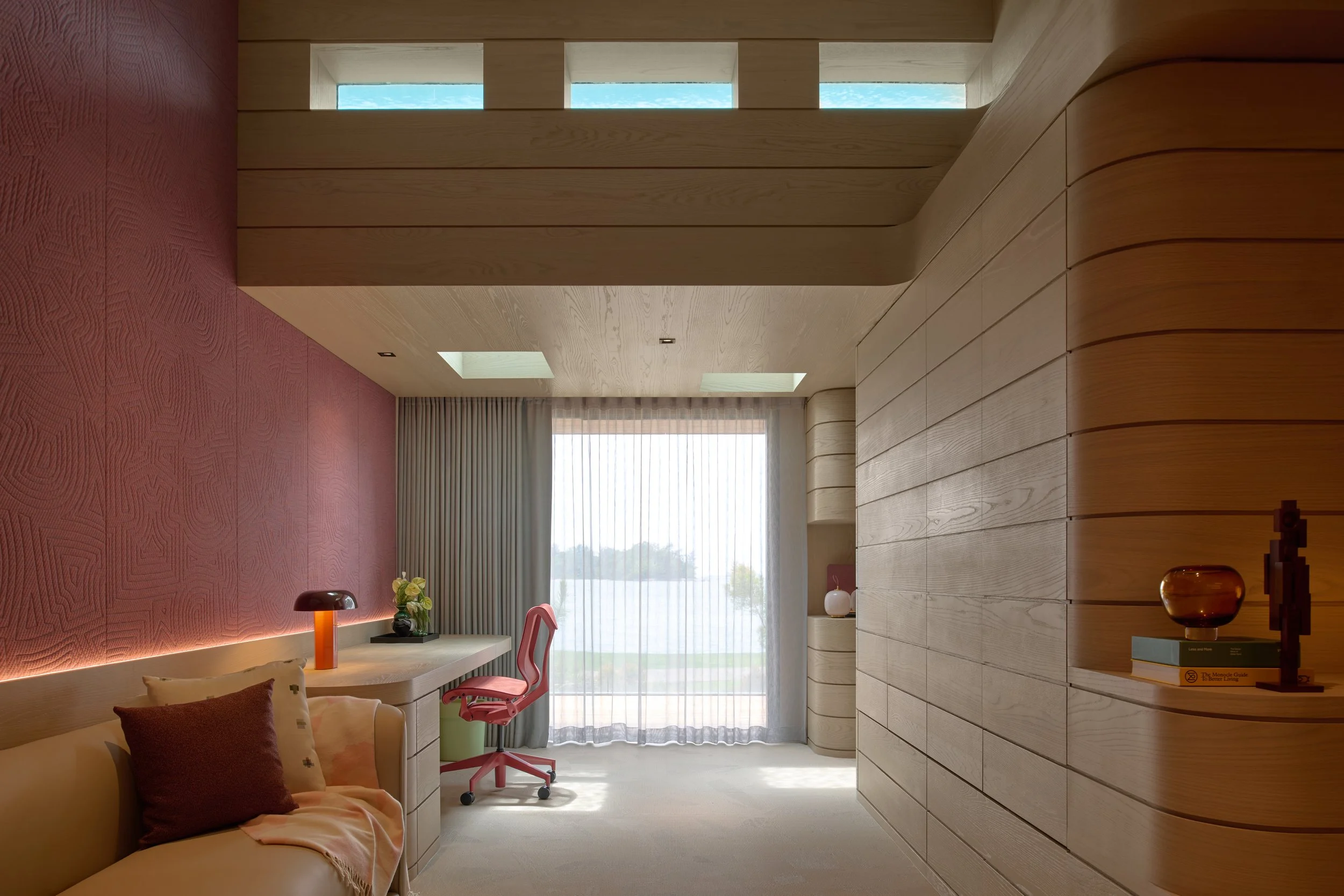
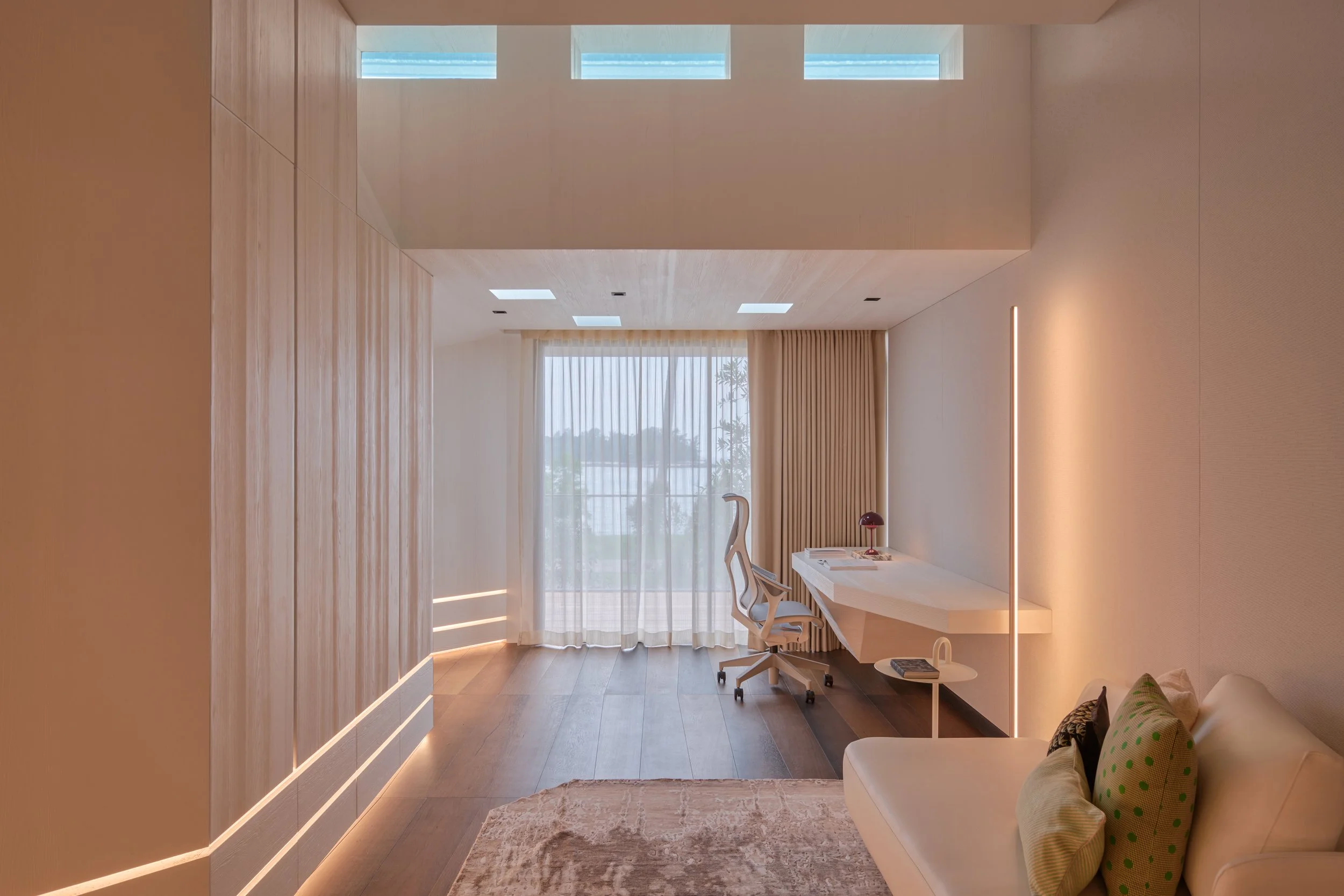
Acrylic skylights beneath the swimming pool allow sunlight to pass through water, casting rippled reflections into the rooms below.
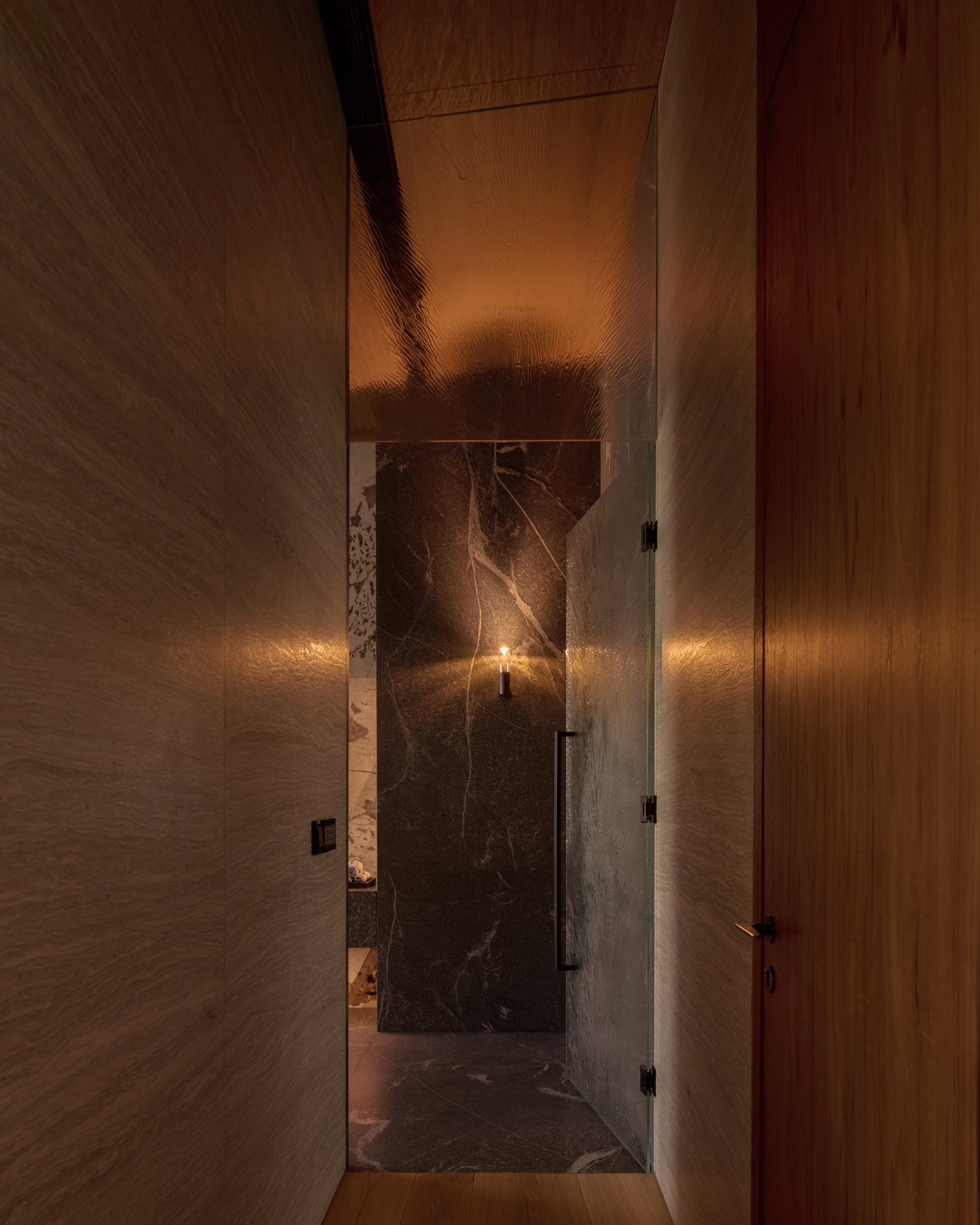
An unexpected phenomenon further connects these spaces to the ocean beyond. Across the ceilings and upper walls, soft rippled patterns of light drift and shimmer throughout the day. The effect originates from a series of water-filled acrylic skylights and clerestories integrated into the structure above, where sunlight passes through water before entering the rooms below. The filtered light produces a gentle play of reflections that recall the surface of the sea. Even within the protective stone base, the presence of water and horizon is subtly felt.
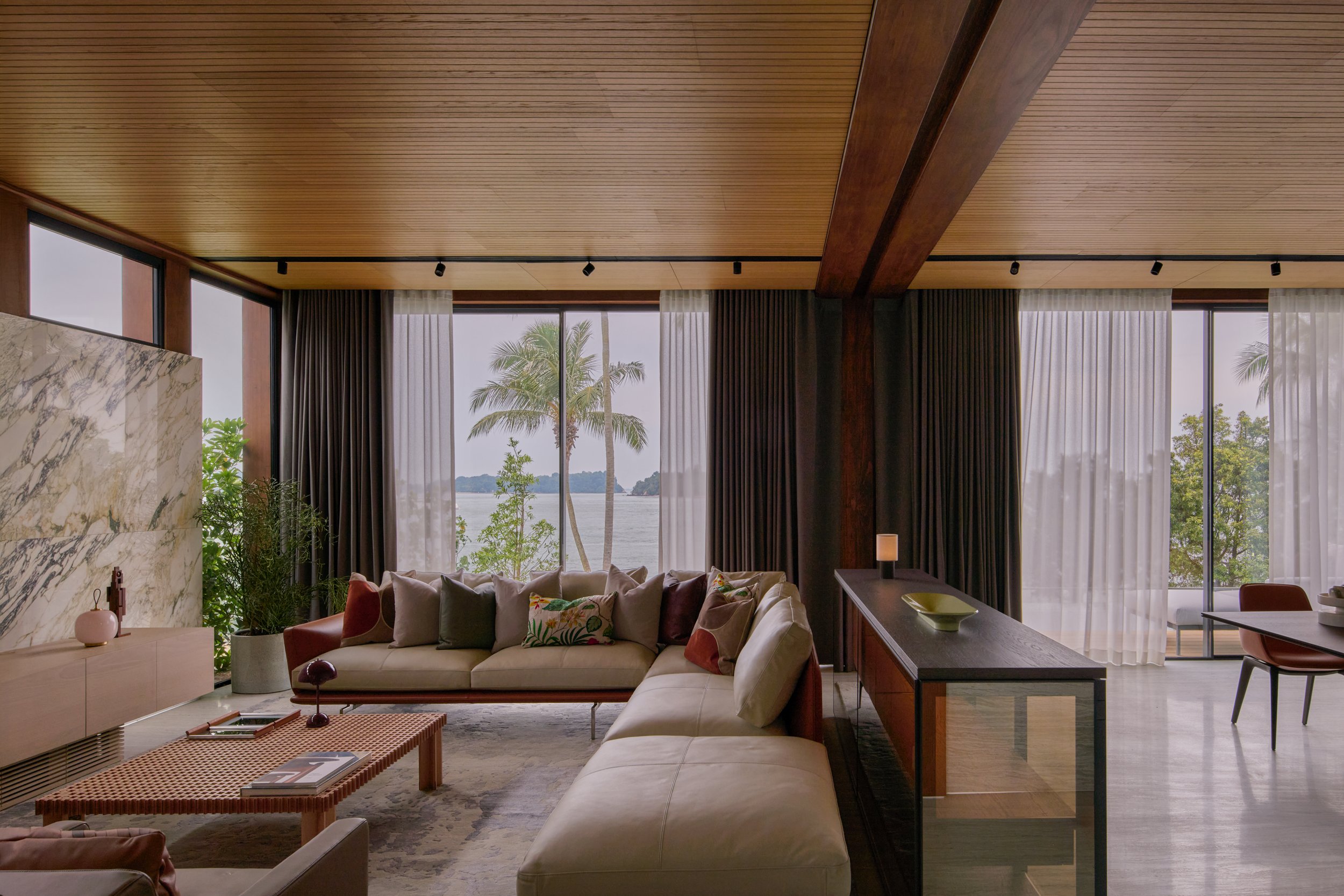
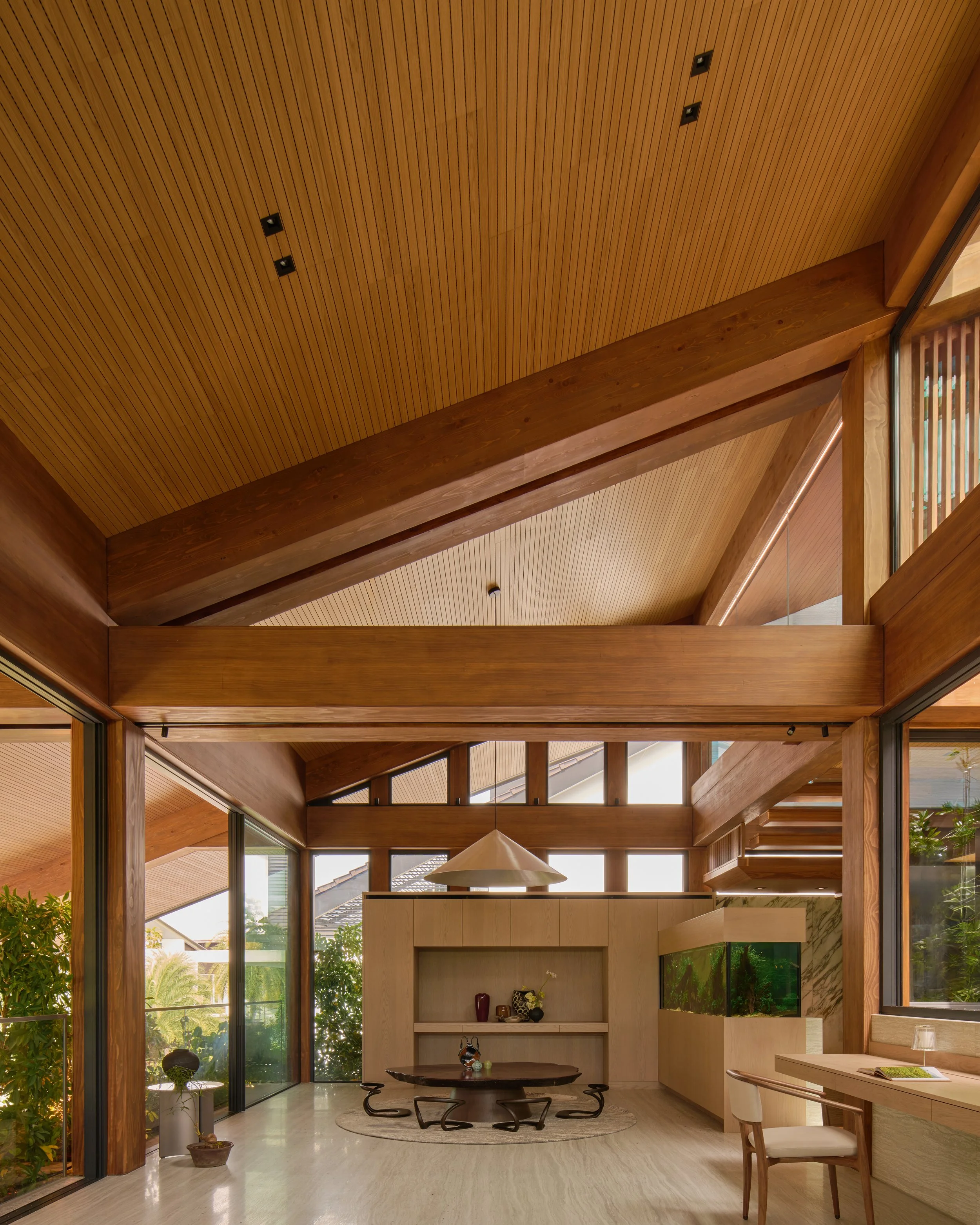
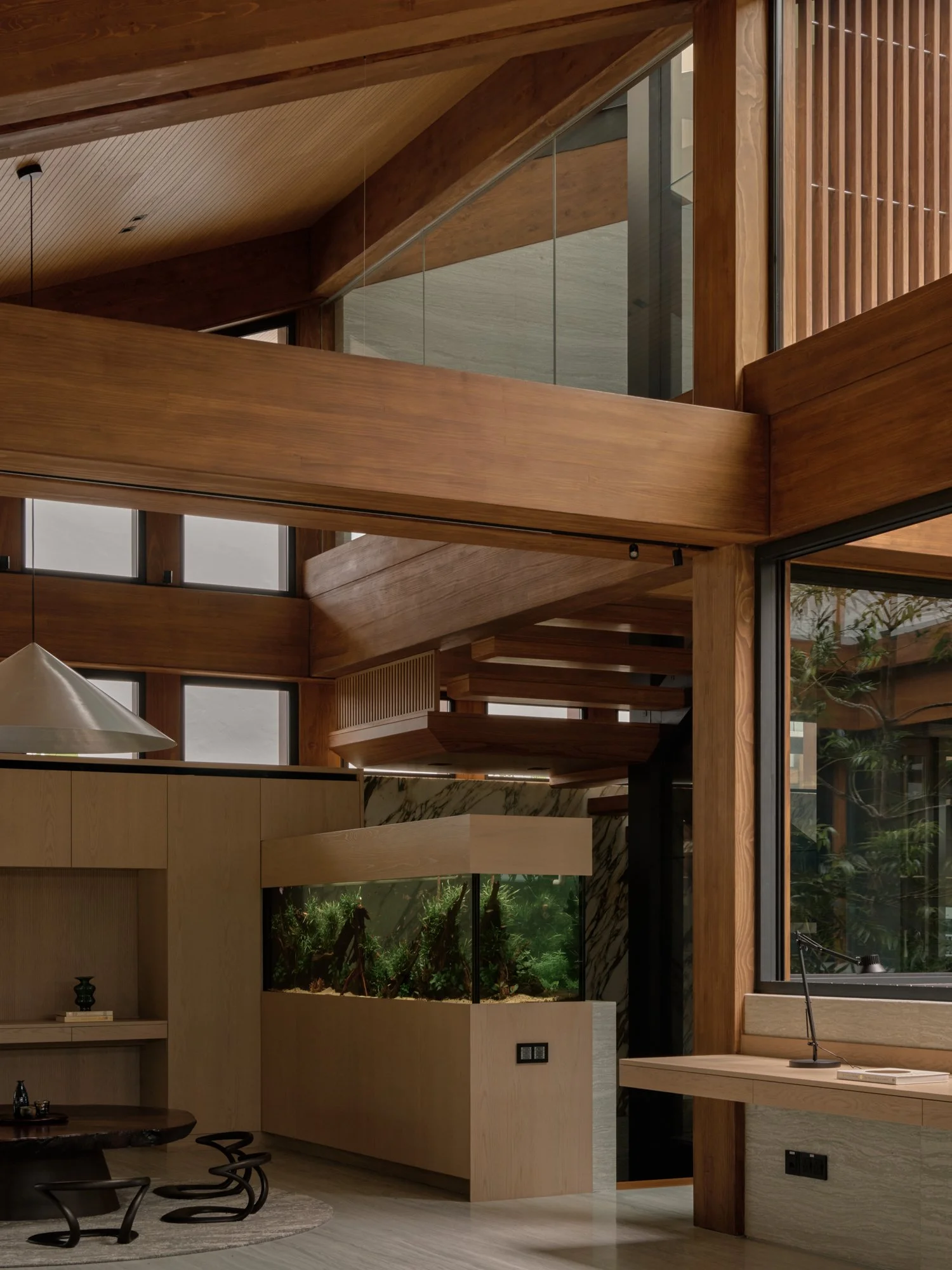
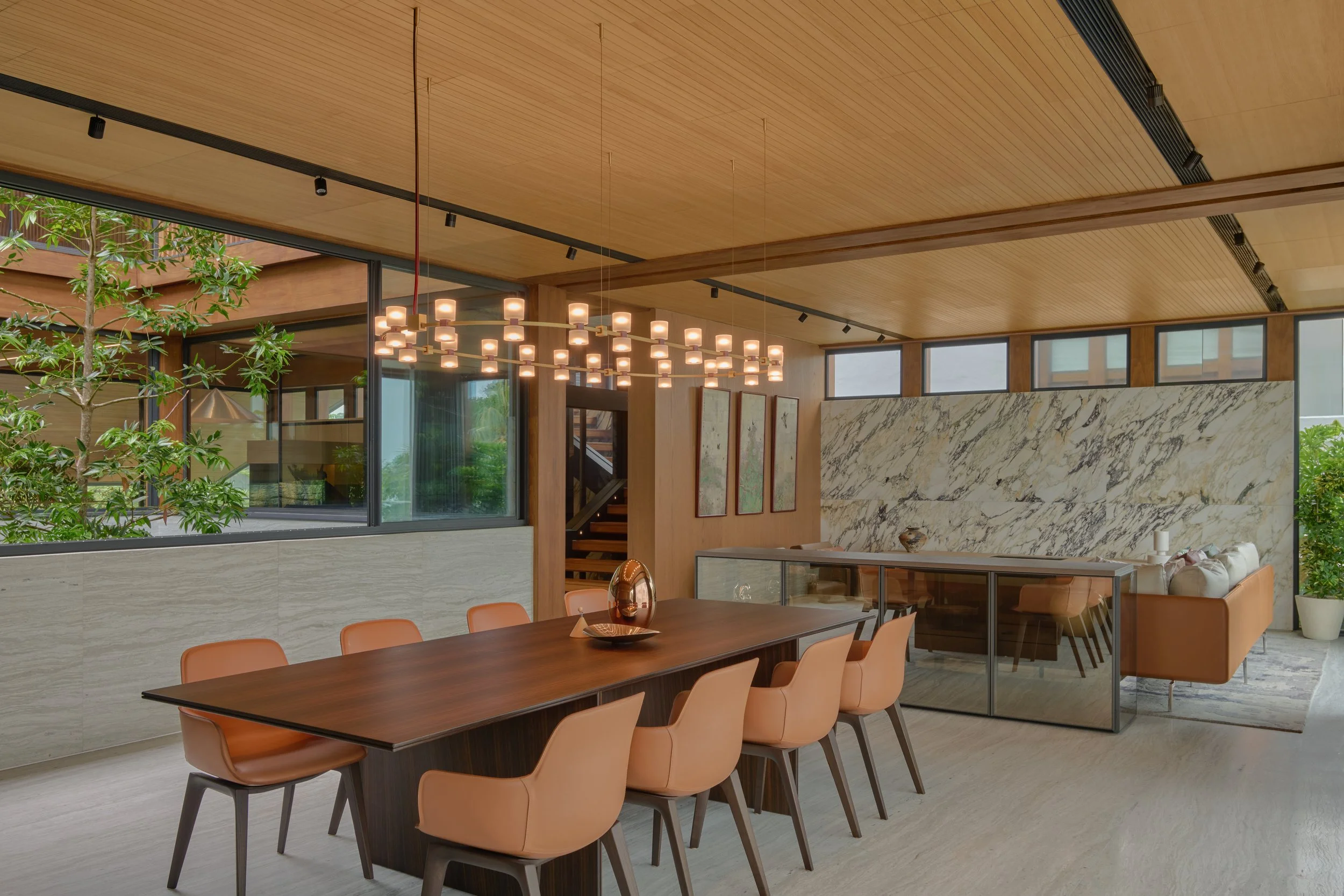
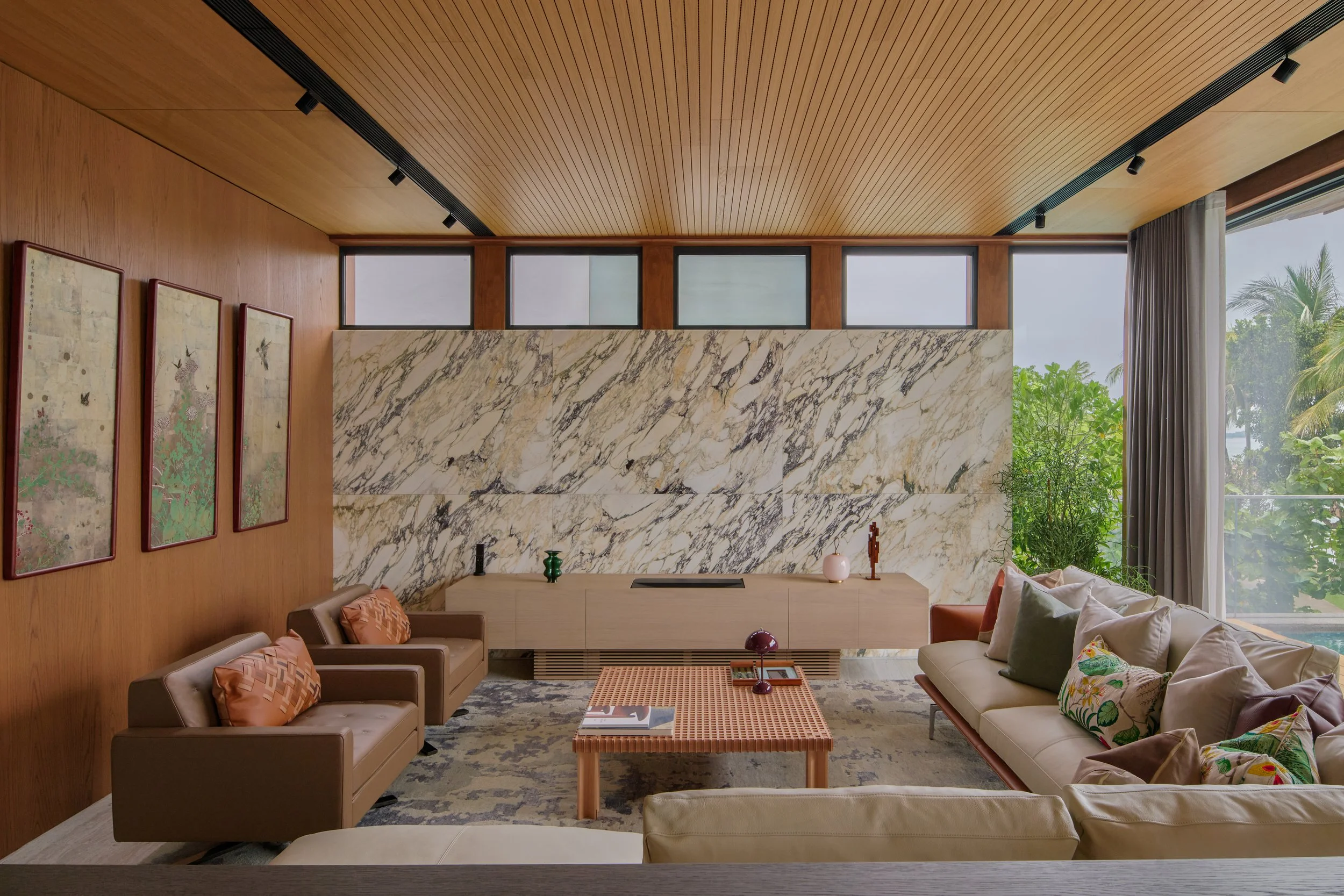
Living and dining spaces occupy an elevated timber pavilion, opening towards the sea while maintaining privacy from the public boardwalk.
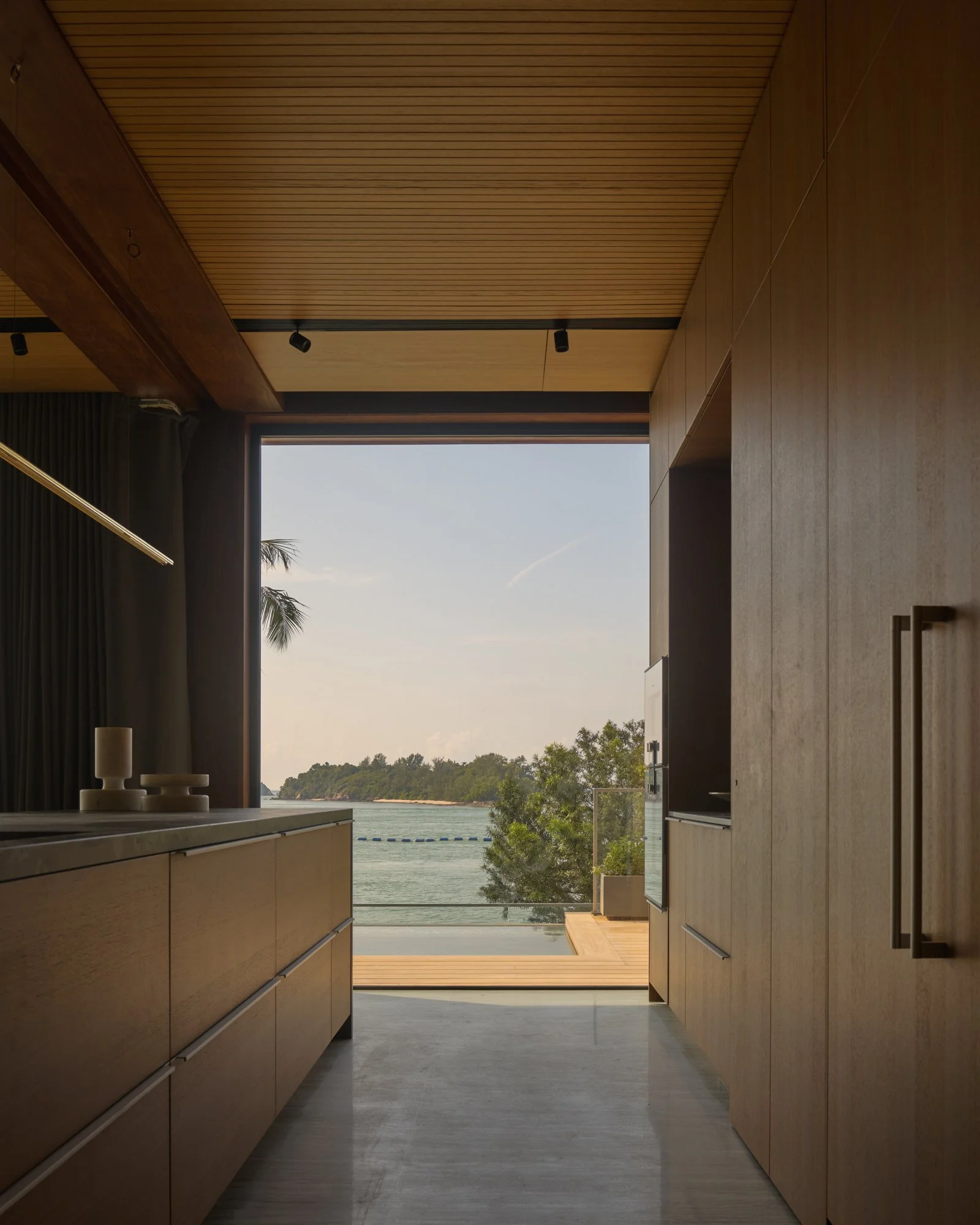
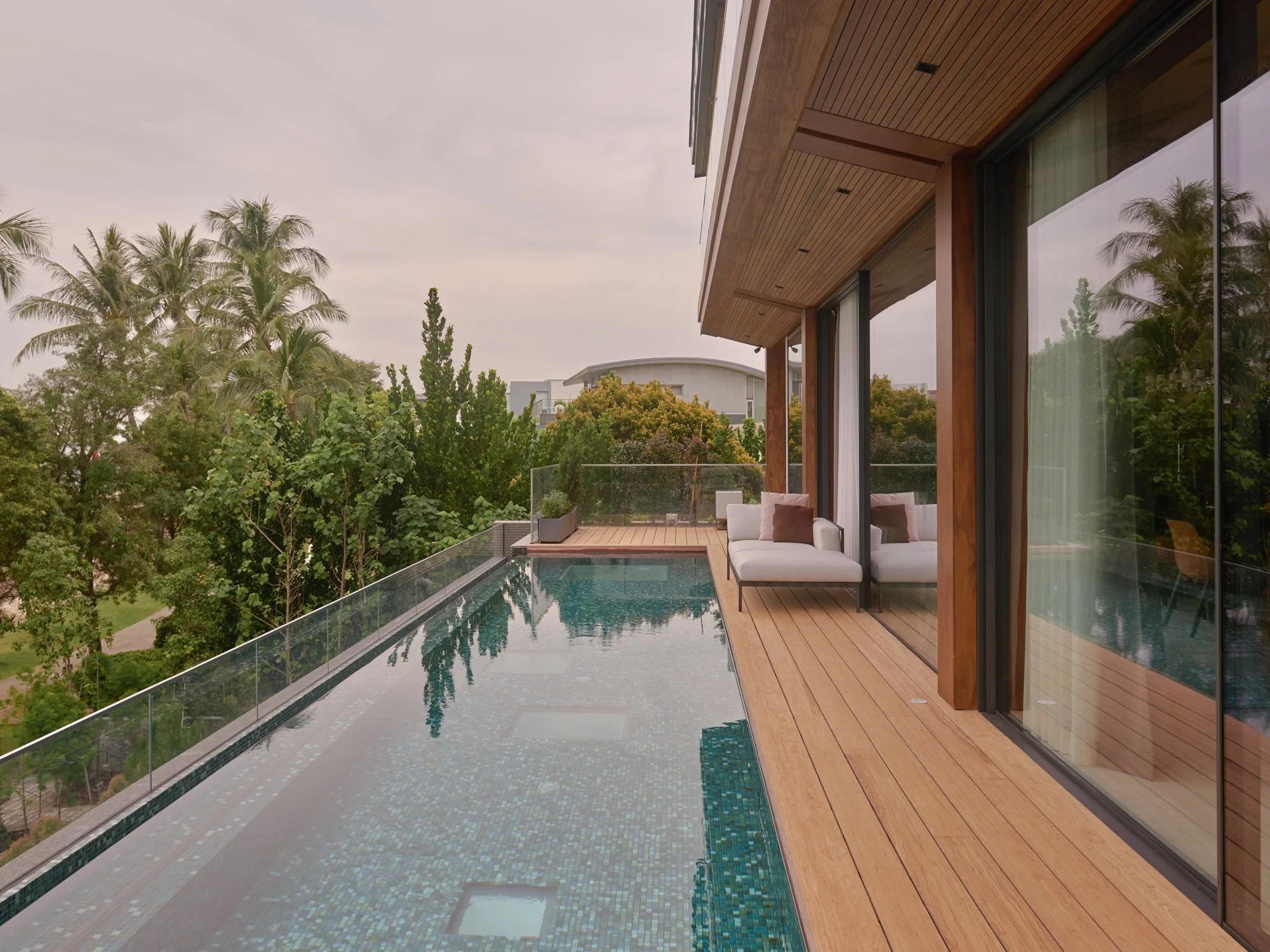
The swimming pool aligns visually with the sea beyond, extending the horizon into the interior living spaces.
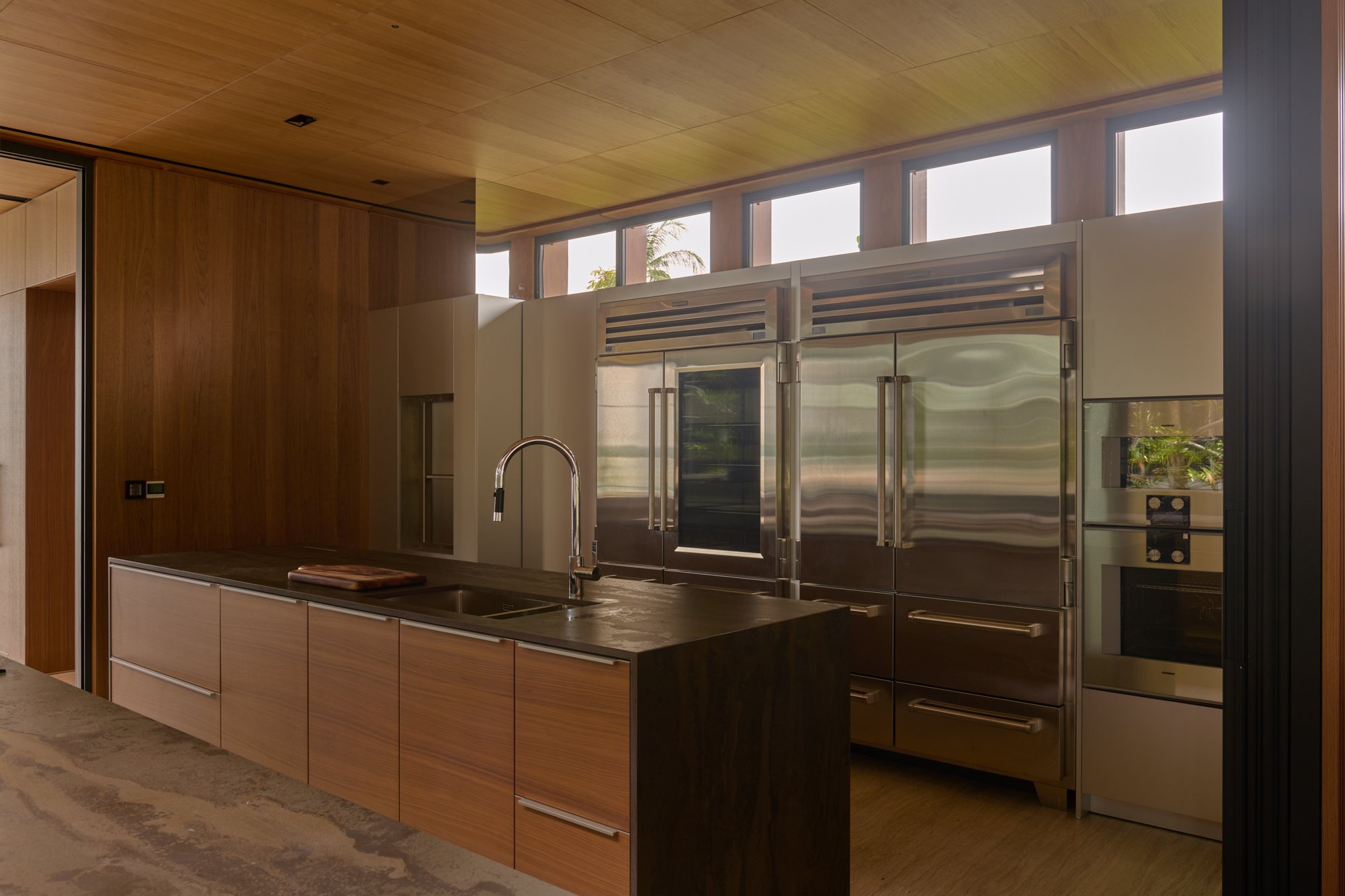
Above this grounded datum rests a lightweight pavilion constructed entirely in Mass Engineered Timber (MET). The second level houses the communal spaces — living, dining, dry and wet kitchens and family lounge — together with an elevated infinity-edge swimming pool. Positioned directly in front of the living areas, the water surface aligns visually with the sea beyond, extending the horizon into the interior space.
By lifting the communal programme above the ground plane, openness is displaced upward where distance naturally affords privacy. The house no longer confronts the public promenade directly; instead, it engages the sea from a position of elevation and retreat.
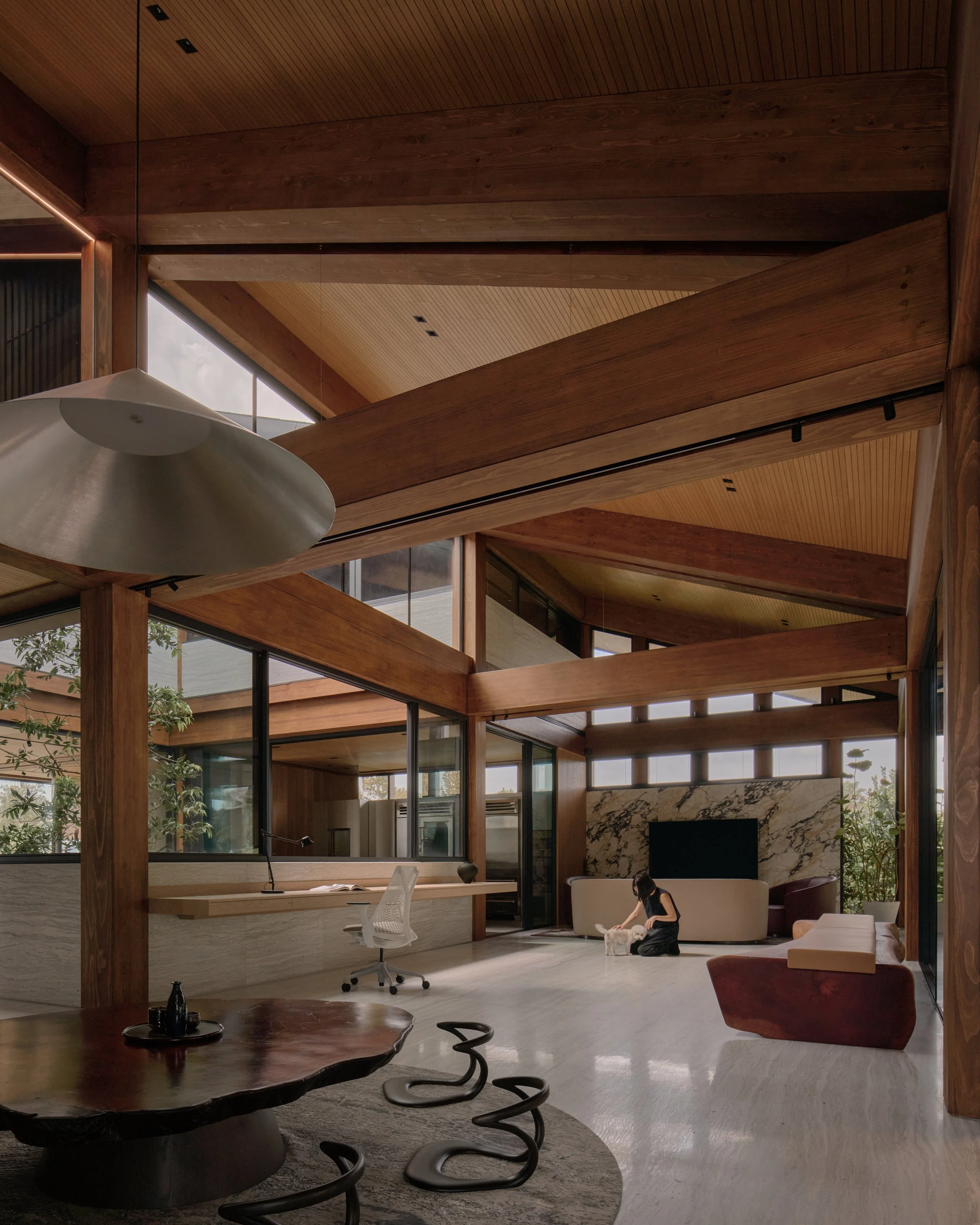
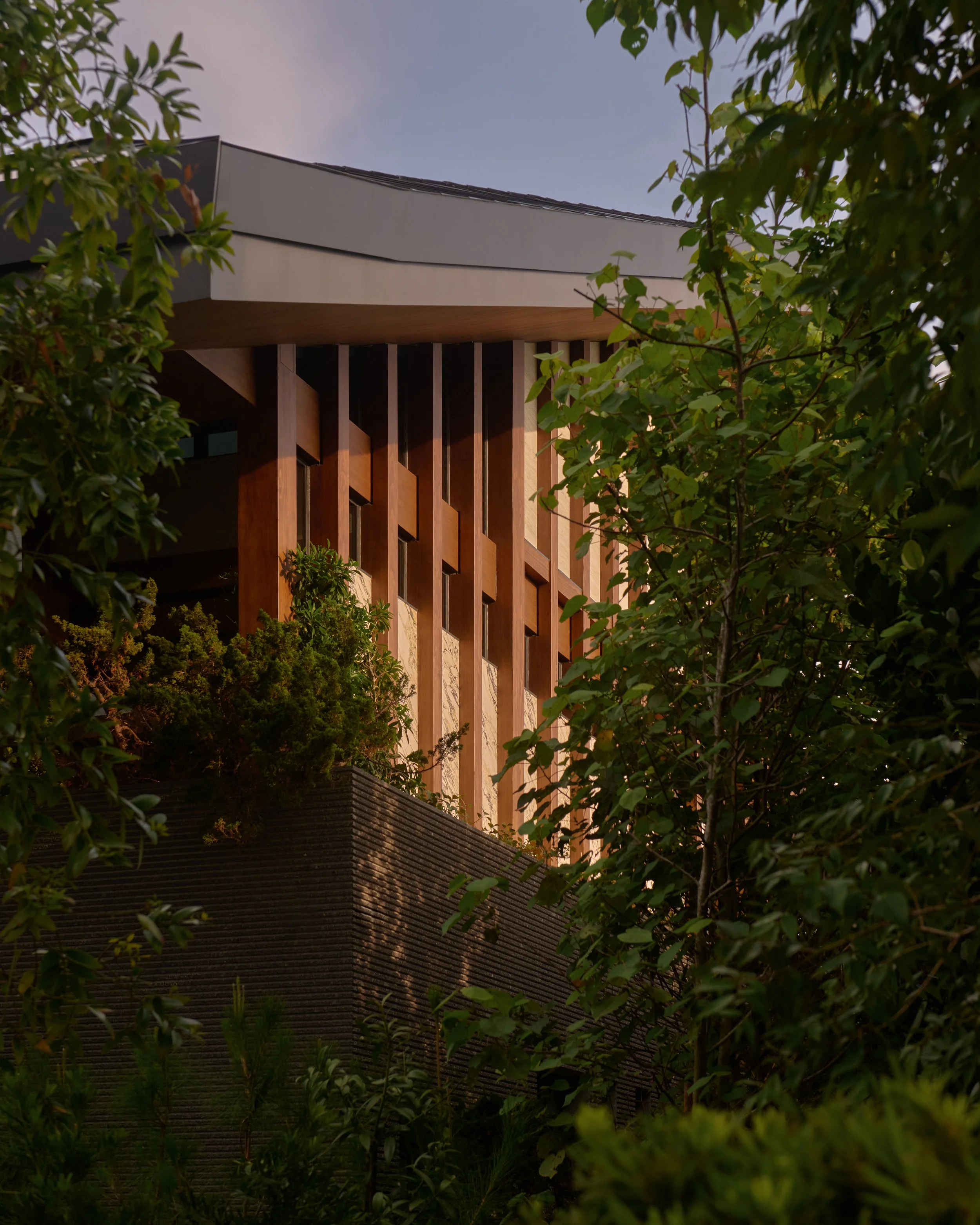
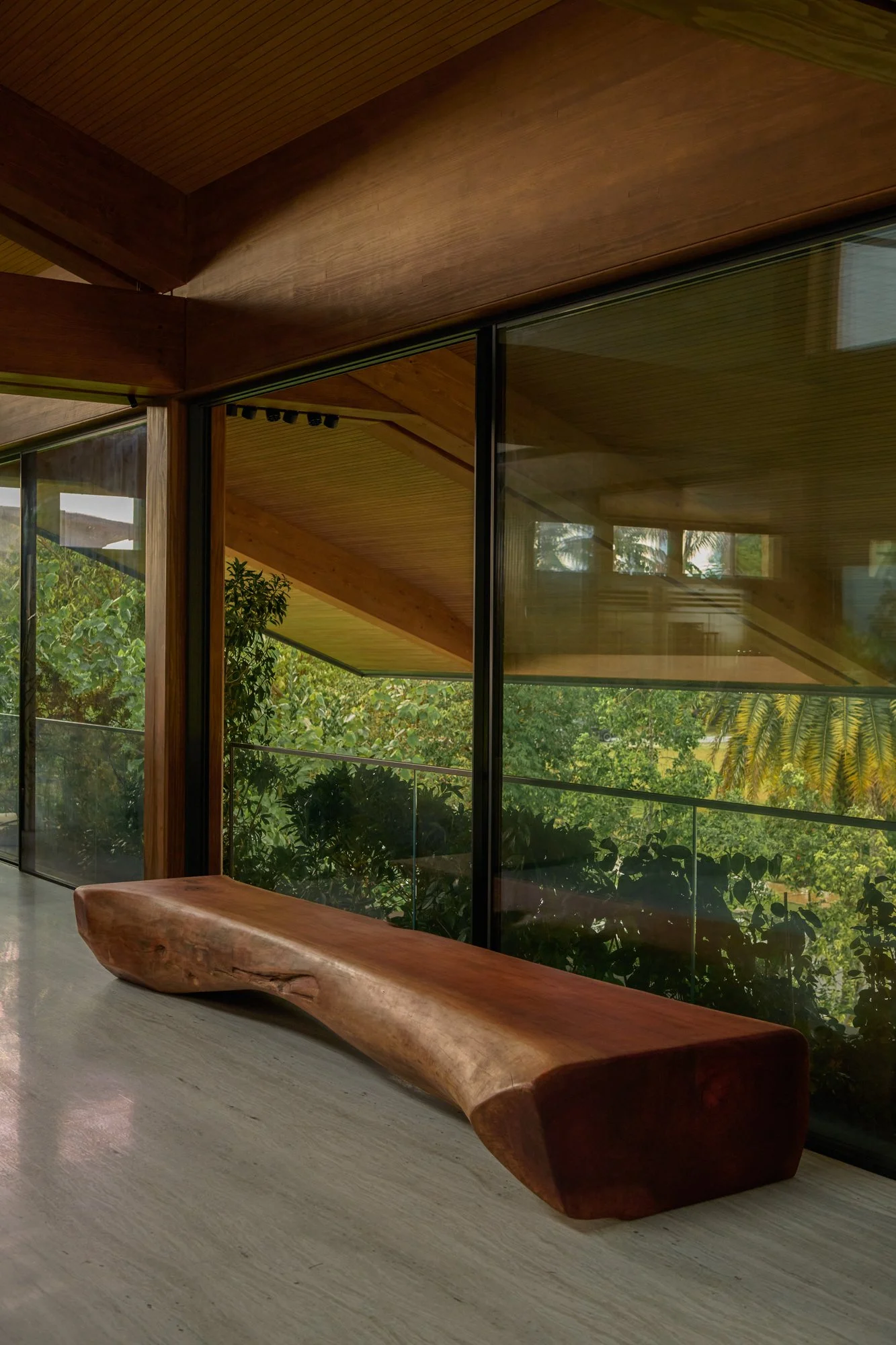
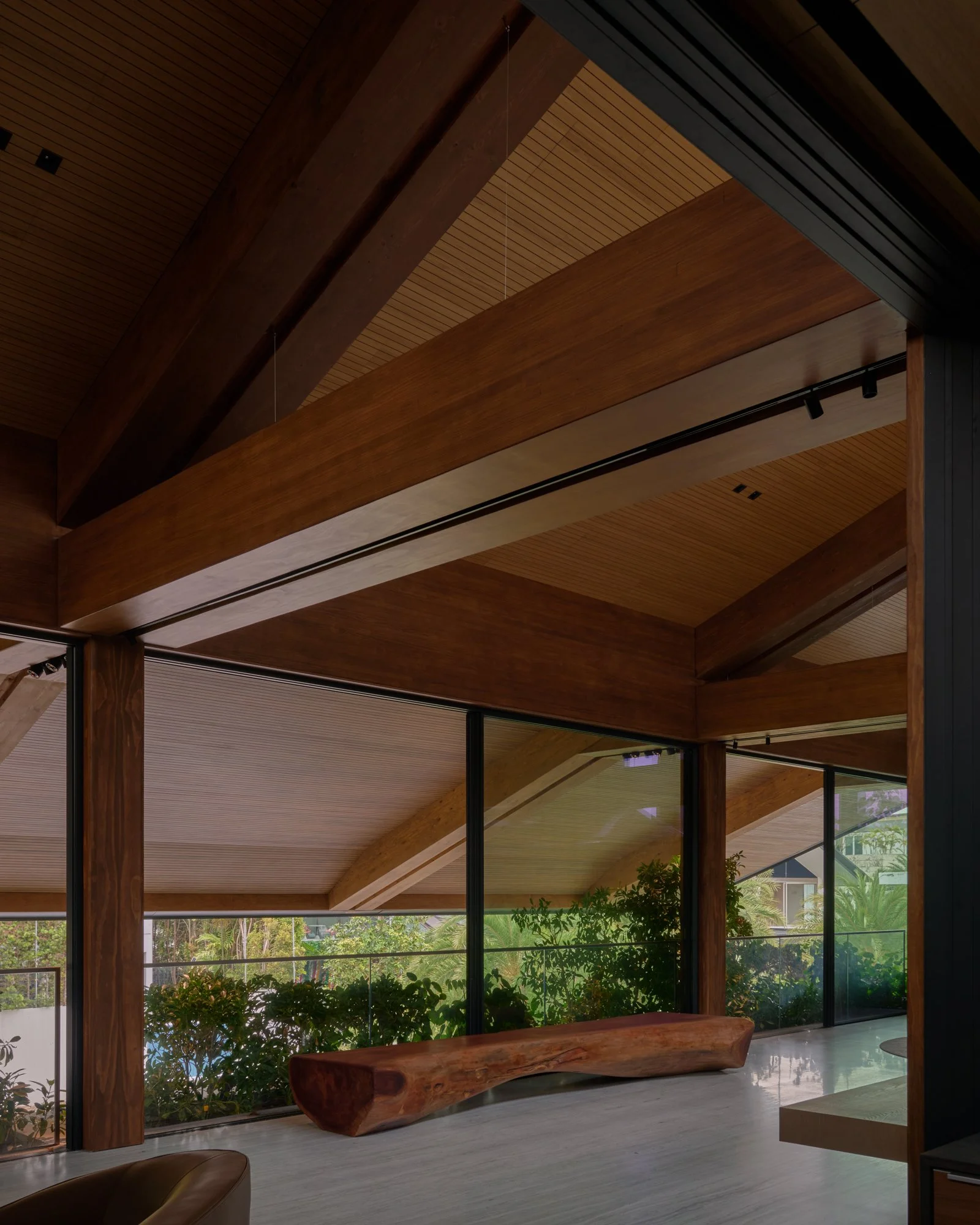
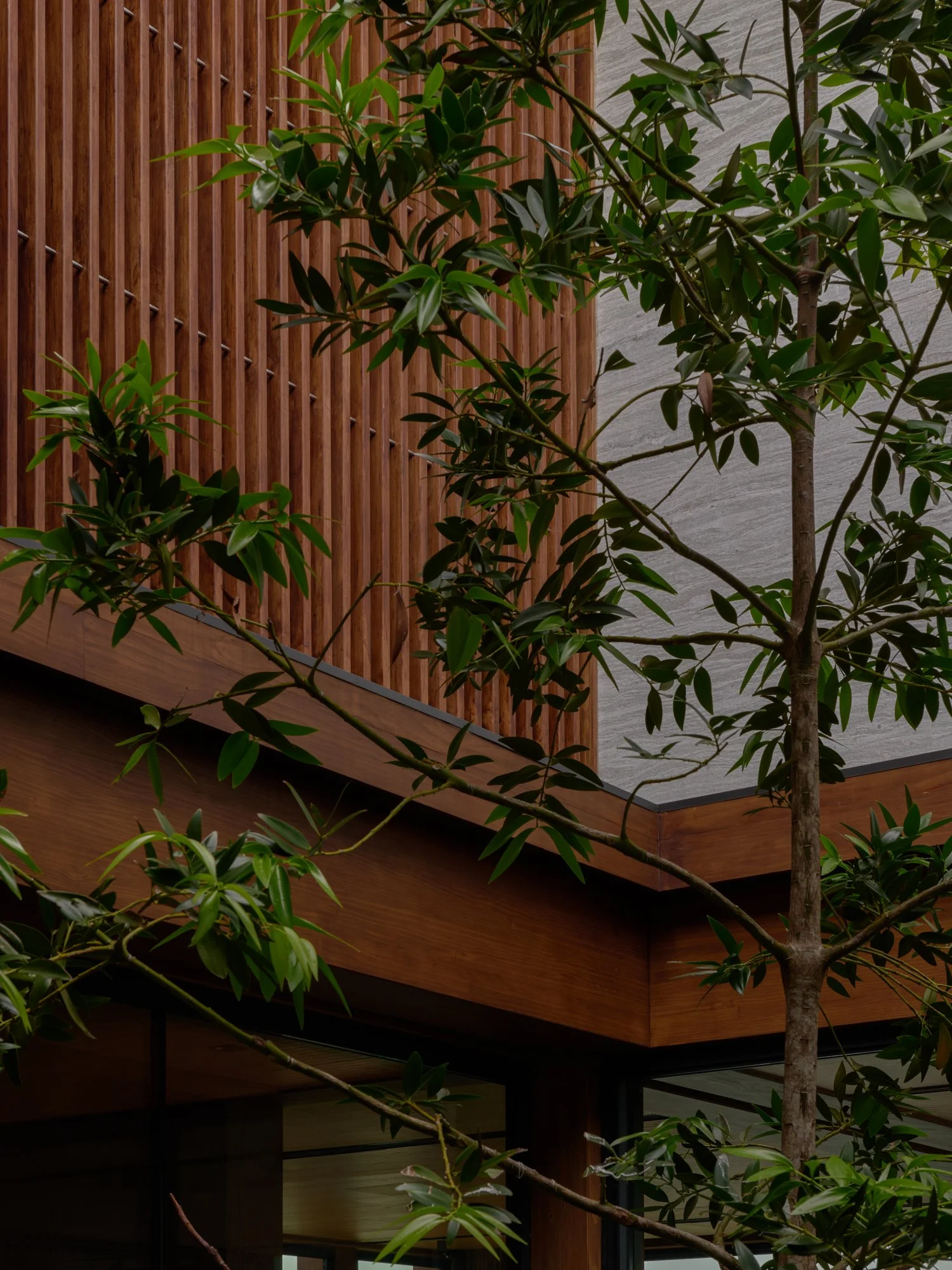
Glulam columns and beams frame the pavilion, expressing the structural logic of the Mass Engineered Timber construction.
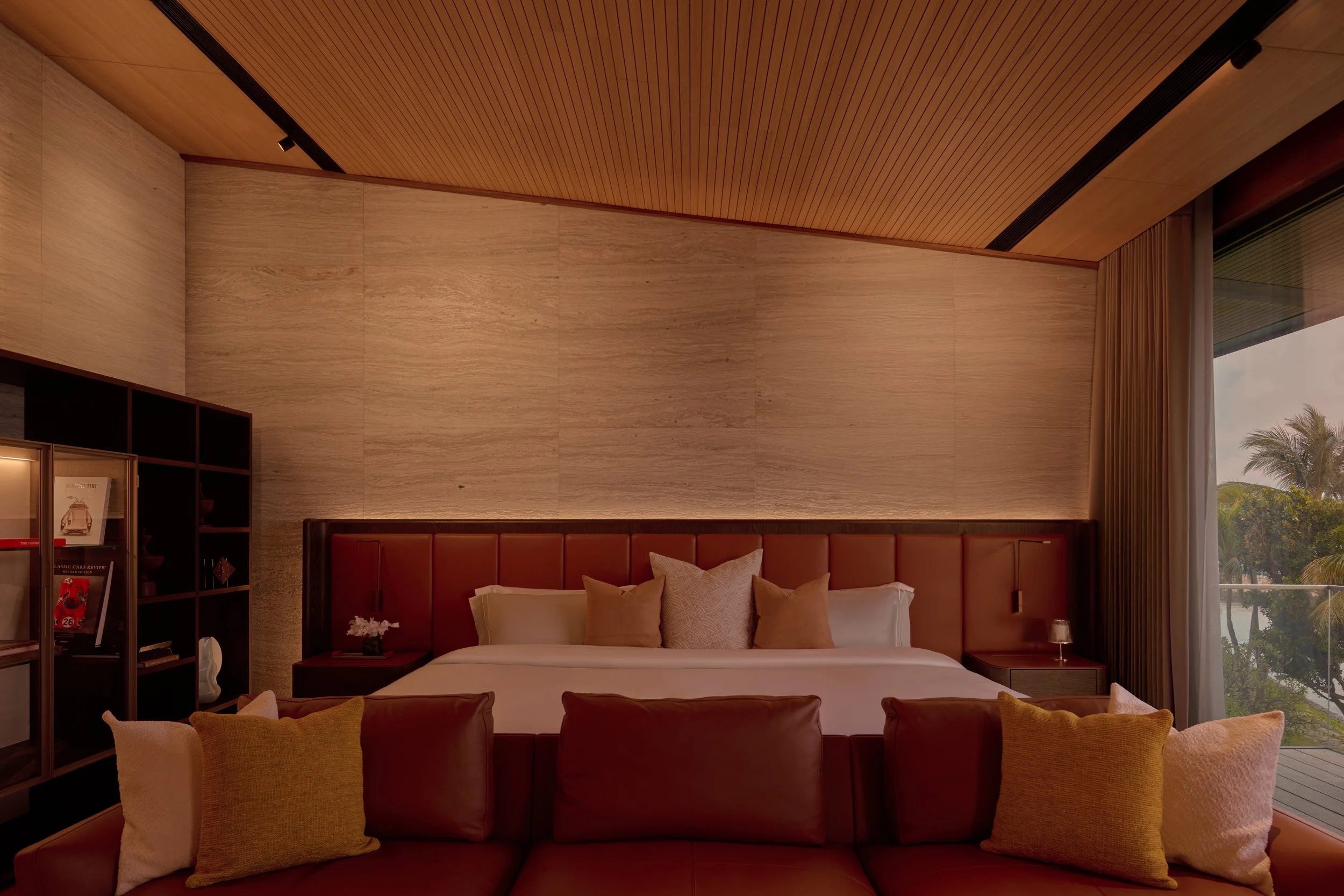
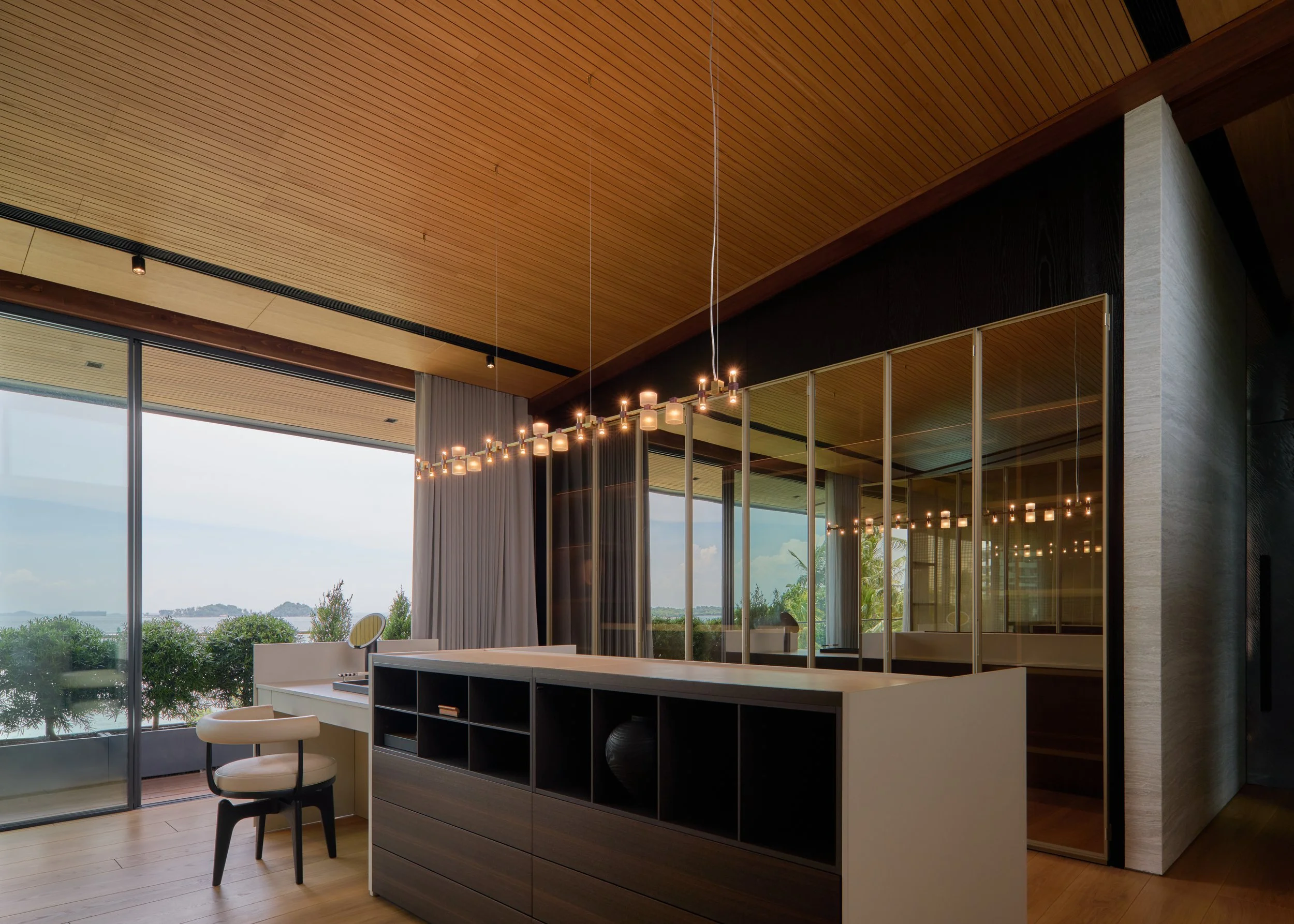
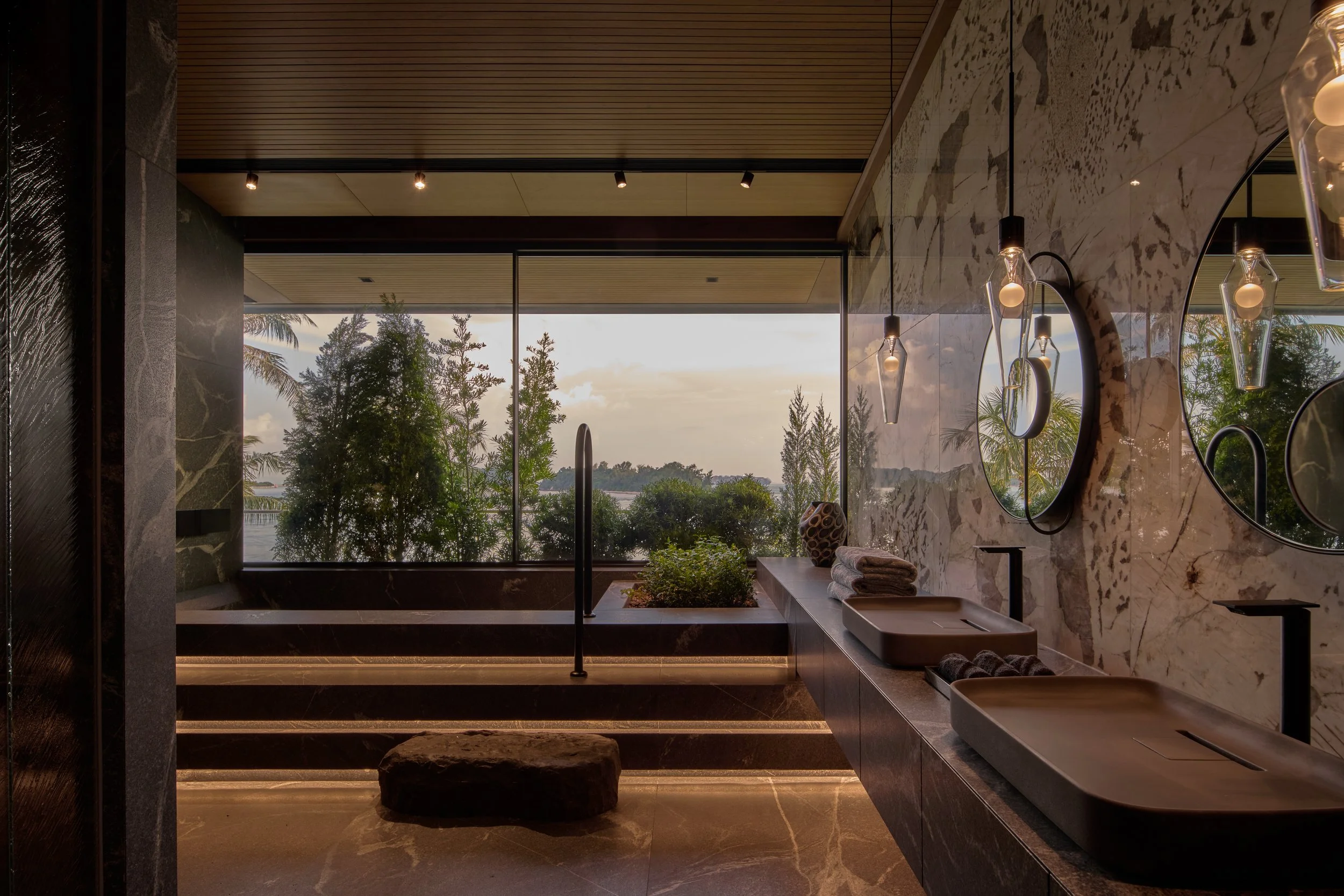
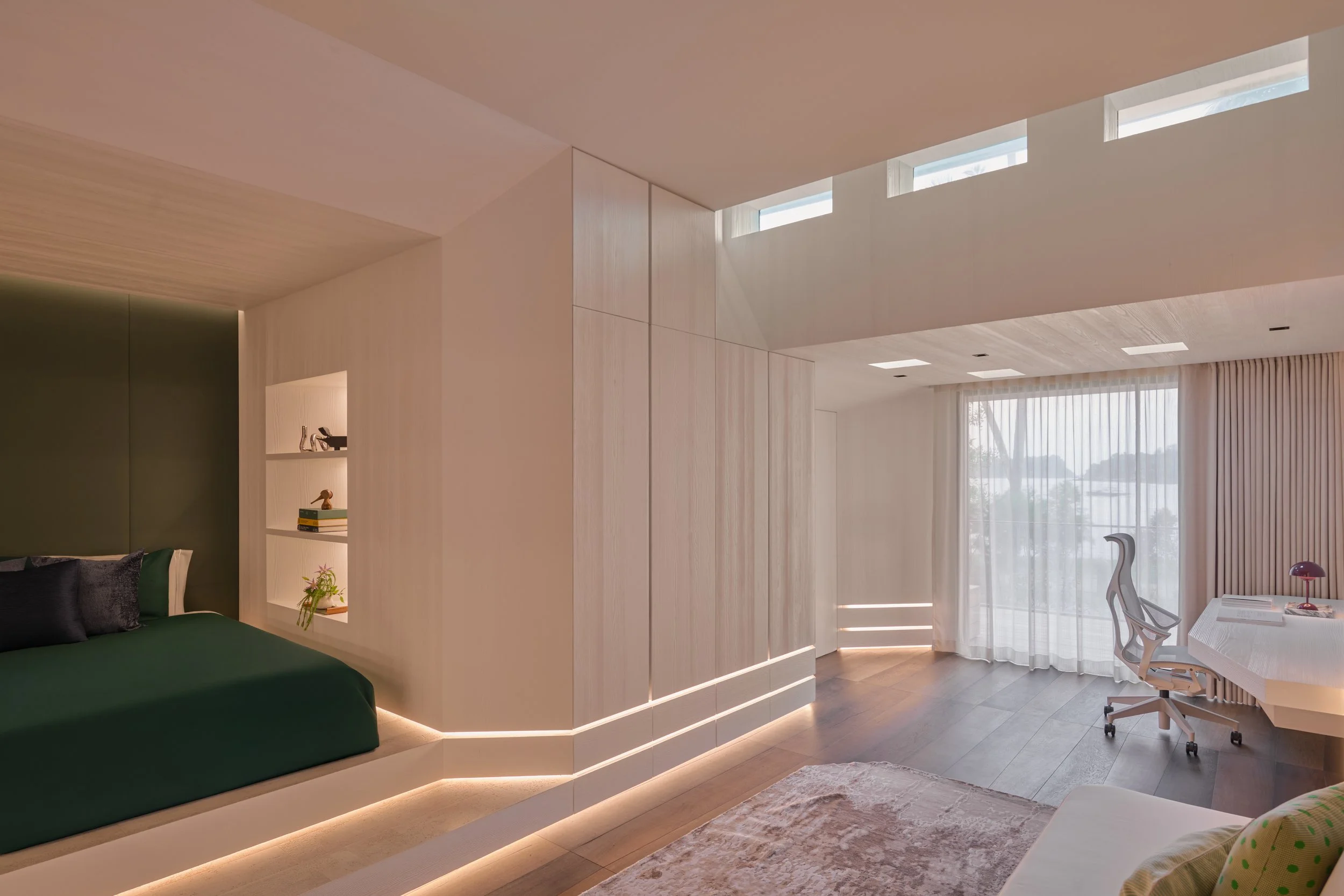
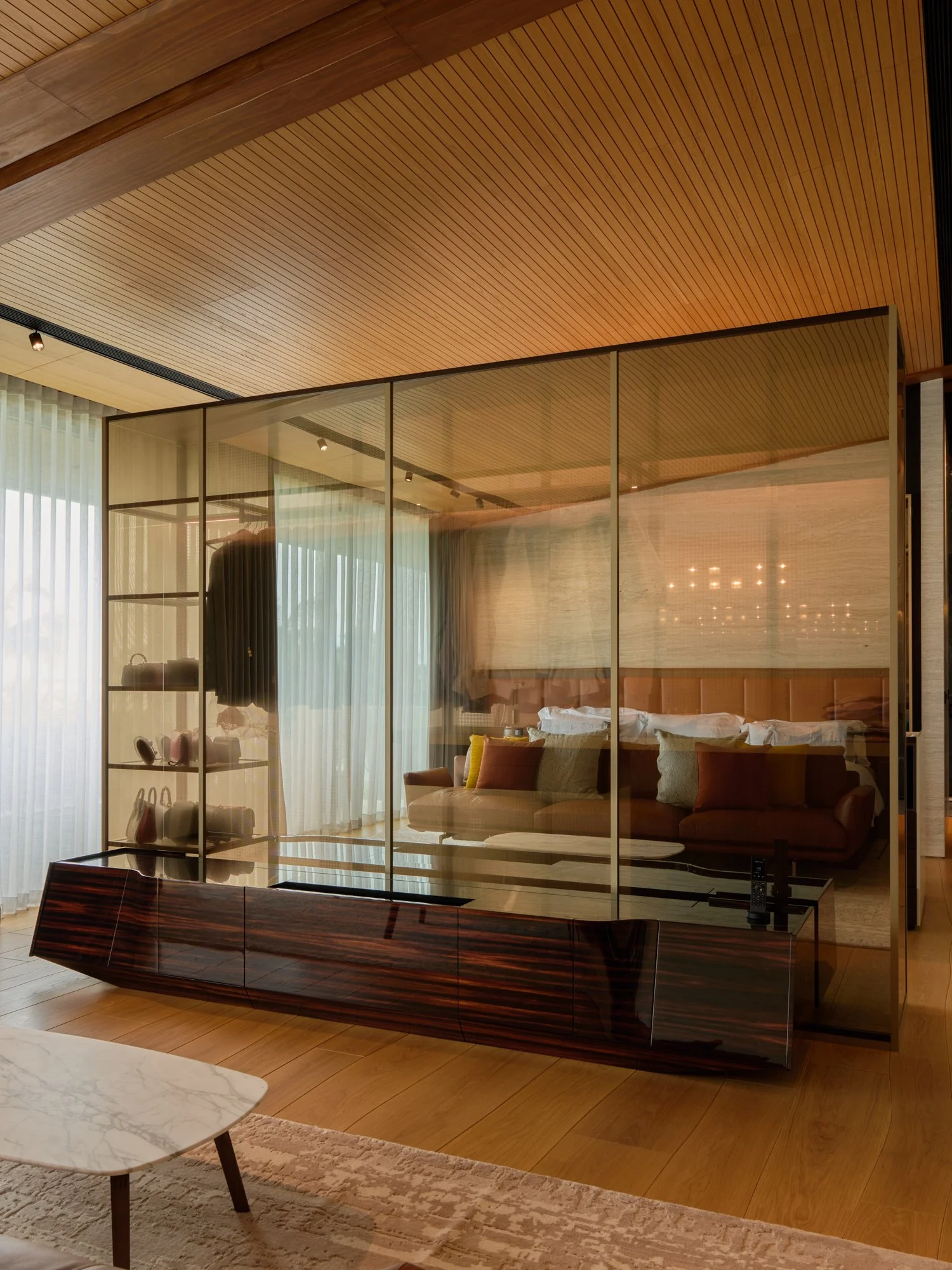
Located at the attic level, the master suite sits within the uppermost timber volume overlooking both the sea and the courtyard tree.
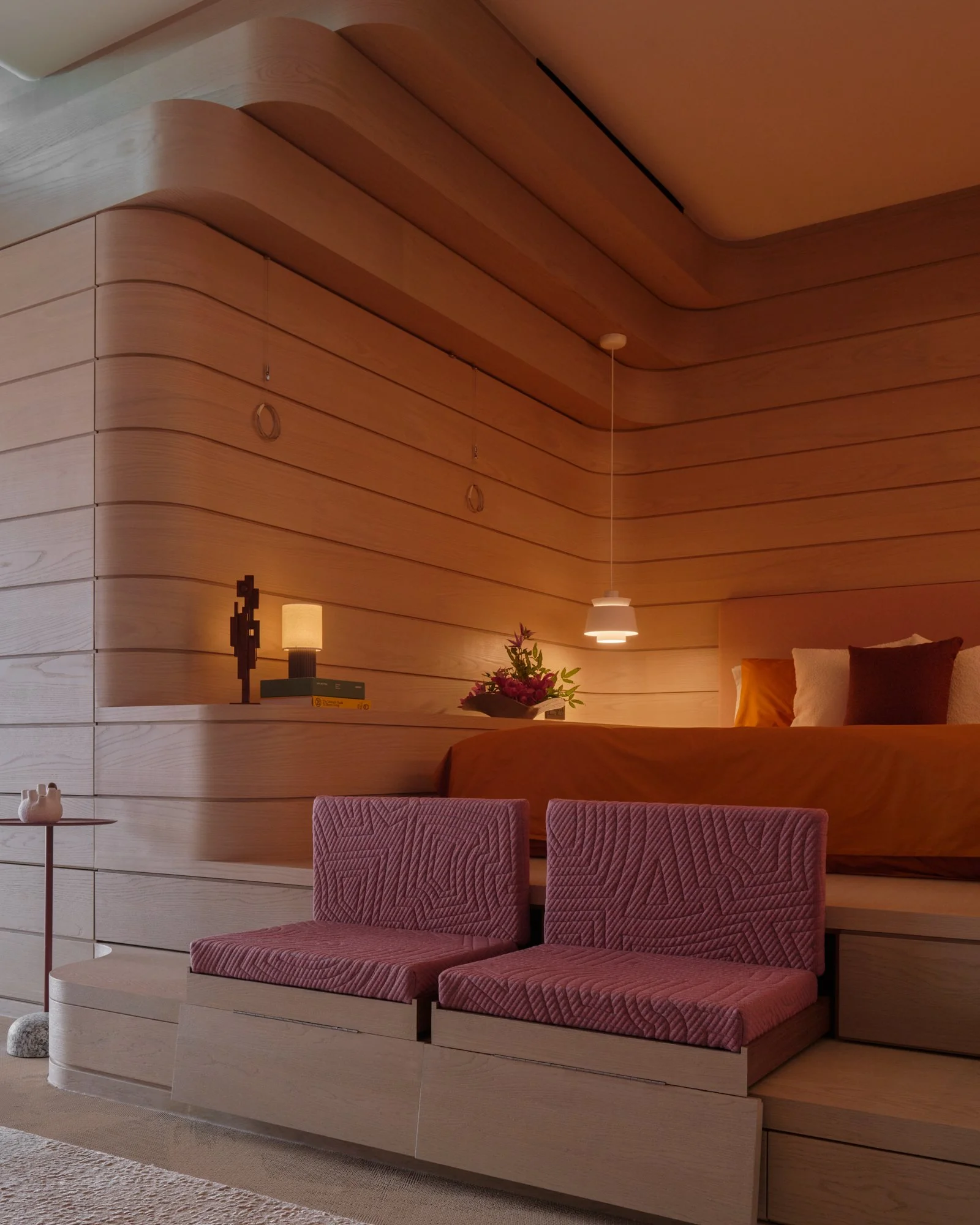
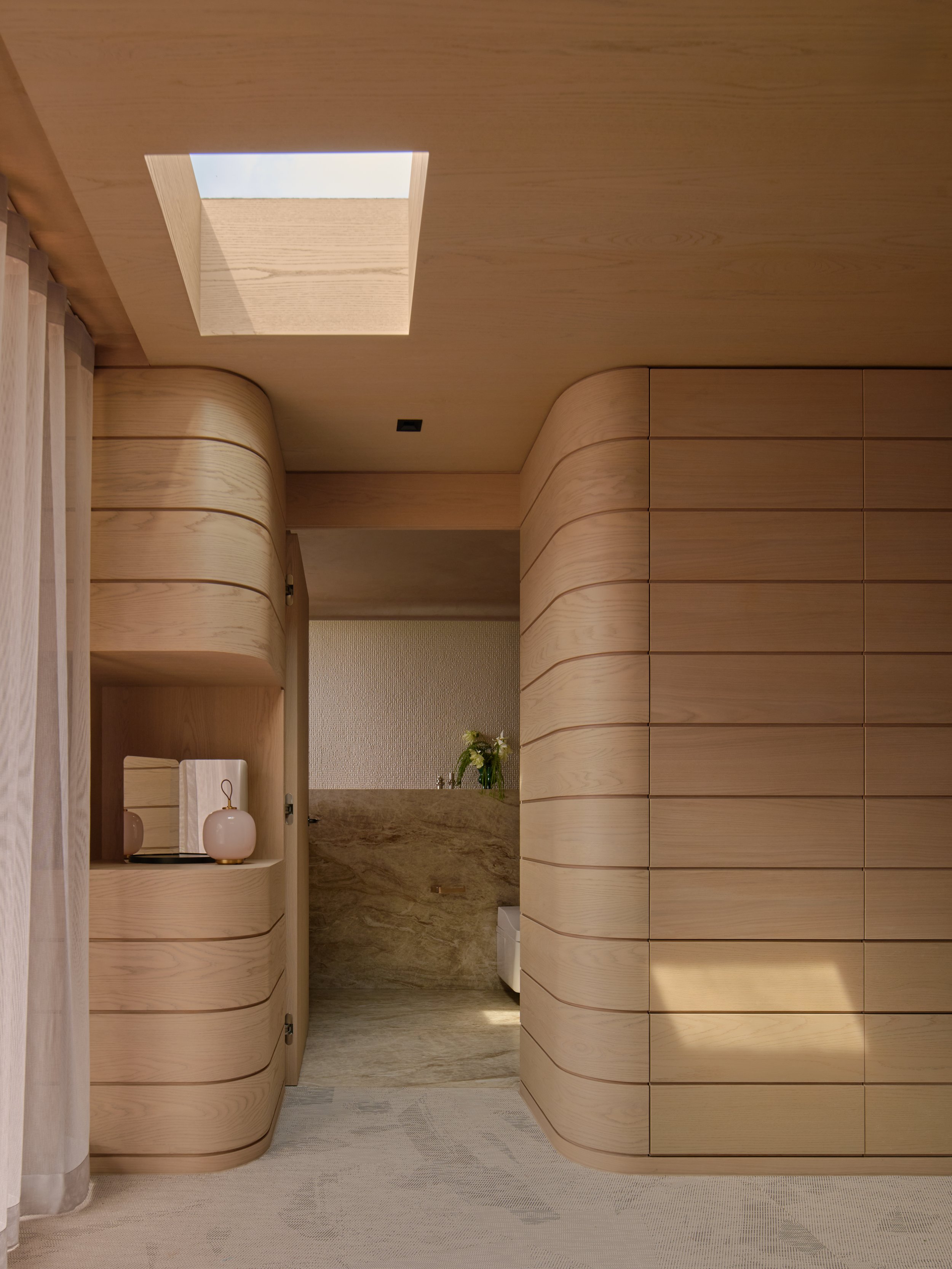
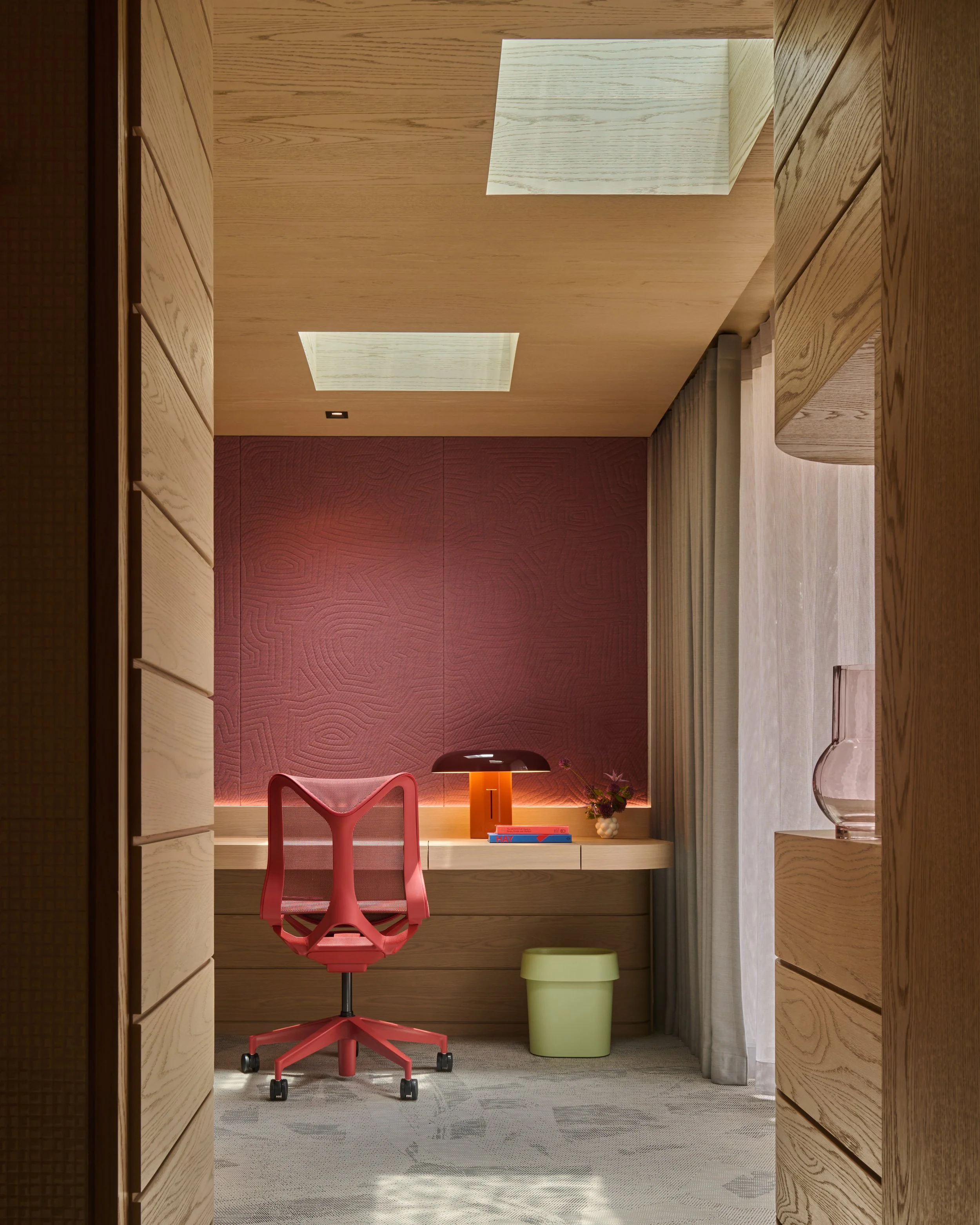
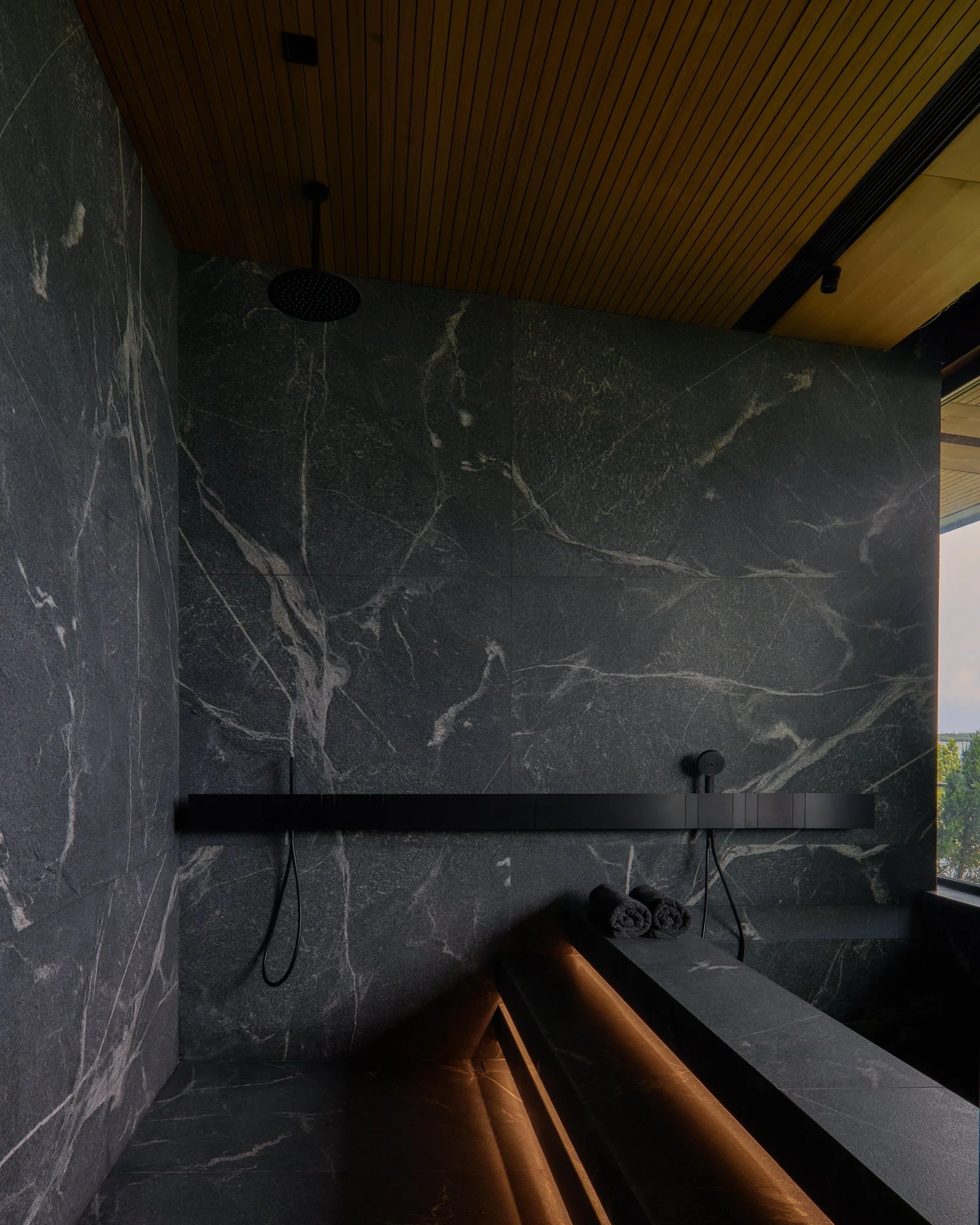
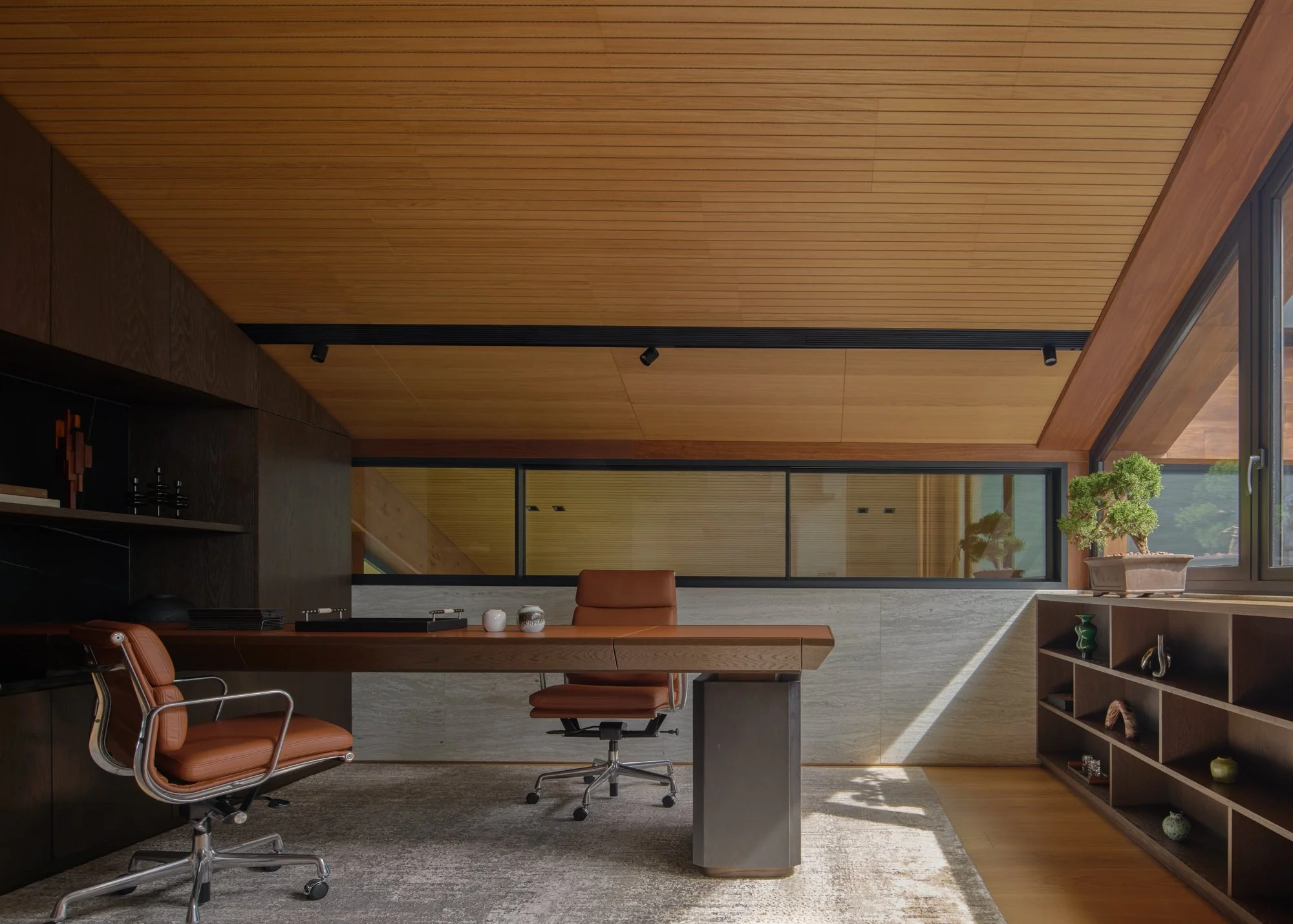
The attic level completes the pavilion, housing the master bedroom, bath and study. Elevated above both the public edge and the communal spaces below, the master suite becomes a quiet lookout towards the horizon.
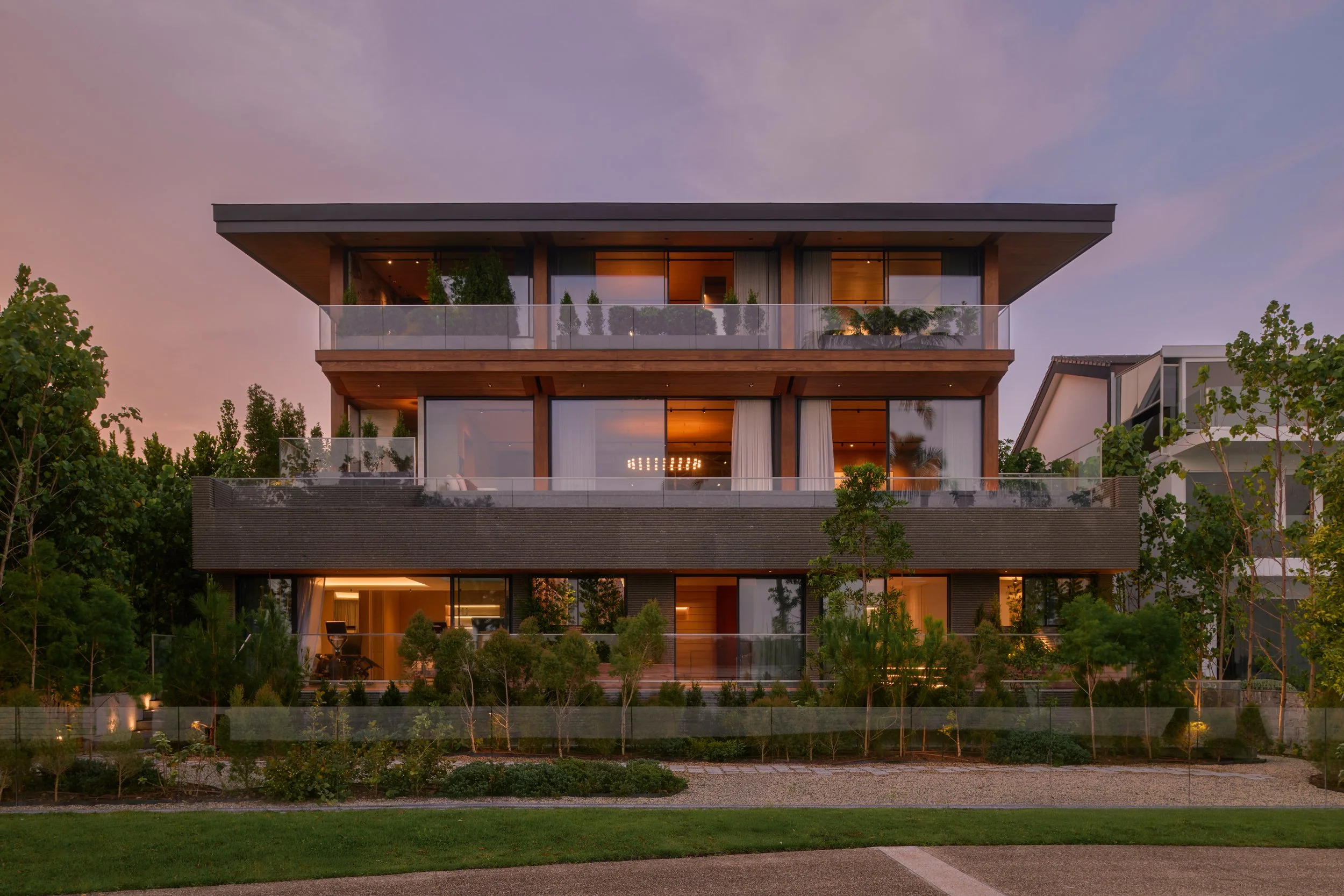
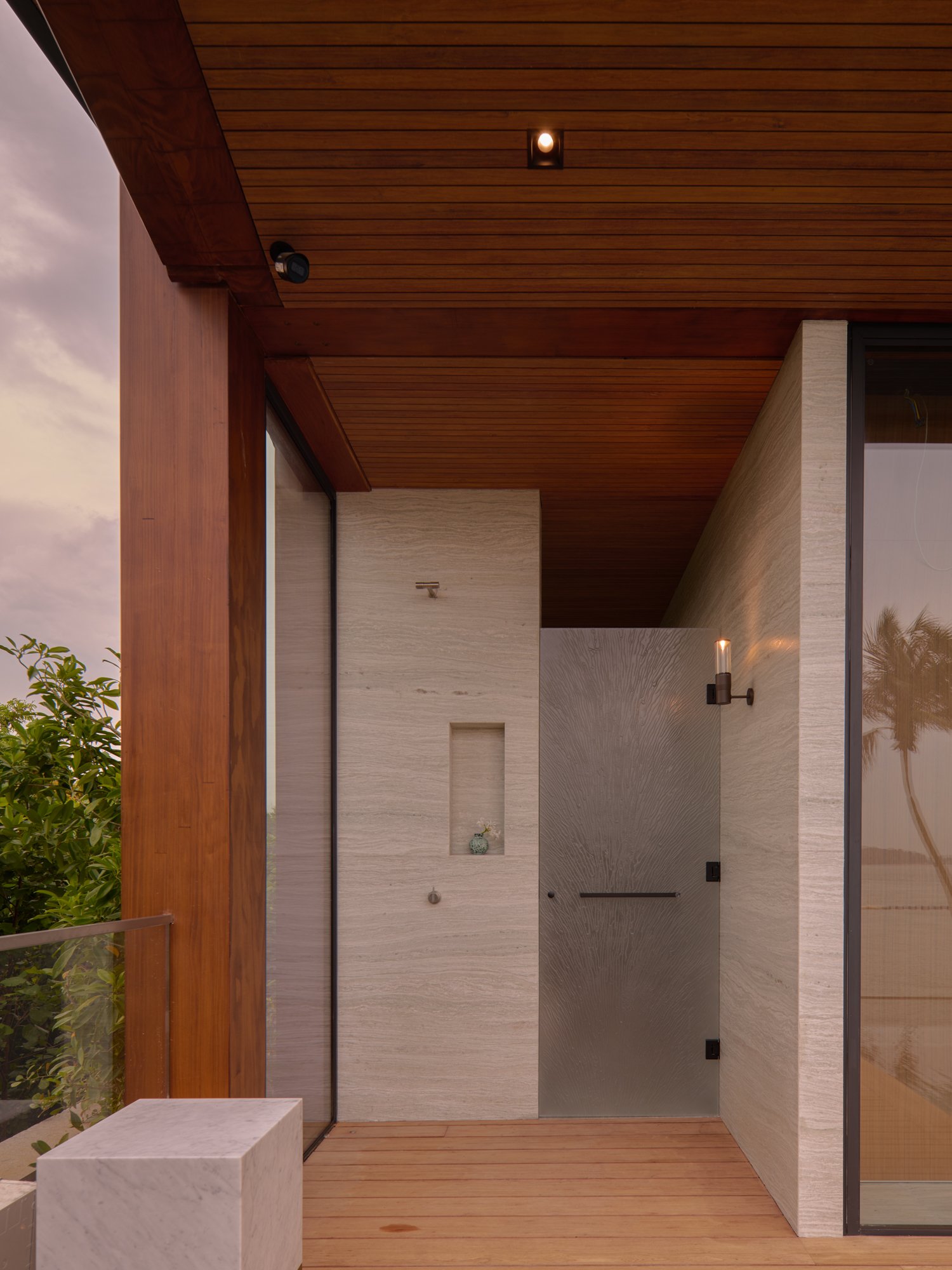
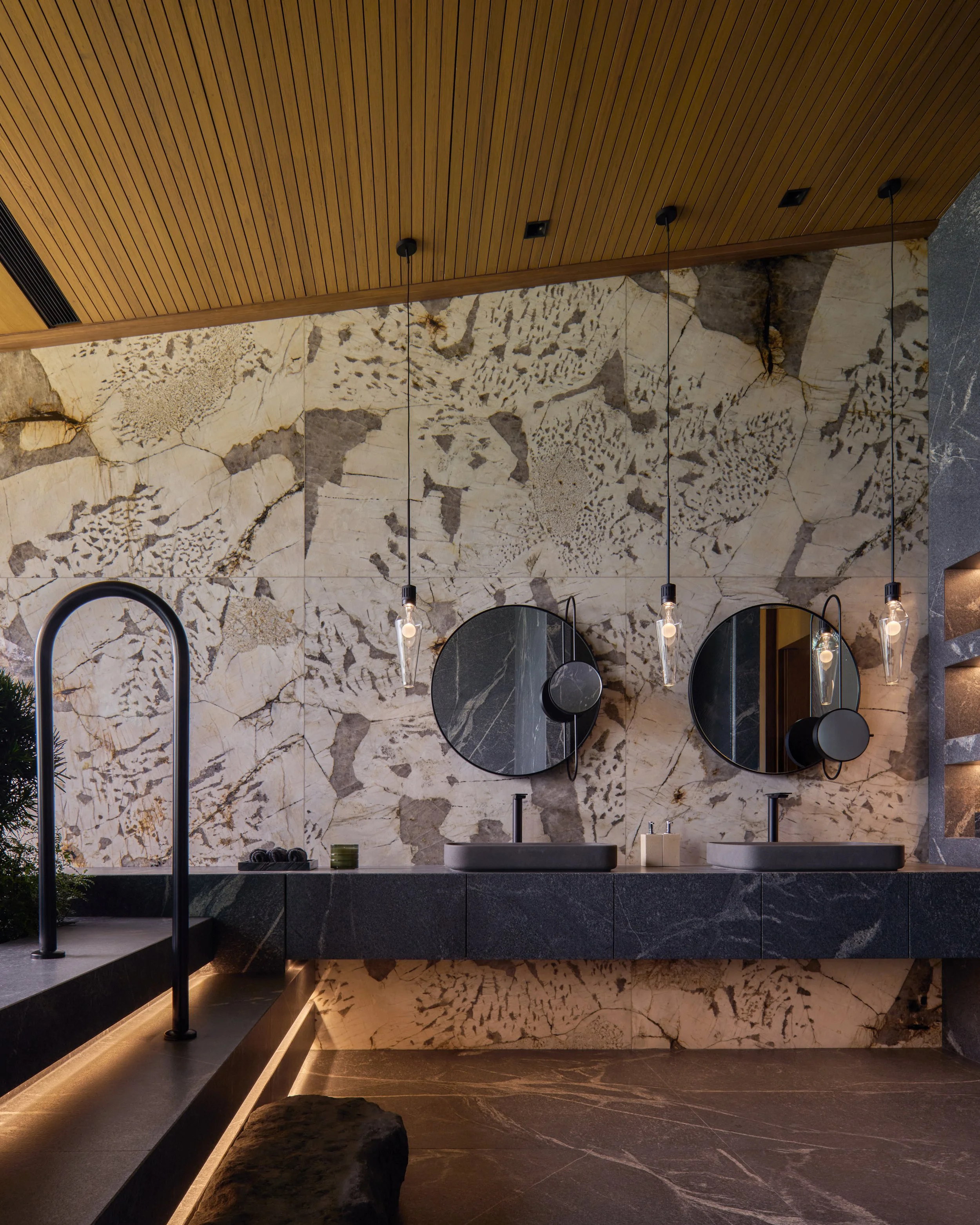
Stone surfaces transition from rugged textures at the plinth to refined finishes and warm timber within the pavilion above.
The architectural composition can be understood through the dialectic of plinth and pavilion. Historically, the plinth represents weight, grounding and permanence — anchoring architecture to the earth. The pavilion embodies lightness, openness and inhabitation. At the Plinth House, these two archetypes are carefully reinterpreted. The stone plinth withdraws, protecting the domestic realm from the public edge, while the timber pavilion above engages the sea and sky.
Mass Engineered Timber
A further concern lay in the construction realities of Sentosa Cove, where residential projects are often associated with extended building timelines. The client therefore expressed a willingness to explore alternative construction systems that might reduce construction duration while improving environmental performance.
The adoption of Mass Engineered Timber(MET) addresses the client’s concern regarding construction timelines. Through Design for Manufacturing and Assembly principles, the timber structure was prefabricated off-site and assembled rapidly on-site. The two storeys above the plinth were erected in approximately seven weeks — a process estimated to take up to six months using conventional reinforced concrete construction.
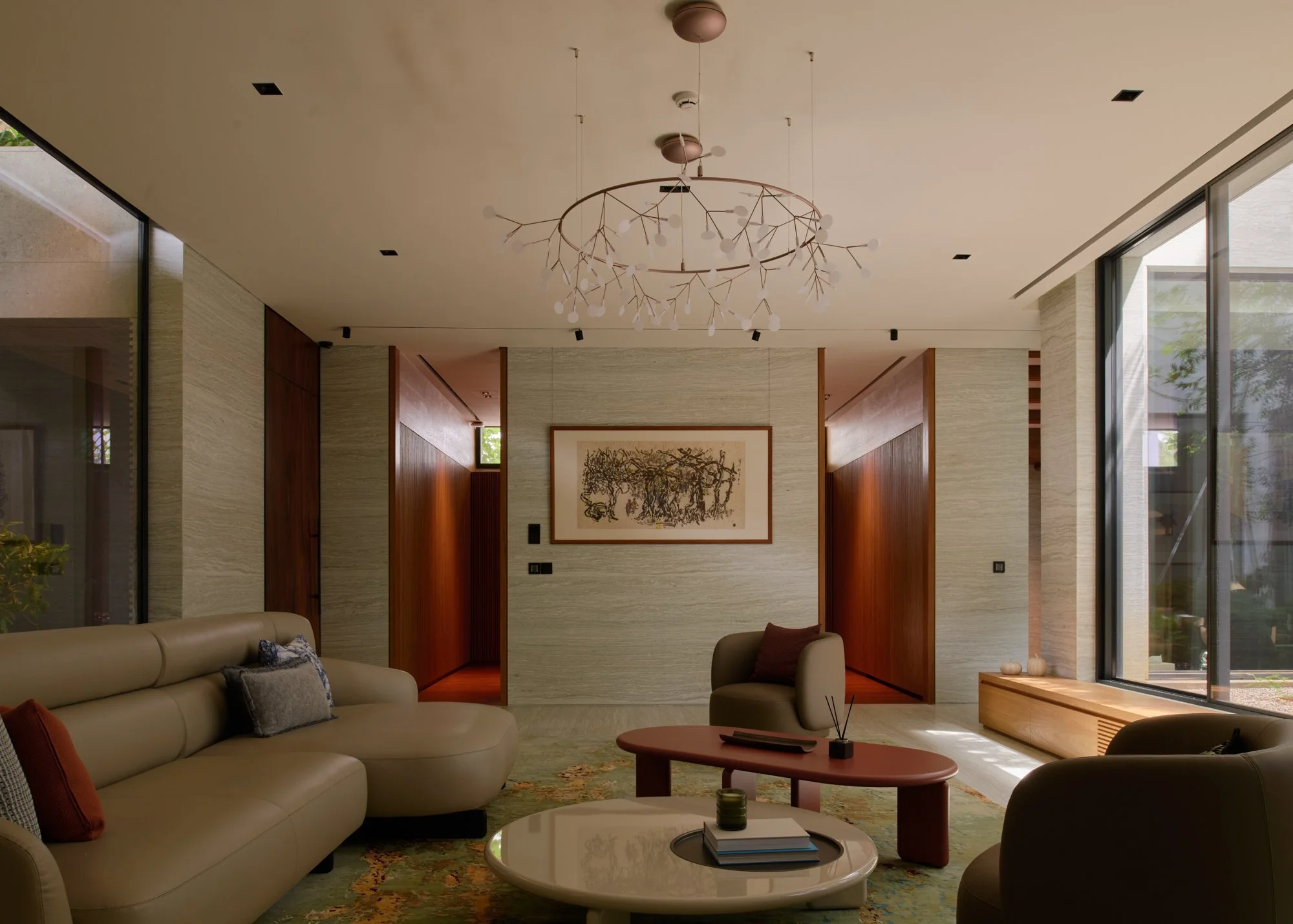
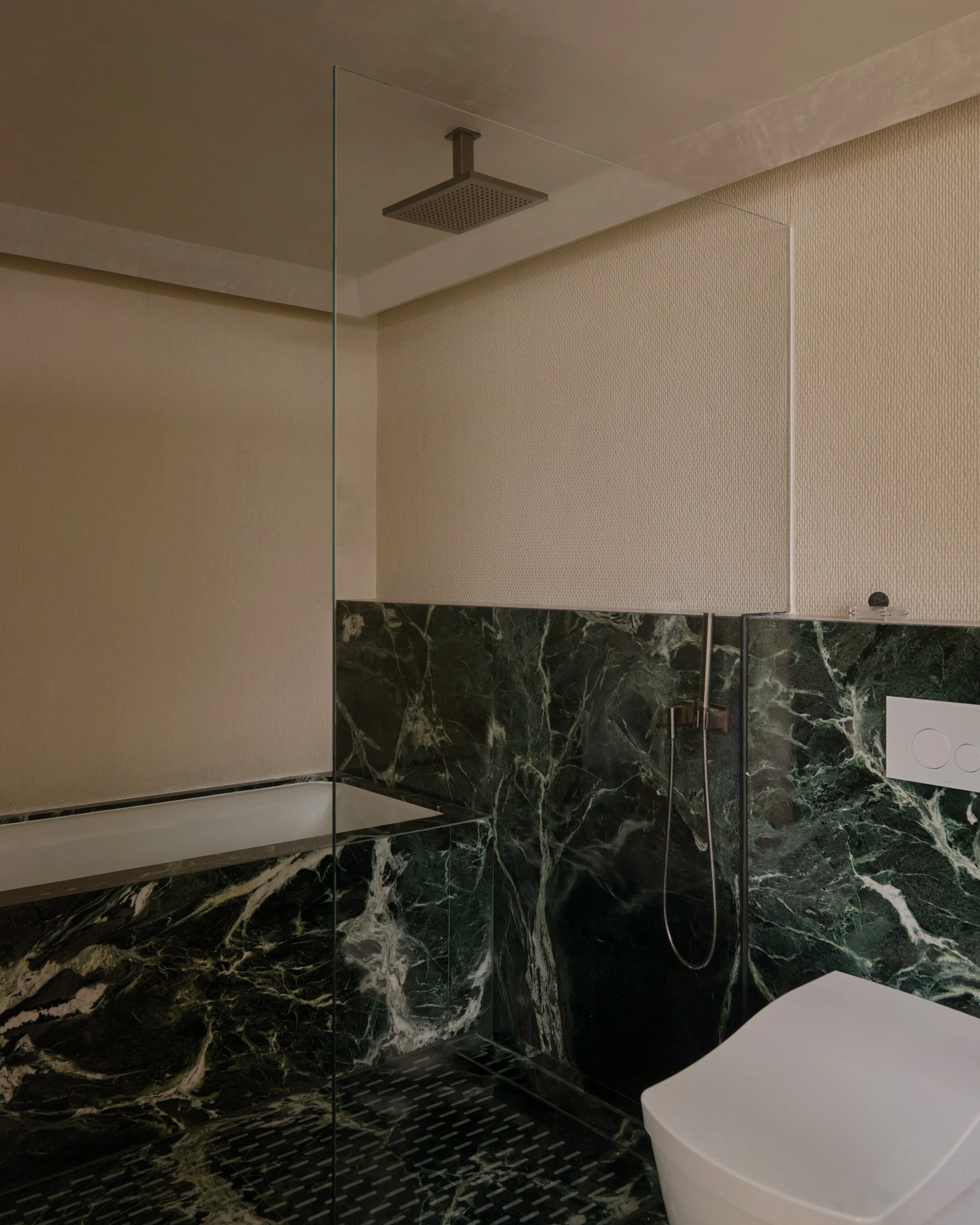
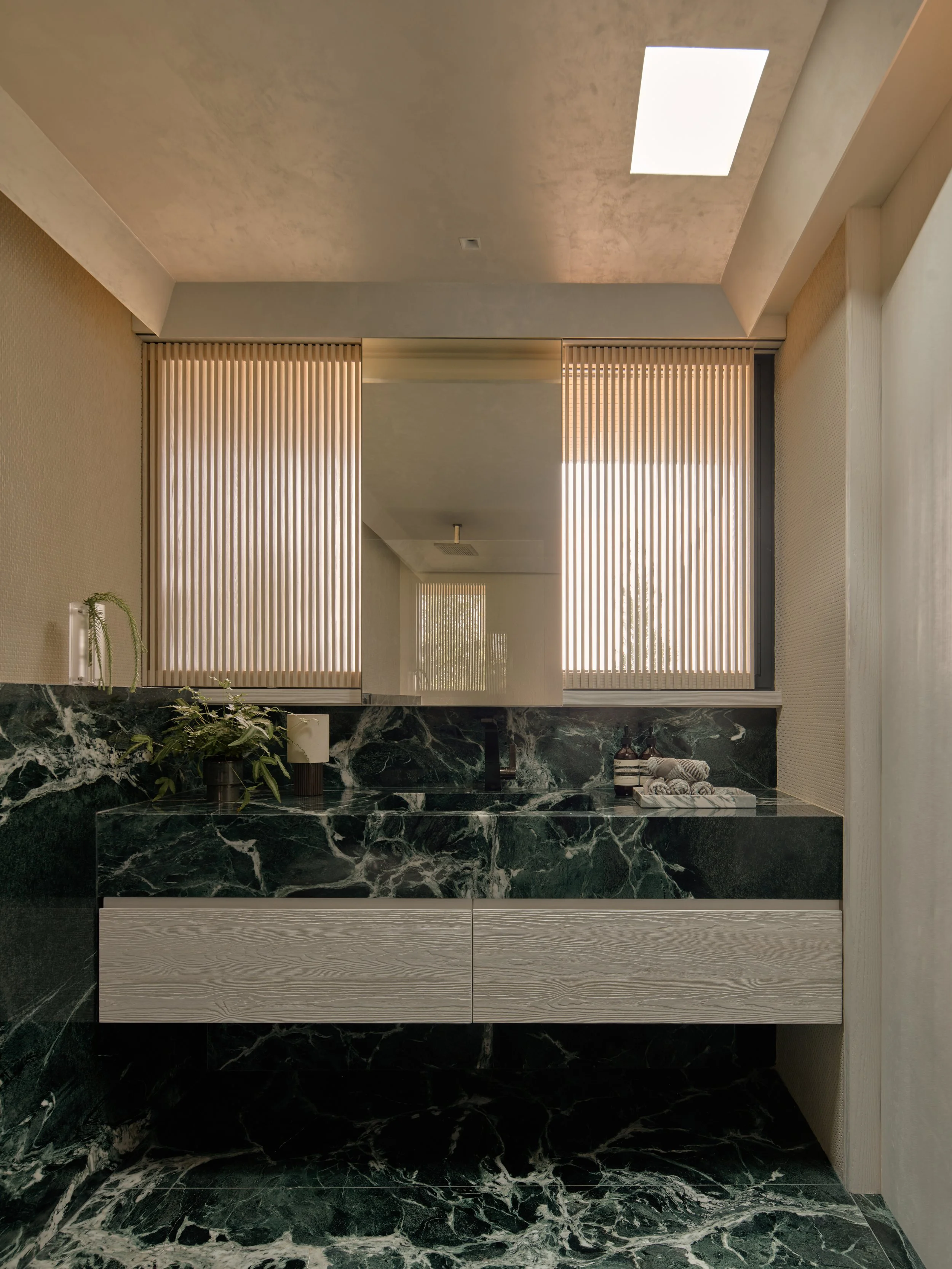
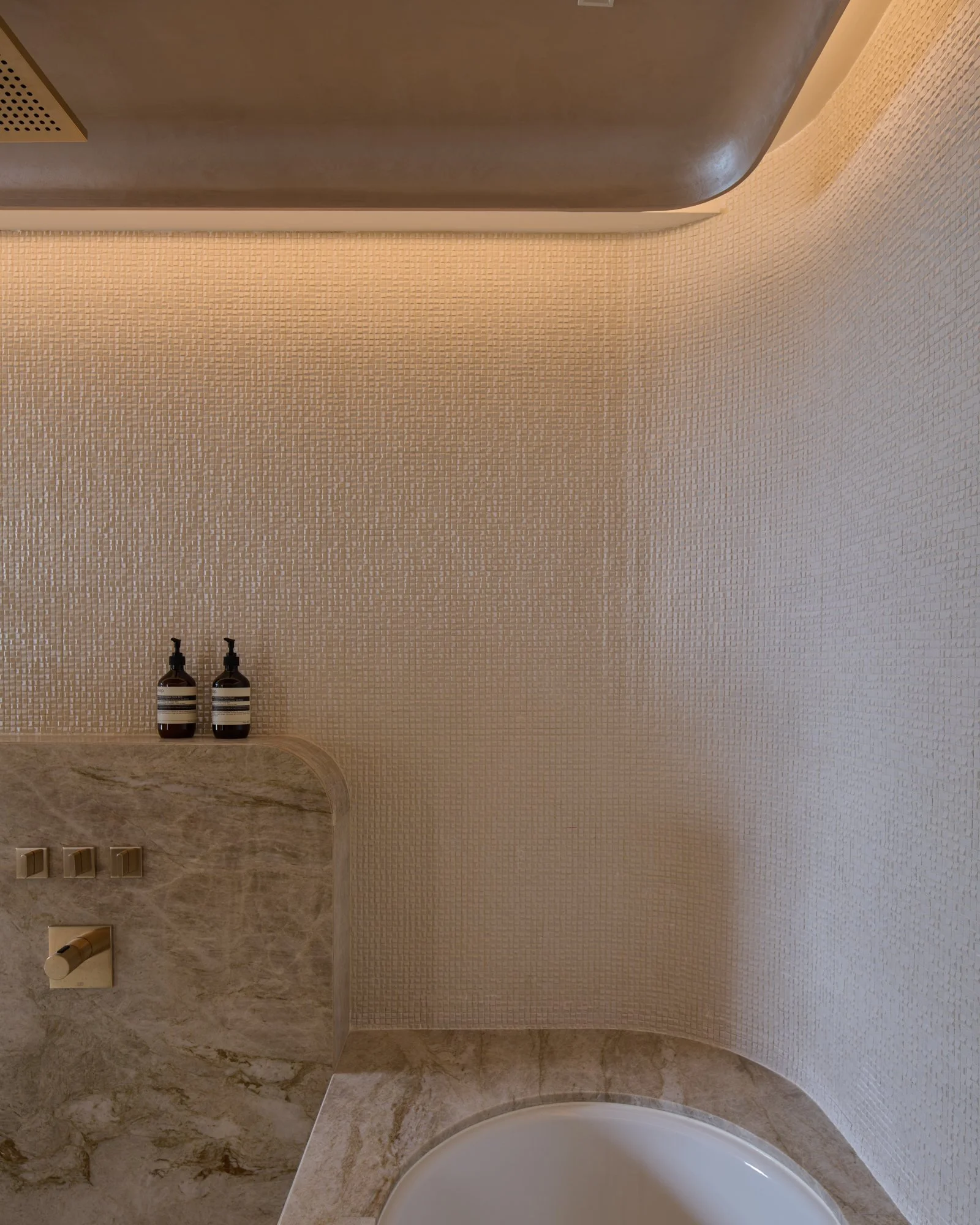
Materiality reinforces the architectural narrative. Stone surfaces transition from rugged hydro-finished Ceppo di Gré at the base to progressively more refined textures within the interior — sandblasted quartzite, leather-finished Olivio Strato and honed marbles such as Calacatta Viola and Patagonia. The progression establishes a subtle gradation of tactility from the geological base to the refined domestic interior.
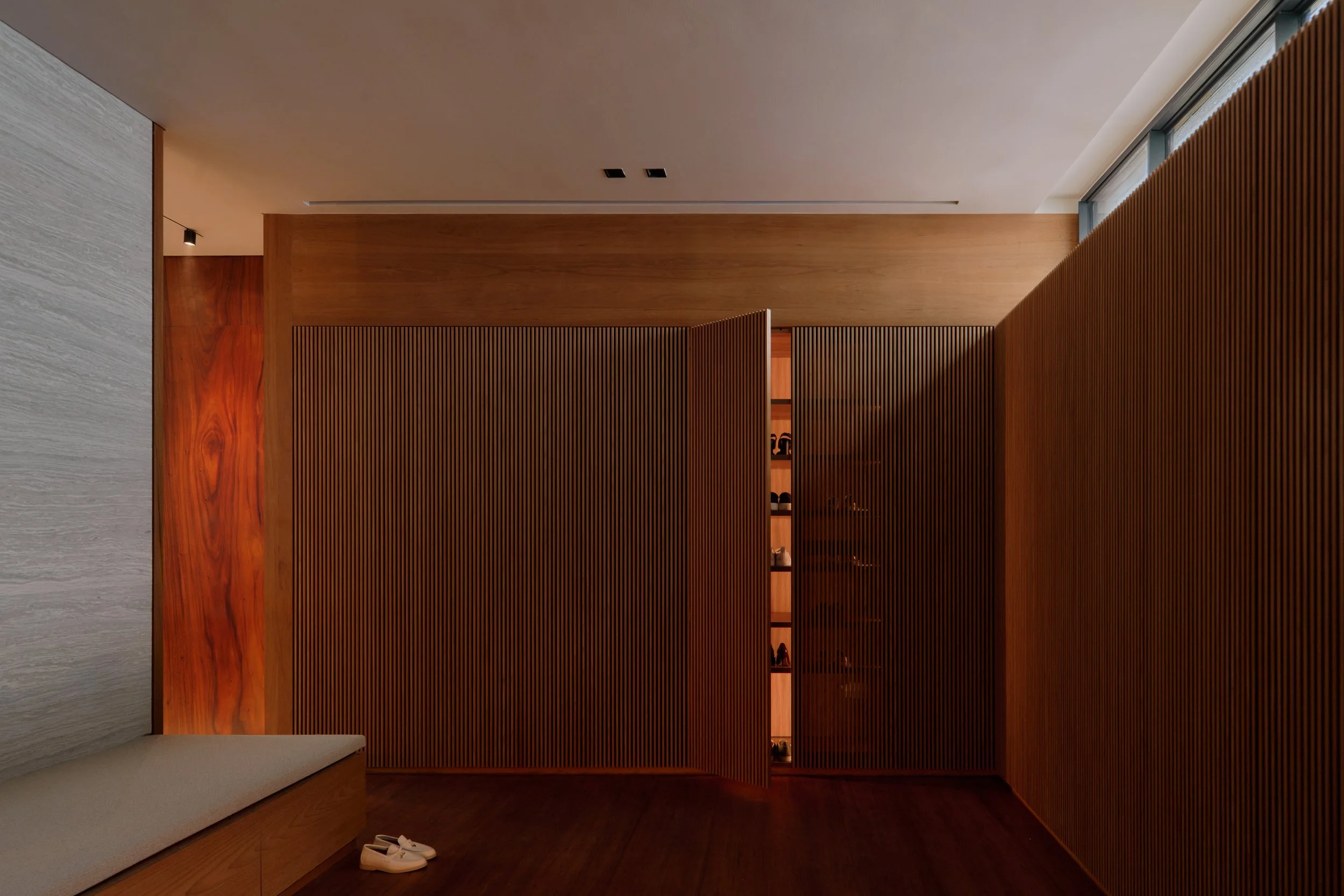
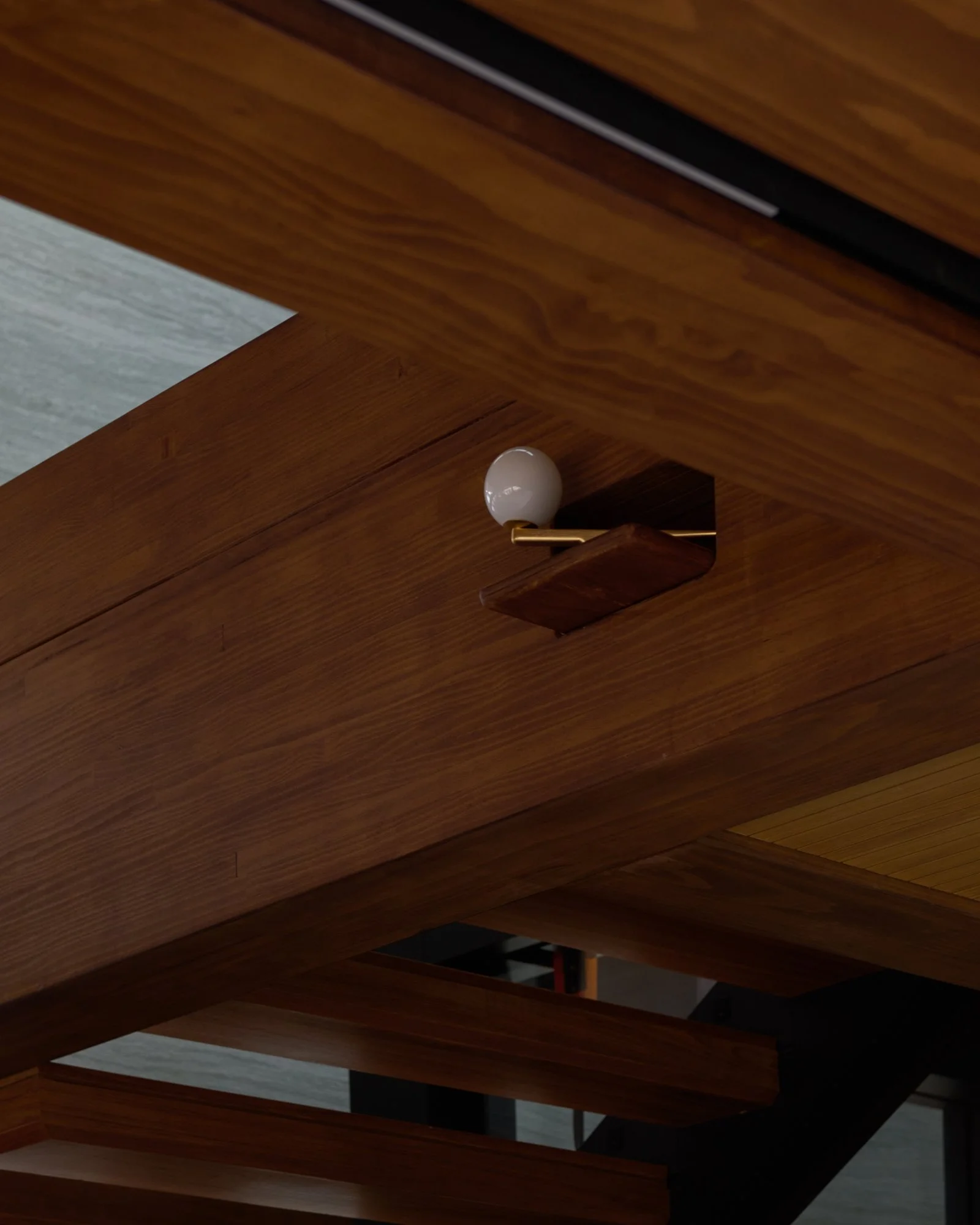
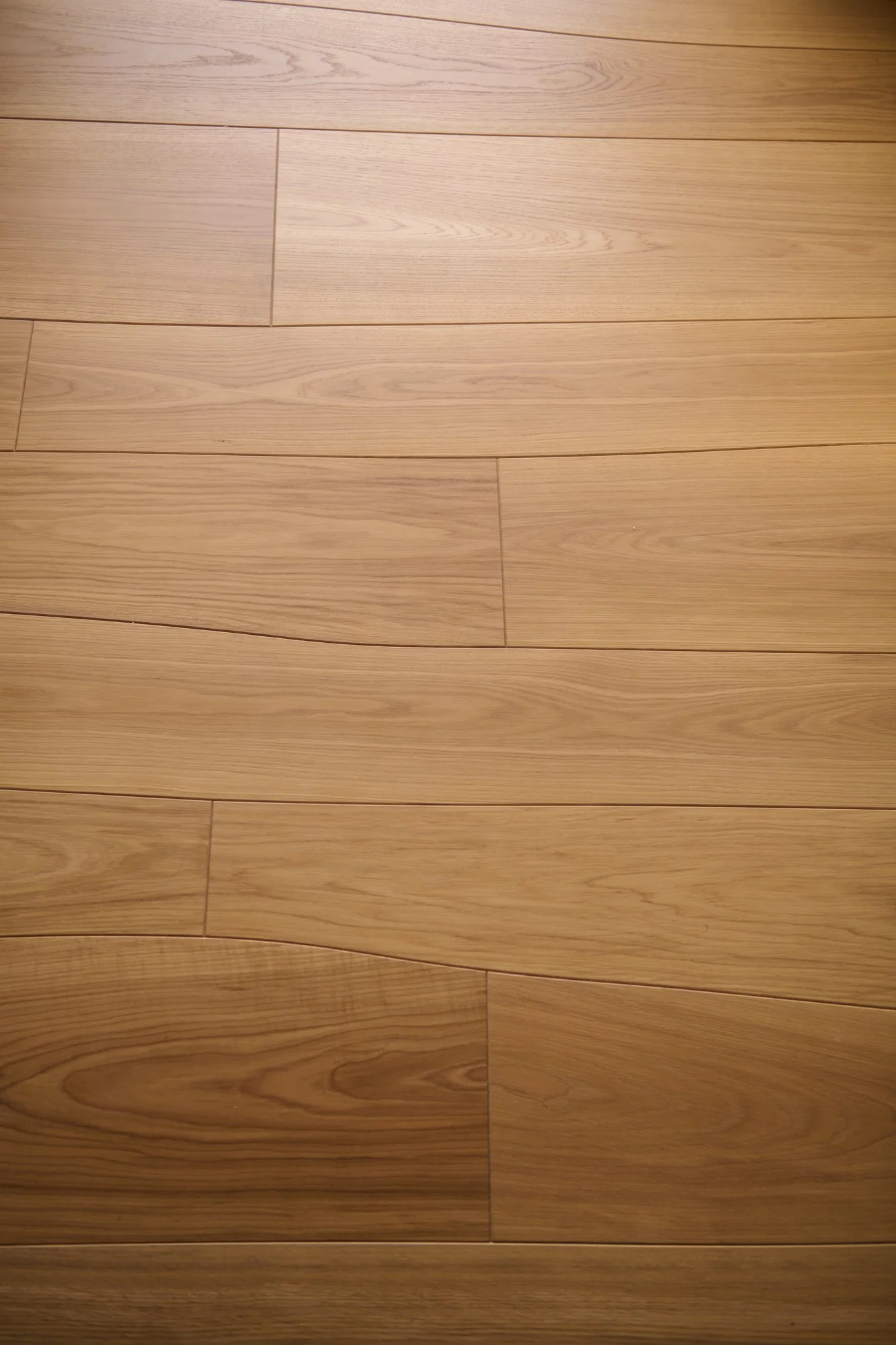
In contrast, the timber pavilion introduces warmth and softness. The grain and tone of the Mass Engineered Timber structure create a tactile counterpoint to the hardness of the stone and the rocky shoreline beyond.
Through this layered tectonic strategy — stone plinth below, timber pavilion above — the Plinth House reconciles the central tensions of the brief. The plinth withdraws and protects; the pavilion opens and engages. Between them, courtyard, water and horizon are carefully orchestrated to produce a sequence of spatial experiences.
Rather than simply facing the sea, the house constructs a layered retreat from which the sea can be meaningfully inhabited.
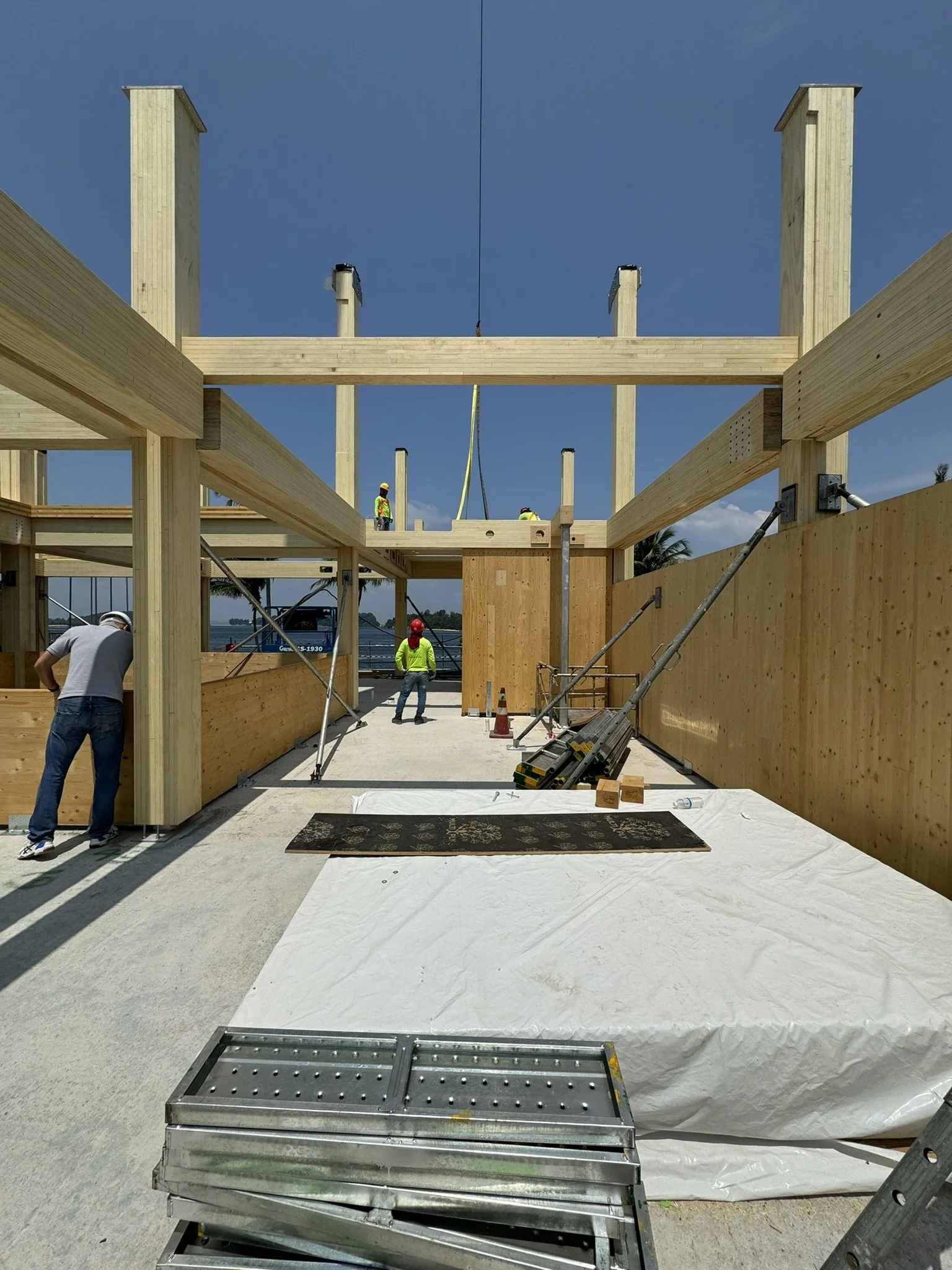
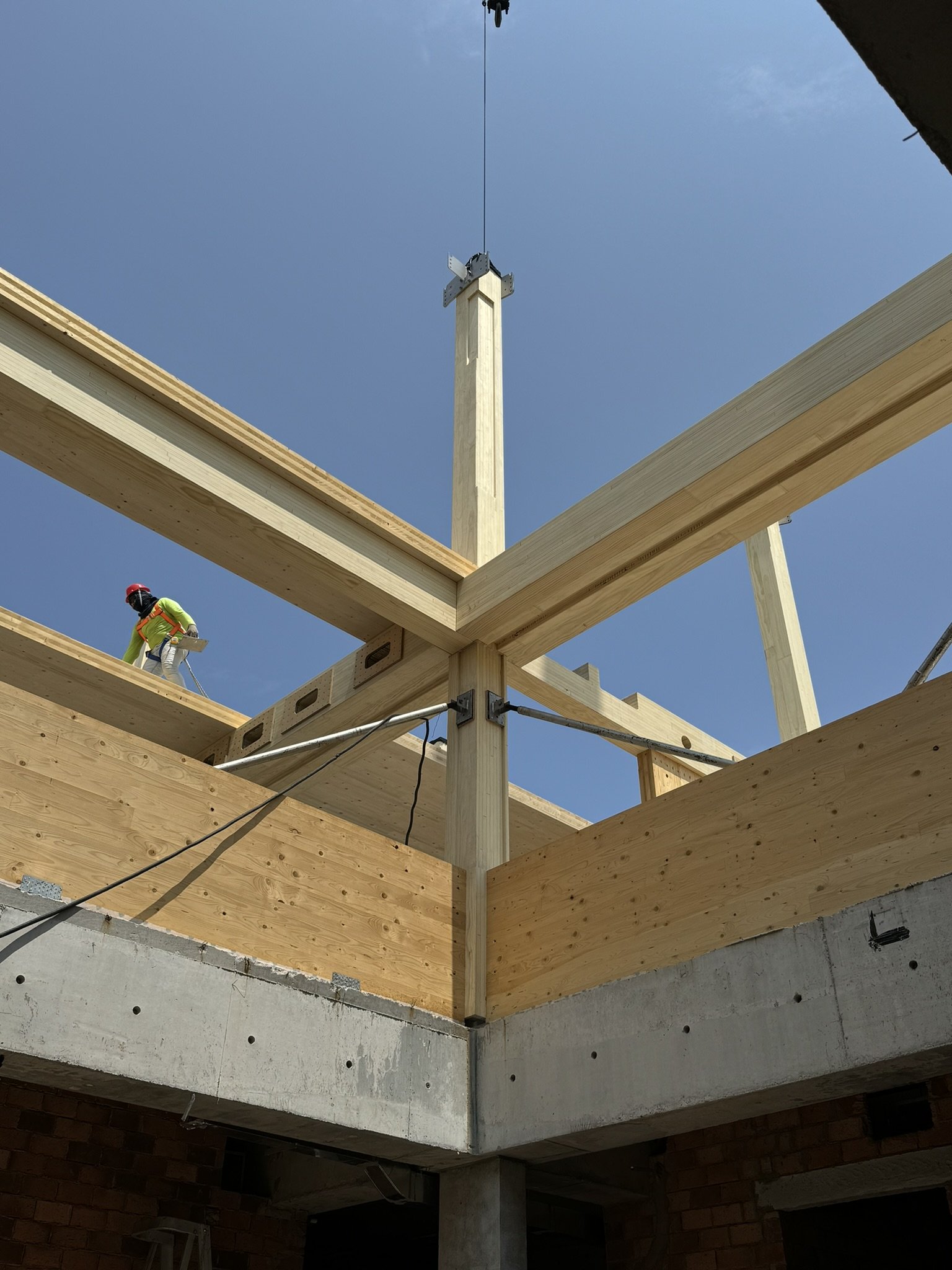
The project is also significant as Singapore’s first privately initiated residential building constructed with Mass Engineered Timber as a primary structural system.
Singapore already hosts several notable mass timber buildings, including Gaia at Nanyang Technological University, Asia’s largest timber building. These projects, however, have largely been institutional pilot developments supported by government initiatives. The adoption of timber construction within the private residential sector has remained rare.
For Type0 Architecture, the Plinth House offered an opportunity to explore how Mass Engineered Timber might move beyond demonstrative institutional projects and enter everyday residential architecture.
The environmental implications are considerable. The global building sector accounts for roughly 40 percent of carbon emissions, with embodied carbon — emissions associated with building materials and construction — representing an increasingly urgent challenge. Unlike concrete and steel, timber is a renewable material capable of storing carbon absorbed during tree growth. When used structurally at scale, Mass Engineered Timber offers the potential to significantly reduce the embodied carbon footprint of buildings.
This question becomes particularly urgent within Southeast Asia, where urbanisation continues at a rapid pace. By the middle of this decade, ASEAN’s urban population is expected to exceed 400 million people. Addressing this growth sustainably will require new construction systems capable of balancing environmental performance, productivity and cost.
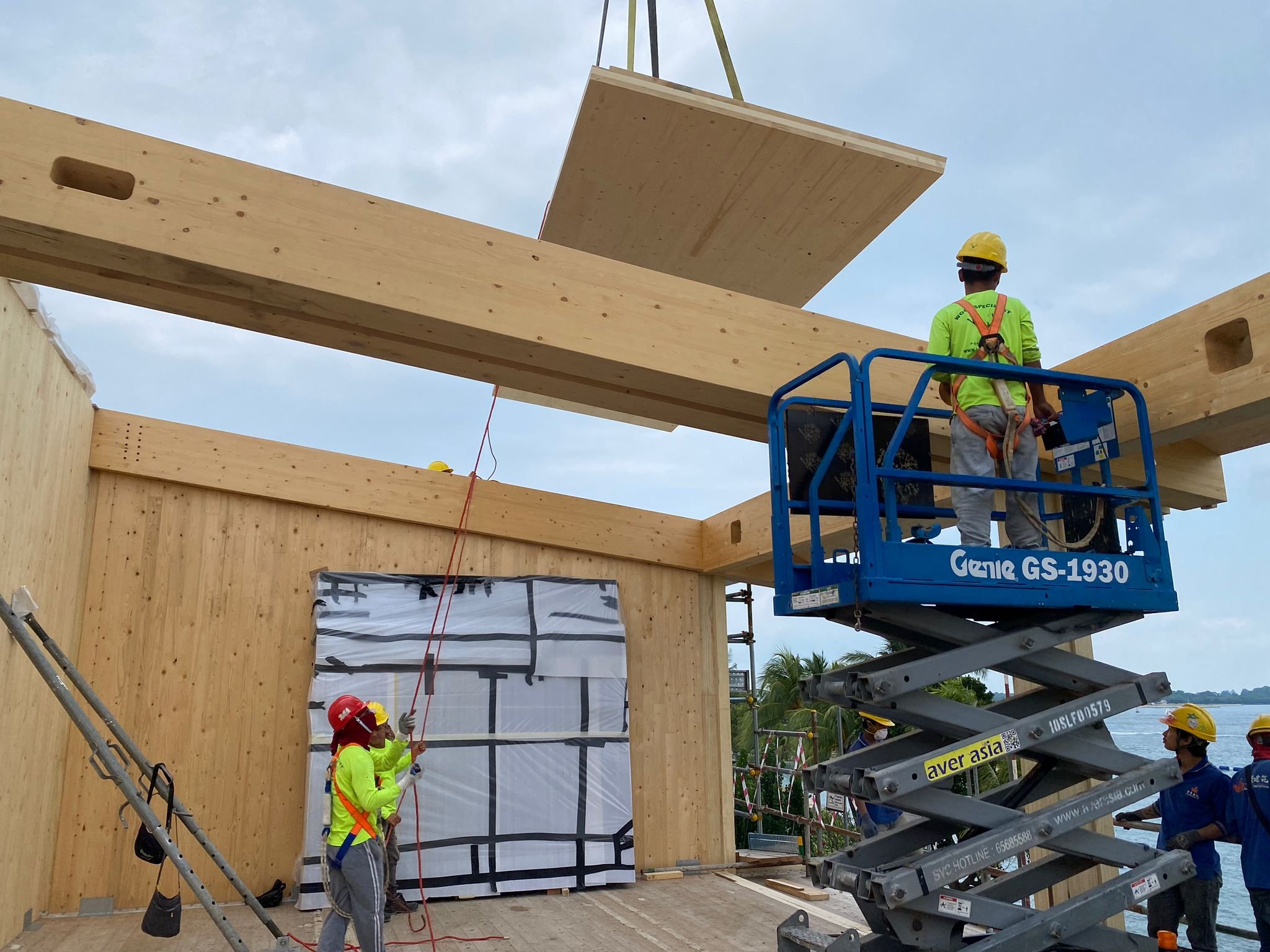
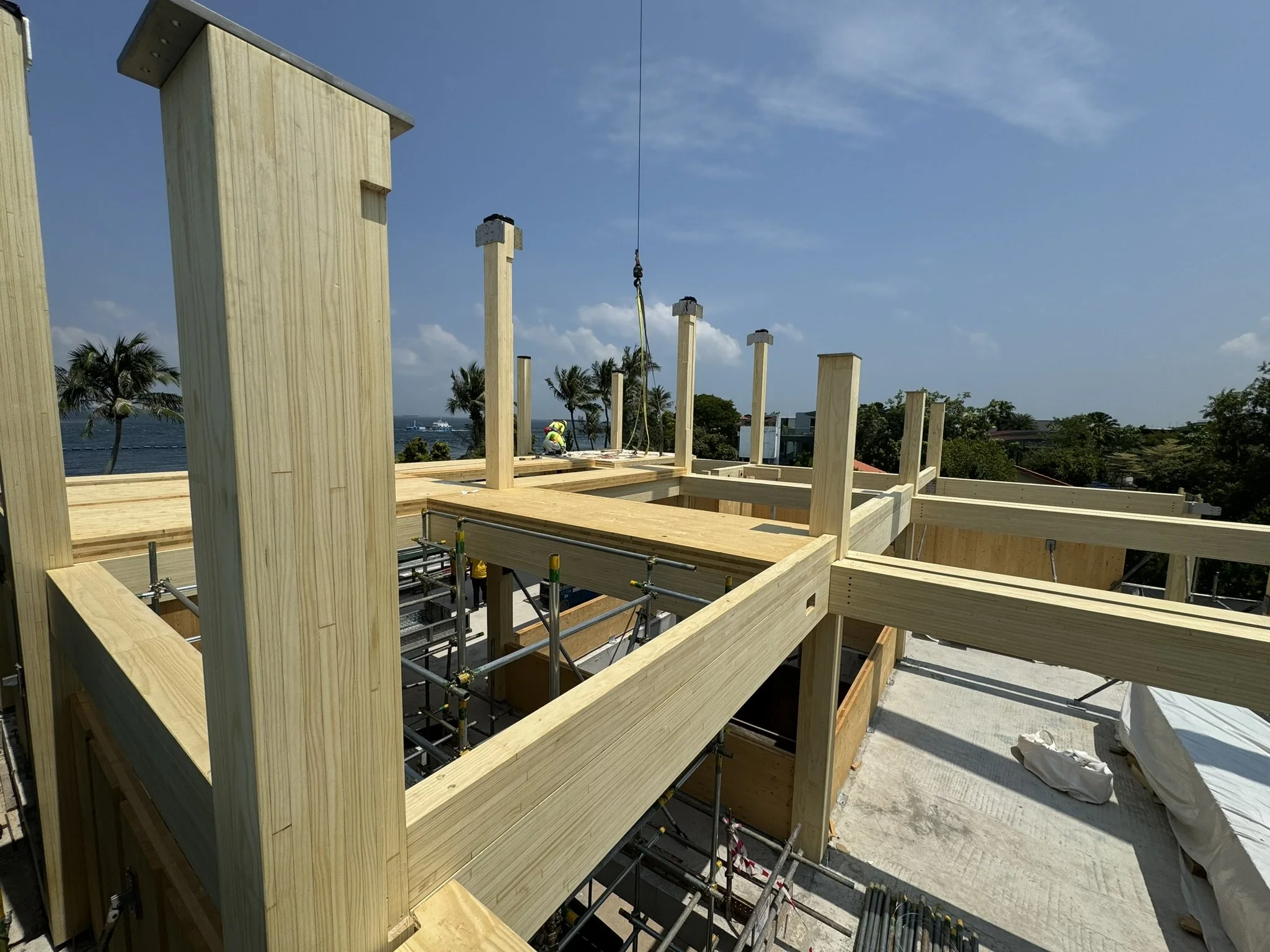
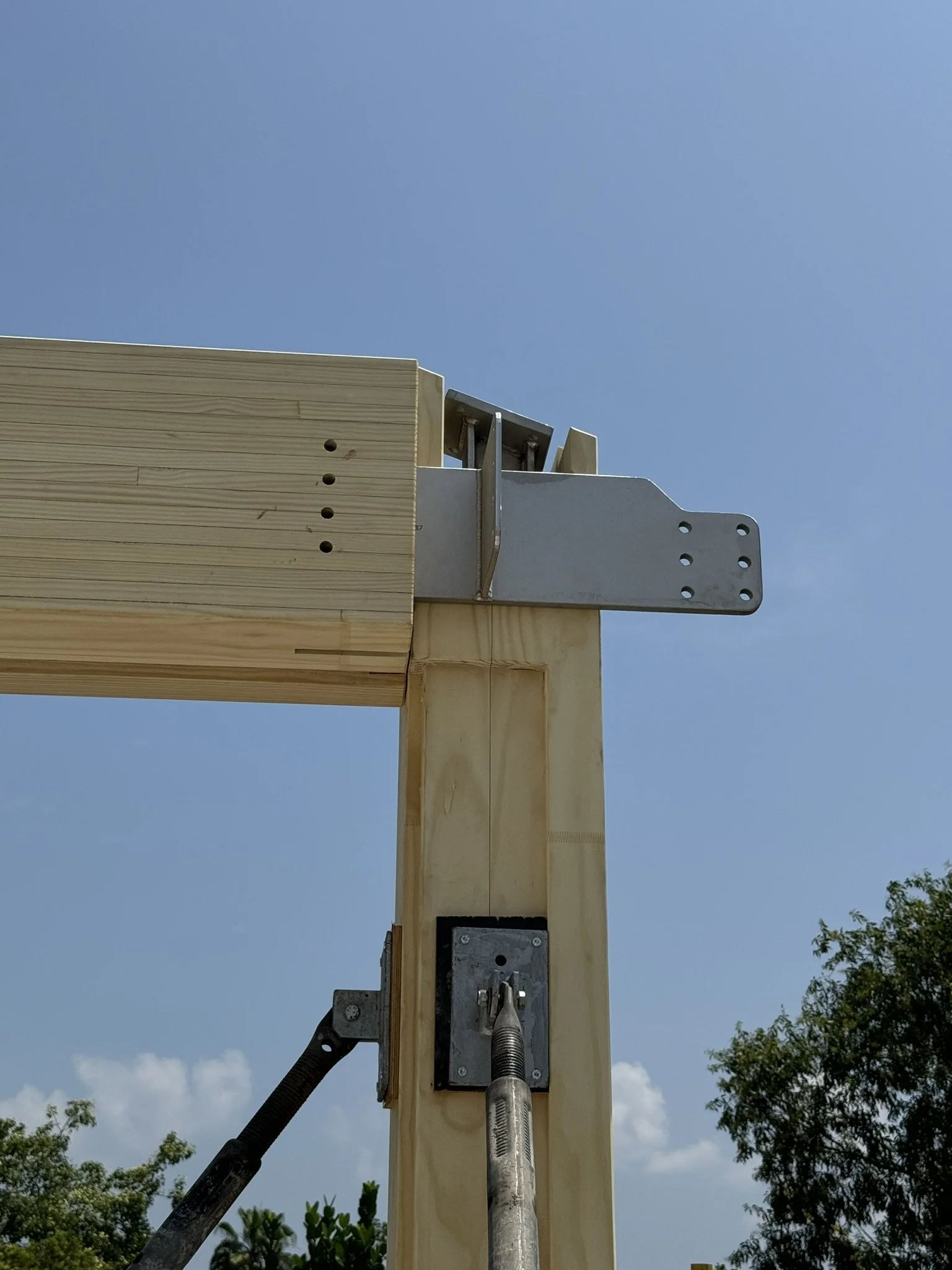
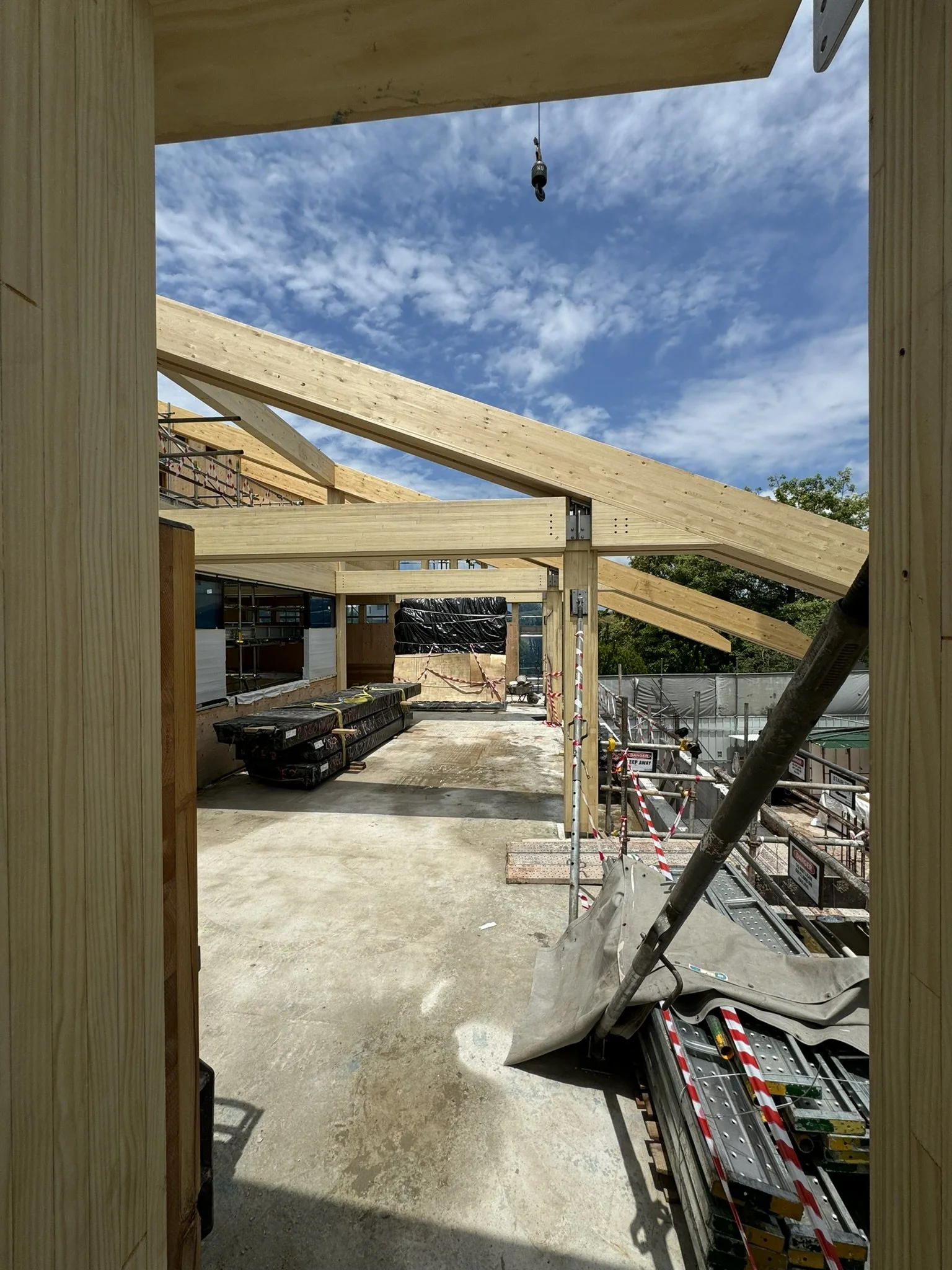
The Plinth House therefore operates not only as a single architectural object but also as a prototype for exploring tropical mass timber construction.
Structurally, the pavilion is composed of cross-laminated timber panels forming walls, floors and roof, together with glue-laminated timber columns and beams. Pine acetylated glulam is used for externally exposed structural members due to its resistance to moisture and termites, while spruce glulam and CLT panels form the internal structure.
Climatically, the project explores how mass timber architecture might respond to tropical conditions. A large CLT roof with deep overhanging eaves — cantilevering up to five metres — forms a protective canopy over the communal spaces. These generous overhangs provide shading and shield the timber surfaces from solar exposure and driven rain. The thick CLT roof and wall panels also provide substantial insulation, reducing heat gain and improving indoor comfort.
Image Gallery

CREDITS
TEAM MEMBERS Pan Yi Cheng, Daniel Chia, Guo Xiu Jin, Jessie Yaw, Chia Sheng Wei, Liu Zepu
PHOTOGRAPHY Jovian Lim
STYLING &serif
ARTWORK NaWei Gallery
C&S CONSULTANT Span Consultants
M&E CONSULTANT CCA & Partners
QUANTITY SURVEYOR Barton Bruce Shaw Pte Ltd
BUILDER Towner Construction Pte Ltd
MET SPECIALIST Steeltech Industries Pte Ltd
MET FABRICATOR WIEHAG Holding GmbH, Stora Enso Oyj
AUDIO & VISUAL AOE Pte Ltd
CARPENTRY TD Furniture & Interior Pte Ltd, XTRA Designs Pte Ltd
LANDSCAPING Humid House
LIGHTS Palicon Lighting Pte Ltd
STONE KStone
TIMBER Panelogue
WINDOWS OTIIMA, Sapphire Windows